Some brief thoughts on “bad faith”

A quick post for today. I’ve been working on a longer one, but I wanted to do some edits, and I have to run some errands this morning. Expect it later in the week. I hope the holidays have been good to everyone and that the new year is shaping up as it nears.

Lately I’ve been reading a lot of Existentialism, researching for a paper I hope to write examining the existential elements in O’Neill’s The Iceman Cometh, especially as they connect to Jean-Paul Sartre’s unique brand of it.

One particular tension that has always struck me, which Sartre stresses, is the limited nature of “facticity” and the perceived limitless horizon of the “transcendent.” Facticity captures the “in-itself” nature of something, and is connected with objects. So a particular table could be wooden in itself, three feet tall, made by Stickley Furniture, etc. These are largely fixed properties and therefore limiting.

Transcendence covers the “for-itself” nature of the subjective: the comprehensive range of possibilities, hopes, plans, dreams, and perceptions individual people have. These do change. Constantly. They push and prod us into action, then shift as the action shapes us.

Sartre always stressed the tension between these two ideas as “bad faith.” Sometimes people try to be objects, limiting their transcendence. Sartre gives the example of the waiter who wants to be known only as a waiter, but he has a whole life beyond this. Other times we try to escape our facticity–like our past actions. These are fixed qualities that affect who we are and how others see us. I am a white male.

To me, this tension is a really interesting thing to puzzle over. How am I limited? How am I limiting myself?

Cheers.

Bits ‘n’ pieces: the odds and ends of the world

For a while now I’ve been wanting to write an essay about end tables, coat Archaeologistpockets, bag bottoms, and storage cabinets. We often forget these clutter-gathering crevices of our individual lives, until we fish through an old coat and pull out receipts, candy bar wrappers, and a dollar or two tangled with some coins. These seemingly random articles, disused and long-forgotten, once played a role. We bought something, earning that receipt. We ate that candy bar and couldn’t find a trash can. We pocketed that loose change.

Such odds and ends reveal our former lives, providing a time stamp for our days and habits, whether they are the books and jewelry on our end tables, the unused casserole dishes in our cabinets, or the grit and at the bottom of our bags. Our past selves leave traces. And just as archaeologists dig through the rubbish of past cities, we can dig through our own lives.

But unlike archaeologists, we don’t normally care about these random bits of rubbish. We crave the big picture–the narrative that collects the pieces, not the pieces themselves. Perhaps a few things transcend this bias, like a stone from our childhood house, a ticket stub from a memorable movie, or that framed first dollar a business might display. We infuse these random pieces of existence with meaning and display them, like a museum of our lives.

But in themselves, they are mere physical objects. That dollar passed trough hundreds of indifferent hands before it fell behind that frame. Its “it-narrative” probably included stints buried in coat pockets or lost in the wrappers and rubbish on the bottom of a bag. Maybe it fell behind a bed. Maybe it went from a lemonade stand to a store clerk to a strip club. That dollar connects us to hundreds of other lives–including our past selves–but its average everydayness camouflages it.

Continue reading “Bits ‘n’ pieces: the odds and ends of the world”

“Polis is This”: Charles Olson

Hey all,

Sorry for the absence, it’s been the final weeks here at school, so I have been grading, tutoring, and working on final papers like crazy. Expect a post this Sunday, but in the meantime here is a link to the first part of a documentary about a poet I wrote on this semester named Charles Olson. The rest of the documentary is online as well.

Olson, considered the foundational figure for the “projective verse” movement and a key figure for New American Poetry, was a well-read and fascinating character. Born Dec. 27, 1910 in Worcester, MA, to a postman, Olson spent most of his life in the small fishing town of Gloucester, MA, where he wrote his most famous work, The Maximus Poems.

He read voraciously, and through his own work as a postman in and around Gloucester, he developed an intimate eye for detail. This latent curiosity and a love of history spurred his studies at Wesleyan and Harvard, where he became a critical expert on Herman Melville, prompting his 1947 book Call me Ishmael.

Besides his poetry and 1950 critical essay “Projective Verse” Olson’s most well-known accomplishment was his time teaching  at and directing Black Mountain College, a small liberal arts school near Asheville, NC, that acted as a gathering point of avant-garde teachers and students from its founding in 1933 until it closed in ’57. Some of its faculty and students included Robert Creeley, Ed Dorn, John Cage, Josef Albers, Robert Duncan, Allen Ginsberg, William de Kooning, and more.

One of his most original idea is the notion of “polis.” Drawn from the Greek word for city state, “polis” for Olson constituted the ability of a certain local area to connect to and mirror the world. Olson, a historian and observer by trade, studied the records, geography, and people of his local Gloucester, and by doing so, he laced his personal memories and existence into the geography and history. Synthesizing the personal connection and history, he was able to create an overlap, where the personal bled into the historical and geographical. This was polis: seeing the “totality of the system” by “inverting” it, the macrocosm through the microcosm.

Olson, however, was a controversial figure. He was opposed to the capitalism that now directs our everyday way of life, seeing it as a “mu-sick” that flooded out and leveled down polis. And his larger-than-life personality, at 6-foot-seven, was as well known as his womanizing and dismissive attitude toward most women poets. Some also think his writing and presence at Black Mountain and elsewhere assumed the role of a high prophet or Zen master, didactic and needlessly cryptic.

While some of these criticisms may be more accurate than others, one has a hard time doubting Olson’s influence or intelligence. And taking a leaf from his own book, I encourage anyone interested in him to do their own research, this documentary providing an engaging start. Enjoy.

-Brett

Unsticking

I’ve been stuck lately. It happens to all of us. Now and then, we feel like Dante, who lastleafopens his Divine Comedy in the midst of an existential crisis:

IN the midway of this our mortal life,
I found me in a gloomy wood, astray
Gone from the path direct. . .

Fortunately, most of us don’t need to walk through hell and purgatory before we reach the heaven on the other side. And we don’t need to need to wander between dream vision and sleep, gradually learning how to “do well” like William Langland’s protagonist in Piers Plowman. 

But what these texts from the Middle Ages note remains true: sometimes we lose our momentum. Like a turtle pushed out to the center of a frozen pond, unable to gain footing and reach the shore again, we feel lost, adrift, and powerless. Sometimes, this makes us stiff and wooden. As Albert Camus writes in his essay “Return to Tipasa“:

A day comes when, thanks to rigidity, nothing causes wonder any more, everything is known, and life is spent in beginning over again. These are the days of exile, of desiccated life, of dead souls. To come alive again, one needs a special grace, self-forgetfulness, or a homeland.

Indeed, sometimes we really do need to come alive again.

Continue reading “Unsticking”

Alan Watts on a Sunday

I need to get some serious work done on a few things today, so I don’t have time to type up my usual post–I swear I’m getting better at this, haha–but rather than leave you with nothing, I wanted to post a video with a spattering of Alan Watts lectures.

Alan Watts was a notable (though some would say notorious) Zen practitioner who dabbled in a variety of other fields, from philosophy to physics. Born in 1915 and dying in 1975, he spent much of his life lecturing and writing, becoming a central figure in the counter-culture movements of the 60s and 70s. His thoughts are often iconoclastic and his metaphors can be pointed, so few read Watts indifferent or unchanged.

A wealth of Alan Watts lectures exist on YouTube. Some users pair them with music and inspiring images or splice together clips of crowded city streets and airy mountaintops. This particular one is a short collection of meaningful excerpts animated by the creators of South Park. Some of the excerpts are quite insightful. Others are a little more out there, depending on your taste. But on the whole, they do give a brief view of Watts’ style and insights.

I hope you enjoy this, question it, and enter the week with some new ideas. Cheers.

Question everything: scepticism as a way of life

A fascinating reflection on skepticism, both as the Hellenistic theory of life and thought and as a way of living today.

timrayner's avatarPhilosophy for change

Question-everythingIn 155BC, Carneades the Sceptic travelled to Rome to give an important speech to the Roman Senate. Carneades was the head of the Athenian Academy and the most dignified philosopher of his day. He was known as a brillant speaker with a whip-sharp mind and a mastery of sceptical techniques that was second to none. In Rome, there were mixed feelings about Carneades’ speech. Some people were concerned about Carneades’ brand of sceptical philosophy and the effect it might have on the Roman youth. Others, however, were curious to learn what Carnaedes had to offer. Greek scepticism was a mystery to the Romans, yet to immigrate across the Ionian Sea. Carnaedes was an ambassador from the land of skeptikos. Was this a land worth visiting?

Introducing Sceptic philosophy to the Romans was not Carneades’ main objective. Carneades came to Rome as a diplomat, tasked with convincing the Senate to reduce…

View original post 1,318 more words

Sisyphus and the fair field full of folk

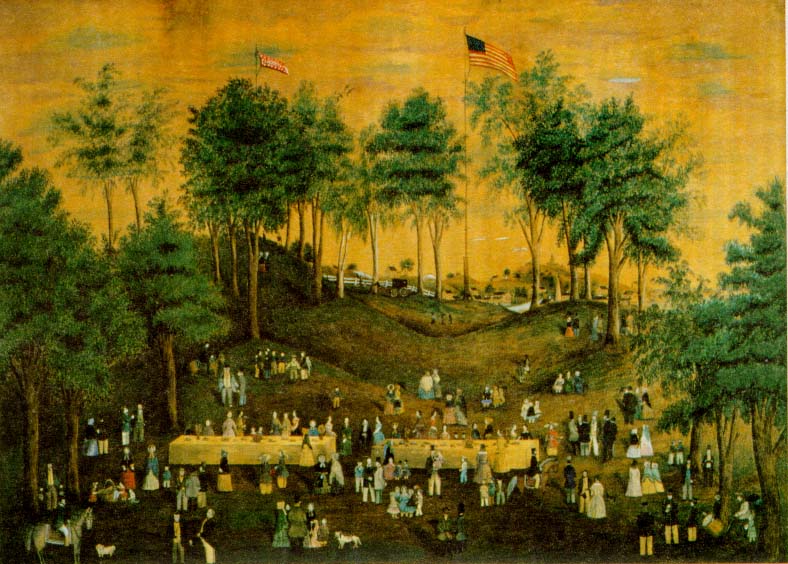
Yesterday, while sitting in the cafeteria, sipping the last of my tea, I scanned the seething mob of students around me. Pockets collected around tables, laughing. Some weaved through the rows of chairs, balancing plates. Most were focused, making beelines through the groups, mumbling excuses and smiling as they dodged bodies and carts, slipping into their own chair. Others took their time, stopping at tables, picking out apples like a chef at a farmer’s market.

Image courtesy of Vanderbilt library

Each person had a way of being. Some wore exercise clothes, others had prim button-down Oxfords, most shuffled through lines in pajamas. They had places to go, things to do–or an absence of things to do that they filled with conversations and distractions.

Having spent the morning reading William Langland’s Piers Plowman, an allegorical dream poem from the 14th century, I recalled one of the more famous lines. The narrator, a mysterious figure named Will, falls asleep and finds himself in the midst of a strange country. He describes it:

I saw a tower on a toft · worthily built; 
A deep dale beneath · a dungeon therein, 
With deep ditches and dark · and dreadful of sight 
A fair field full of folk · found I in between, 
Of all manner of men · the rich and the poor, 
Working and wandering · as the world asketh. 

Will then goes on to describe these “fair folk.” Some toil in fields, while “Wasters” devour their products in gluttony. Some seek after salvation, becoming monks and anchorites; others wear the habit as a means to a escape poverty and cheat others. Merchants sell wares. Pilgrims travel. Kings rule, judges judge.

The poem describes a diverse spectrum of life, from highborn to low, and sandwiched them between these two towers: the one on a hill, the other in a ditch. We later discover that the tower on the hill is the tower of Truth, a symbol for God and salvation. The tower in the ditch belongs to Wrong, providing a symbol for a wasted life and a doomed afterlife. As the poem progresses through it’s many “steps,” visions chronicle Will’s search for salvation through Truth.

In the cafeteria, I considered Will’s vision, particularly this “fair field full of folk,” buzzing, weaving, laughing, and living around me. Where are they all going? I thought. What are they doing? Why are they here? A surge of compassion welled up in me as these questions turned over in my head, rolling one to the other. I felt connected to everyone and detached at the same time, an outside observer with a unique stake in the observation.

Continue reading “Sisyphus and the fair field full of folk”

Time, art, and negative capability

I found my summers yesterday, in the fall, the whole of them blue-sky bound and strewn with wind. The oak and maple leaves weaved paths like a wandering needle as they settled to the ground, sun-curled and scattered. Meanwhile, the afternoon light shimmered in the shaking leaves like a mirage or a whispered poem.railway-autumn

Legs folded, I sat on a red Adirondack chair, looking at the backyard where I grew up. A few things were different. The white picket fence wasn’t there anymore. My brother and his friends had taken sledge hammers to it some hot day years ago, celebrated with beer, and piled up the boards like felled trees. A wire fence replaced it, rattling in the wind and squaring off the yard like the lines on a chess board.

My grandfather’s old table was gone too. It was old when I was a kid, gray like the weather had bleached the life out of it, while lichen and moss filled the cracks. I used to poke my finger through knotholes and wiggle it, like a worm, legs swinging too high to touch the flagstone patio where the table rested. I don’t know where that went. Maybe firewood. Maybe the soil behind the stand of hemlocks in the back.

There, on that old table, my neighbor and I built planes with computer paper from my dad’s old Macintosh. That’s gone too, or maybe buried somewhere in a dim corner of the basement, beneath rusted wrenches and coffee cans of old nails. Those days, before the wire fences went up, my neighbor would cut through our backyards and knock on our back door. We rarely called. I’d see him on our back step, his hair like a pile of feathers cemented under a baseball cap, and I’d steal the paper.

For the whole summer day, we’d sit out at that table, folding, and cutting, and throwing our planes when the wind blew. Sometimes they weaved, crashed, and tumbled on the ground like drunk pigeons. And other times, the wind caught the frail wings of our creations and carried them up into the blue, blue sky like birds chasing the sun, and we forgot that there were boundaries, forgot that there were fences and time limits.

Yesterday, sitting on that red chair, I found that joy again. I could see the table, the paper, and my neighbor folding planes beside me. Memories pooled in a puddle that never dried up. The images had a deep resonance, like the memory had bounced back from some distant place, bringing echoes as it returned. Time dissolved.

Then, the moment passed, as a gust brought a branch full of yellow leaves sailing down like a dozen paper planes, all weaving, and diving, and settling. I locked back into time again, like a wanderer suddenly brought back to the path.

Continue reading “Time, art, and negative capability”

What’s a Stoic to do? Emotions and Reason

We all have those moments when we say or do something foolish because our emotions “made us.” You decide to wait for the last minute to finish your work because you’d rather watch Breaking Bad, resulting in a last-minute panic. Or you lean in to kiss a friend because it “felt right,” only to be pushed away.frowny-face

If anything, emotions make life interesting.

But for the most part, we like to think that we’re rational decision makers. To make choices, we consider our options and chose the one that makes the most sense. We’re not willy-nilly about such things. And those foolish, emotion-based decisions are a rarity, not the norm. As Samuel Johnson once said, “We may take Fancy for our companion, but must follow reason as our guide.”

Moreover, Most of our public discourse assumes that we are rational. Our economy’s dominant theory is “rational market theory” and the framers designed our political system according to Enlightenment ideals of rational government. 

Philosophy, in particular has tended to focus on logic and reason. The Stoics are one famous example, but Socrates also prided logic over emotion, even to the point of death. Some exceptions exist, like Nietzsche and Rousseau, but they are precisely that: exceptions. 

Indeed, most of us like to think that we control our destiny with rational choice–whether its in buying a car or choosing a profession–but research shows we may not be as rational as we think.

Continue reading “What’s a Stoic to do? Emotions and Reason”

Update

Hey all,

I’ve been on the road for most of this weekend, so I haven’t had a chance to update the blog. I apologize. In the meantime, here’s a video. It’s a two-part video on Kierkegaard from a BBC documentary called Sea of Faith that covers a number of modern philosophers, including Kierkegaard and Wittgenstein, and how they approached faith in the modern era.

Enjoy: