A Short: “Fishing”

I take my notebook, slide up on a weathered log, and look. The sunlight rising and

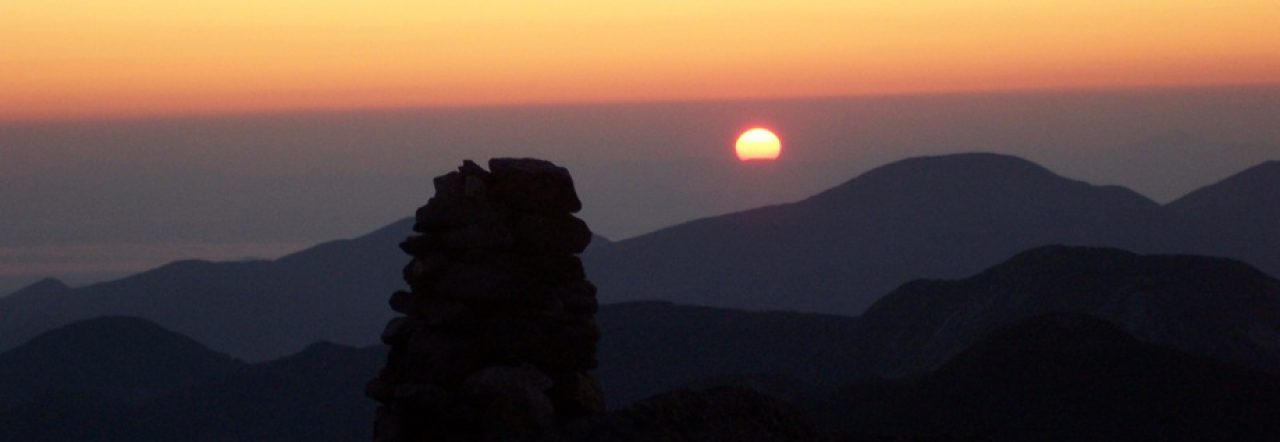
After sunset on the Allegheny River

falling on the river resonates, and a fisherman inches into the water. Running his fingertips along the bill of a stained, weather-beaten baseball cap, he adjusts it. I watch him hold his line above the water with the natural, unconscious care of a mother, peering into the river.

He juggles the line, grips the pole, and catapults the lure out like a lasso, letting it sail skyward and plop in the stream. As it flashes in the sun, being tugged and buoyed by the current, the fisherman reels it in, gathering it up and casting again.

As the quaking aspens shiver in the cold wind and golden air, the sun continues to set. Hills guard the horizon, motionless blinds to the sun’s retreat. The clouds slow their silent shuffling. Nature stills. I cross my legs and wait, resting on the log.

Hearing the husky rhapsody of geese, I look up. A flock rolls over against the clouds and flies toward the silhouetted hills, over the fisherman’s head.

The sun sinks lower and lower, and I shiver like the aspens. The heat evaporates in a warm poem of lush reds and oranges. The tongues on the river cease to sway with the current; the glints against the water cease to blind. The geese calls become eclipsed by distance, and the squirrels nestle into their nooks for the night. Reeling in the bobber, the hook, and the spider-thread line, the fisherman holds the rod a bit and sighs.

Winking over the mountains, the sun vanishes, leaving the residue of its brilliance lingering like a faded photograph. Its fiery hues subside into shades of purple and of blue.

The fisherman comes to life and takes a final cast. In time, he reels it in, wades out onto the rocky riverbank, and leaves without his catch. Closing my notebook in the sinking twilight, I leave with mine.
Thoughts on the Real World

My life continues to truck forward, as long-term projects gain roots. I’m not a very

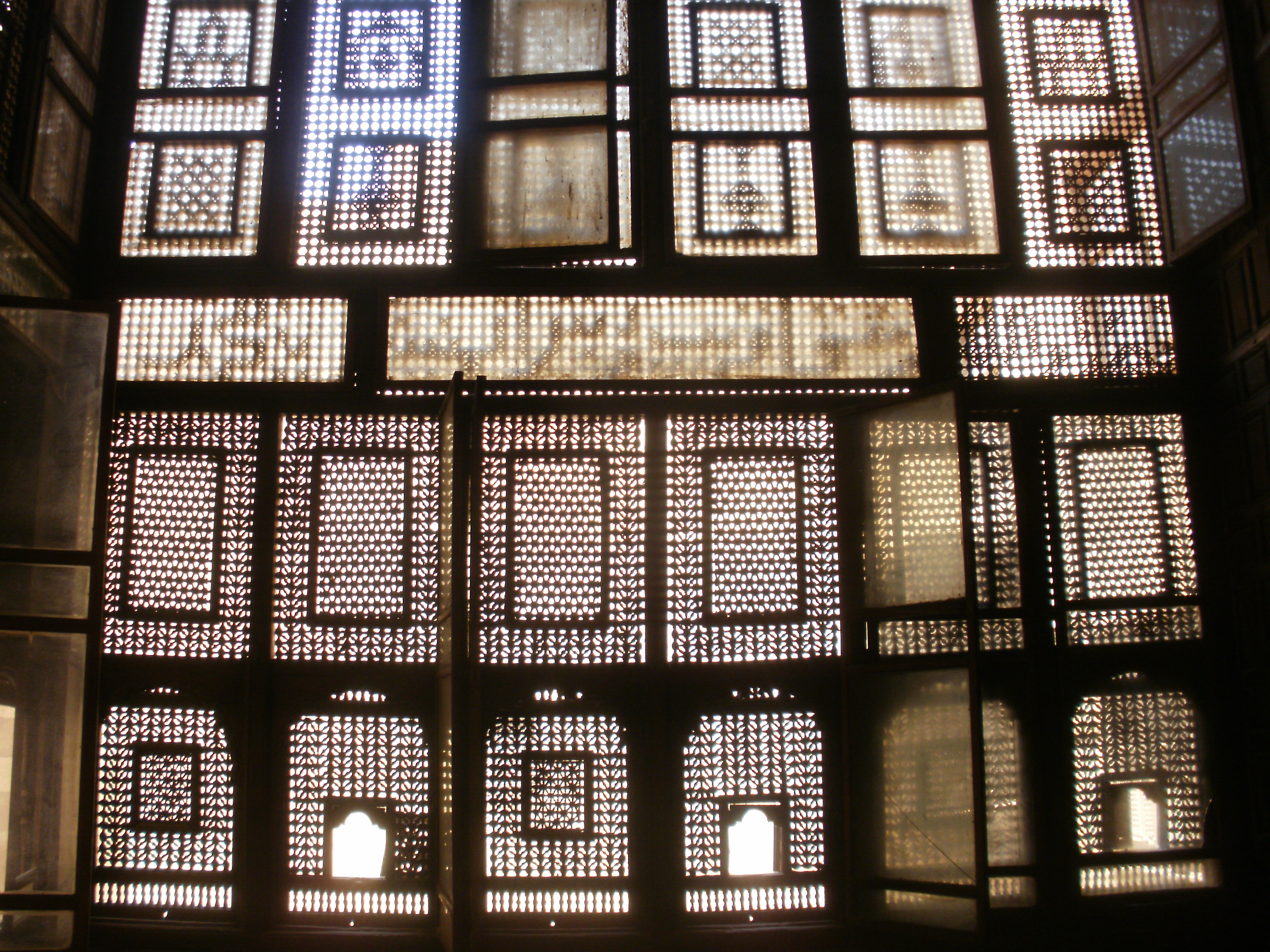
Looking through a traditional mashrabiya, photo by Brett

exciting person. On a scale from one to ten, I crop up somewhere in the middle. Right now, I’m living at home–yawn–researching philosophy PhD programs–super yawn–and brushing up on personal finance and fitness as I set out to join the “real world” with whatever jobs and internships can sustain me for a year–asleep yet?

But one week from today, I drive to the airport, battle through the baggage lines, and hit the air, sandwiched on a stuffy plane, on my second trip to Egypt to teach English.

I’m both nervous and excited.

Continue reading “Thoughts on the Real World”

The Good Life

opulence
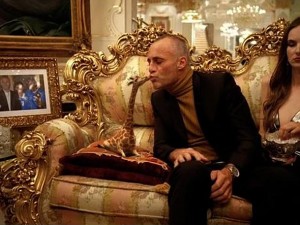
Miniature giraffes and gold-encrusted chairs clearly mean the good life.

What many people consider creativity doesn’t occur in flash of sudden brilliance. A Mona Lisa doesn’t leap from the brush. In Search of Lost Time doesn’t write itself. Maybe sometimes, but not often. Most creative people slog through long hours, laboring without much inspiration, until their little efforts accumulate into a sizable project.

As French writer Albert Camus put it in an essay on French novels, “Works of art are not born in flashes of inspiration, but in a daily fidelity.”

One can never underestimate the sustained effort of a single person. But a person needs a direction first. Simply running and working without direction leads nowhere. Like a dog chasing its own tail or a hamster sprinting on its wheel, undirected effort–no matter how hard it is–remains undirected and fruitless.

One needs something to structure effort, like a goal or even a way of life. In many ways, this was once the role of philosophy.

Continue reading “The Good Life”

Feeling “at home”

I spent the last three days traveling to Boston with an old friend and his girlfriend, House picturescouting for apartments. They’ll both be PhD candidates in the fall–one at B.U. and the other at MIT. My old friend called me about a month ago to catch up, and we decided it may be neat for me to move in with them.

I didn’t get into the MFA programs I applied to last winter, and the prospect of a gap year living with my parents at home as I applied to other programs didn’t seem pleasant. My friend agreed. Boston would have plenty of people, schools, and opportunities to explore. I’d be out of the house, living in the world.

The plan was to find a two-bedroom in Cambridge area for a reasonable price. Turns out, it wasn’t that simple.

Continue reading “Feeling “at home””

Dreyfus and Magee: Phenonomology and Existentialism

This week, I’ve been watching these 1980s videos with BBC host, author, and thinker Bryan Magee.

Each one is five parts, coming in at about 45 minutes, and is a great watch. Magee does a good job putting difficult concepts into fairly ordinary language and summarizing things.

I’ve uploaded one on phenomenology and existential philosophy, although most of it deals with Heidegger.

All of the videos are good. You get to see articulate, intelligent people discuss dynamic topics with extremely tallow-colored backgrounds! (What could be better than that?)Enjoy!

Making the Switch

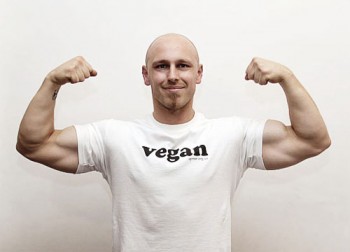
Dave glances at my plate of spinach, beans, and brown rice as I eye the meatballs Not me... yetnestled in his spaghetti.

“You eat like a rabbit,” he says.

“Rabbits don’t generally eat garbanzo beans or cooked rice,” I reply.

“But still…”

As the conversation changes, he forgets my rabbit food, and I forget his meat. In the end, it doesn’t really matter what we have.

According to a 2008 study by Harris Interactive Service, about 7.3 million people are vegetarian in the United States—that’s about 3.2 percent of the population. Most are young, from middleclass backgrounds, and live in the Western or Southern regions of the United States. I’m one of them, a skinny, grain-eating, tofu-crunching middle-class American.

Nothing radical there.

We vegetarians eat about three meals per day—just like our omnivorous counterparts. We don’t all use organic paper and beet-juice ink or attend regular services at hippy churches on weekends.  Most aren’t PETA extremists who throw red paint at fur coats and survive on seaweed and unpronounceable grains. Perhaps our farts smell a little bad sometimes, or we’re be a pain to take out to dinner, but most of us are pretty normal. At least I think so.

Still, some people berate me with things like, “why the hell would you do that?” or “we deserve to eat animals,” or my personal favorite, “you’re going to die because you’re not getting enough protein.”

Others aren’t so malicious. They just don’t understand, or grow up thinking that all vegetarians fit the same model. But we are all very different and have very different reasons for becoming vegetarian.

Continue reading “Making the Switch”

Aphorisms

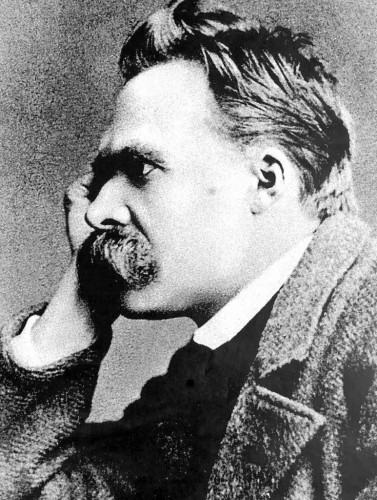
Call this a sequel to my last post. I graduated yesterday, and have been busy moving, nietzsche-377x500unpacking, and processing my final weeks. So I haven’t had much time to research or write anything new.

Still, in the midst of it, I’ve been reading Nietzsche. Along with his break with Wagner in 1876, Nietzsche took leave from his post at the University of Basel. With his freedom, Nietzsche wrote a series of aphoristic works, beginning with Human, All too Human and ending with The Gay Science.

I just finished reading excerpts from the set of them.

Before these works, Nietzsche wrote essays or reflections, The Birth of Tragedy being the main example. After, his work retained this aphoristic bent, even when he resumed a more traditional essay style, as in Beyond Good and Evil. The style may owe much to the German philosopher Schopenhauer and the French tradition that predated Nietzsche, which influenced his work a great deal, but he made it his own with his sharp wit, dynamic language, and unique philosophy.

Influenced by Nietzsche, I figured I’d share a few aphorisms I’ve gathered during college. I’ve heard some, borrowed others from books, and made up a number. In no particular order, here are a few:

Continue reading “Aphorisms”

Clichés and images

In seven days, I put on a cheap, fire-hazard of a cap and gown, shuffle across the Charlie Brown One Nightoverpopulated floor of a gym, grab a mass-produced sheet of sepia-toned paper, and graduate–along with thousands of others in the coming weeks. In the meantime, I have a lot to think about.

I auditioned to be one of the commencement speakers. I don’t think the committee appreciated my attempt to deconstruct the clichés that crowd most ceremonies–those lovely nuggets of wisdom we pocket heading out into the “real word” to find a job because “we’re the future” and “our education is only the beginning.”

“I didn’t think we’d make it,” but we did. Hopefully we’ve “found ourselves” and “remember where we came from” while we’re at it.

I think I’ve made my point…

Clichés are the Easy Mac of our language: artificial, devoid of nutrition, but easy to make. No one really likes clichés, but we use them at important events for well-trod expressions and cheeky adages. They’re quick and malleable. Few of us take the time to truly consider what the event means, or if we do, we can’t find the right words. There’s too much going on.

This is my problem.

I can feel the day approaching, but I don’t know what it means. And I’m not the sort of person who can blithely steps off into mystery like a trust fall. I need some clarity.

Continue reading “Clichés and images”

Almond Blossoms

Another excerpt from my memoir, a polished-up and expanded older piece: almond blossom

On Sunday, Jun. 24, Egypt announced its first democratically elected president: Muhammad Morsi. It’s a milestone for any nation. Egypt is no exception.

I ‘d like to say I was huddled in some austere bunker nibbling rations as a radio murmured Morsi’s name through static, or that I was near Tahrir, watching a sea of faces, cheers, and gun shots rattle in the air as people celebrated the pick.

They’d make good stories.

Instead, I was taking a nap. From my window, I heard someone shout Morsi’s name from the street, so I cracked my lids open to decipher the echoes. When no one else shouted, I closed my eyes again.

Continue reading “Almond Blossoms”