An older piece that used to be another blog that is, alas, no more. I found it again today, made some edits, and decided to post it, being an old favorite of mine. Enjoy:
I sat around reading warning labels as a kid. Maybe some kids played basketball or kickball. Nope. Not me. That’s where I first learned French.
The words were musical. Though they burbled from my lips in coagulated lumps of mangled forms, I sensed the potential for improvement. For lush vowels and fluid links. Of course I had no idea what they meant, either. Attention! I said to my dad. Regardez! Gonflable! The last one means airbags, in case you’re wondering.
I started taking French in middle school. My teacher was a lean woman with a face like Edith Piaf and frenetic red hair that never changed, as is suspended in perpetual clothes-folding static. A lyricist of French grammar, she sang songs about the imperfect tense to the tune of jingle bells, and if we misbehaved, she swore in Greek under her breath.
As the American Transcendentalist Ralph Waldo Emerson once wrote (or so the various quote websites have us believe),“I cannot remember the books I’ve read any more than the meals I have eaten; even so, they have made me.” So it is with me.
A confirmed bibliophile, I may not be a surprising case, but I’ll never forget one of my co-workers at Lowes. An older man with rough hands, worn blue jeans, and work boots, he rasped contracting stories in a cigaret-stained voice about “idiots who didn’t know shit about construction.”
But one day, during his break, when I was reading Don Quixote over a turkey sandwich, he sat down and started talking about books. Books he read in school, like Hemingway, Austen, Faulkner, and Dickens. Books his wife read, like Jody Piccoult and John Grisham. Books his father gave him, worn how-to manuals and beat-up hardcovers gathered from outdated encyclopedia sets.
“I miss reading,” he said, leaning back in his metal fold-out chair. “I miss the stories.”
Soon, I went back to the registers, thinking about it. Probably nothing would happen. But a few weeks later, he came in and pulled out a worn copy of the The Old Man and the Sea.
“My favorite,” he said. “I’ve never forgotten this book.”
Hey all, I think I’m finally back from my hiatus. I apologize. I had a busy semester, coupled with a persistent clinical depression. But now, with summer here, I’m ready to start posting again.
Me this summer. [image from genio]I figured this blog will offer a great chance for me to work through some summer projects. In addition to my summer jobs and the day-to-day concerns of life, I have three things in particular I’ve been working on:
1. My thesis groundwork: I’ll be writing about composition theory, ideally focusing on critical pedagogy, and where critical pedagogy intersects with new digital concerns, like online classes, content generation, and multi-media writing (or multimodal composition, to use the fancy term).
What is critical pedagogy? Probably a good topic for a later post. But in general, it’s an attempt to use education to empower marginalized or “oppressed” individuals and populations. One of its foundational texts–if not the foundational text–is Paulo Friere’s Pedagogy of the Oppressed (1968, trans. 1970),where Friere argues for a more “humanizing” role for education, breaking the “culture of silence” created by traditional education and the oppression for the poor that it creates.
2. Writing about Egypt and the Egyptian Revolution: My major creative project for this summer will be an exploration of Egypt and the turmoil that has haunted it the past few years (or longer, really), weaving the personal, the journalistic, and the academic. It’s a mutual project with another friend, who also has a lot invested in the Middle East and the Arab Spring. I hope to begin by looking at some of my older pieces, reading the news in depth, and building from there.
3. Figuring out the next step: I graduate next May, with my English M.A. From there, I’m not yet sure what I’m doing. I may go straight to PhD, in either rhetoric and composition or philosophy. I may stay home, trying to make some money as I figure things out. I may also look at AmeriCorps, Fullbright, or Teach for America. As of now, these are all viable possibilities, requiring research.
How these three projects will come together remains equally uncertain. I can already see a few links worth exploring. I’m looking forward to writing again. In the meantime, have a good day.
[Image from North Dakota State University]I had plans for another post today, in light of a fellow blogger nominating me for a Liebster Award. But a night at a Franciscan retreat center has prompted me to write something a little different.
Since I first learned about Buddhism in high school, I’ve been interested in it. I still remember filling out answers to the Four Noble Truths on quizzes in the front of my ninth grade class, alongside sanskrit terms.
Since then, I’ve come a long way.
An independent study in Buddhist philosophy, numerous books, a few meditation retreats, and a daily meditation practice that lasted a few years have all increased my awareness in Buddhism, especially Zen.
But two winters ago, my interest culminated in a three day retreat at a Zen monastery in the Catskills. I still recall the final day of the retreat. After the exhausting stints of 5 a.m. zazen meditation and work projects–where I silently cracked over a hundred eggs–we concluded with a koan and a dharma talk by the sensei. The koan was about the diamond sutra, a central text in Mahayana Buddhism, called “diamond” because a true understanding allows one to cut through illusion and ignorance like a diamond.
The sensei brought up the ending of the sutra itself:
“So I say to you – This is how to contemplate our conditioned existence in this fleeting world:”
“Like a tiny drop of dew, or a bubble floating in a stream; Like a flash of lightning in a summer cloud, Or a flickering lamp, an illusion, a phantom, or a dream.”
“So is all conditioned existence to be seen.”
Thus spoke Buddha.
Building on the Buddhist notion of impermanence–that life contains unceasing flux and change–the sensei stressed our need to “leave no footprints” as we moved through life, negotiating the tricky balance of “equanimity,” a peaceful abiding between aversion and desire that does not fall into indifference. Life is indeed brief. It is full of change and interdependence. Like a dream, things come and go.
Sitting in zazen position, legs folded and “heart open,” I felt a change. Buddhism traditionally has different levels of understanding, ranging from the merely intellectual to the silent but sure understanding of an Enlightened one. Somewhere between lies a heart understanding, where one truly “feels” a new insight that cannot fit into words.
In the midst of the dharma talk, I felt that insight.
We celebrated my brother’s 27th birthday this past weekend. Twenty-seven; six-ish years my senior. He has an apartment that he shares with his 5-year-old Golden Retriever. He’s a success story; an internship he had during his undergrad summers morphed into a career. He’s single. He watches seasons of TV shows on Netflix, takes the dog out for walks and visits friends. He’s happy.
In fact, I’ll never forget what he told me during my birthday celebration a couple months back when I told my family about a guy who wanted to take me out on a date.
“It’s okay to be single for awhile, Em,” he said.
You may have read this post a few months back. I wrote that 89 days ago. I’ve kissed six different guys over these past 89 days, ultimately (drunkenly) sleeping with two of them. I looked up the word “slut” in the dictionary and have concluded I am neither promiscuous or slovenly –– I’m merely going for the men who seem to readily give me attention. “Promiscuous” implies I’ve had sexual relations with each of these six guys and that is simply not the case.
Sounds about right
Still, in the process, I’ve lost real feelings. So imagine me a little over a month ago when a really nice, respectable guy began giving me attention. I went a little nuts and it scared me shitless. He scared me shitless. My friends told me they could tell how much I liked him by the speed of my talking and the high-pitch tone my voice adopted. That scared me, too. Now I think I’ve scared him away. Real smooth, Em, ya dummy.
I’ve realized that being rejected really depresses me. I go into full-blown nihilism mode and lose track of everything I’m working for, everything I’m trying to be. I’ve lived under the mindset of what good is anything if I have nobody to share that ‘anything’ with? for a very long time, leading to never watching movies by myself or going shopping for fun by myself.
I need to get back in touch with the adventurous version of myself I found while living away from home last summer for an internship. My brother’s found it. I’d like to join him. I’d like to be happy, learn from my past mistakes and begin a new relationship when I’m good and ready for it. Too many of my insecurities rule my life and my way of thinking –– I need to squash them before I begin anything new.
I moved back into school today to start the next semester. A new semester has always had more of a “New Year” feeling than actual New Years, since school provides a ready-made change of scenery and lifestyle.
[image from http://uuspringfieldvt.org/%5DThat said, I try not to treat “resolutions” like “revolutions.” Often, this time of year–especially the first week or two at the start–gets annoying. Everyone has a hundred hopes, impossible plans, and vague outlines, all aimed at turning them into a new person. I respect the hope and spirit that goes into this, but as with many things, the hope outshoots the reality. Would-be gym-goers, dieters, meditators, and volunteers slump back into their old habits, like a well-worn couch, and lose momentum until “next year.”
It’s happened to me a dozen times. To people I know. To people I don’t know, but see peppering the gym this time of year, then slipping away like a trial product that never goes big. According to a recent study by the University of Scranton, used by Time and Forbes, only about 8% of those who try a resolution say they usually make it.
Other research has different numbers, but the conclusion seems pretty clear: resolutions don’t come easily.
One thing that may hamper our ability to reach our goals is an inherent limitation to self control. Recent research seems to indicate that we can only use so much self control before we succumb to temptation. Or, at the very least, we get more likely to succumb. That pizza, ice cream, and beer hits us much harder after a long day at work.
Sometimes we even rationalize it, saying “Well, I worked hard today and kept up my diet, so I deserve a little something.” The psychologist Kelly McGonigal, who studies willpower, critiques this particular tactic that she calls “moral licensing” in an interesting video.
Moreover, moral licensing and limited self control aren’t the only things that impede resolutions. The stubborn resilience of bad habits, our inability to visualize future selves, competing priorities, guilt-saturated procrastination, and more set strong roadblocks between us and progress.
First of all, happy New Year. Perhaps 2013 was a down-and-out scrape to get through or an idyllic gallop on the pig’s back. Whatever the case, it’s ended and a new window aglow with resolutions awaits. But since New Years resolution posts have already flooded the internet, I wanted to write about another timely topic: being an introvert during the holidays.
I don’t handle holidays well. The noise, social obligations, tedious traditions, ostentatious meals, and blitzkrieg shoppers exhaust and overwhelm me. Each year as Christmas crawls around, my stomach knots up with dread. And the past few years I’ve reached saturation points, where at the end of a long string of busy days, I crash like stretched out spring ripping back into place. I cannot put on the act any longer.
With the holiday season on the wane, I can say that I survived this year. It took an effort, but in the end, this was the best holiday season I’ve had in a while. Perhaps some of you weren’t so lucky. In that case, here are a few ideas that helped me.
For a while now I’ve been wanting to write an essay about end tables, coat pockets, bag bottoms, and storage cabinets. We often forget these clutter-gathering crevices of our individual lives, until we fish through an old coat and pull out receipts, candy bar wrappers, and a dollar or two tangled with some coins. These seemingly random articles, disused and long-forgotten, once played a role. We bought something, earning that receipt. We ate that candy bar and couldn’t find a trash can. We pocketed that loose change.
Such odds and ends reveal our former lives, providing a time stamp for our days and habits, whether they are the books and jewelry on our end tables, the unused casserole dishes in our cabinets, or the grit and at the bottom of our bags. Our past selves leave traces. And just as archaeologists dig through the rubbish of past cities, we can dig through our own lives.
But unlike archaeologists, we don’t normally care about these random bits of rubbish. We crave the big picture–the narrative that collects the pieces, not the pieces themselves. Perhaps a few things transcend this bias, like a stone from our childhood house, a ticket stub from a memorable movie, or that framed first dollar a business might display. We infuse these random pieces of existence with meaning and display them, like a museum of our lives.
But in themselves, they are mere physical objects. That dollar passed trough hundreds of indifferent hands before it fell behind that frame. Its “it-narrative” probably included stints buried in coat pockets or lost in the wrappers and rubbish on the bottom of a bag. Maybe it fell behind a bed. Maybe it went from a lemonade stand to a store clerk to a strip club. That dollar connects us to hundreds of other lives–including our past selves–but its average everydayness camouflages it.
I’ve been stuck lately. It happens to all of us. Now and then, we feel like Dante, who opens his Divine Comedy in the midst of an existential crisis:
IN the midway of this our mortal life, I found me in a gloomy wood, astray Gone from the path direct. . .
Fortunately, most of us don’t need to walk through hell and purgatory before we reach the heaven on the other side. And we don’t need to need to wander between dream vision and sleep, gradually learning how to “do well” like William Langland’s protagonist in Piers Plowman.
But what these texts from the Middle Ages note remains true: sometimes we lose our momentum. Like a turtle pushed out to the center of a frozen pond, unable to gain footing and reach the shore again, we feel lost, adrift, and powerless. Sometimes, this makes us stiff and wooden. As Albert Camus writes in his essay “Return to Tipasa“:
A day comes when, thanks to rigidity, nothing causes wonder any more, everything is known, and life is spent in beginning over again. These are the days of exile, of desiccated life, of dead souls. To come alive again, one needs a special grace, self-forgetfulness, or a homeland.
Indeed, sometimes we really do need to come alive again.
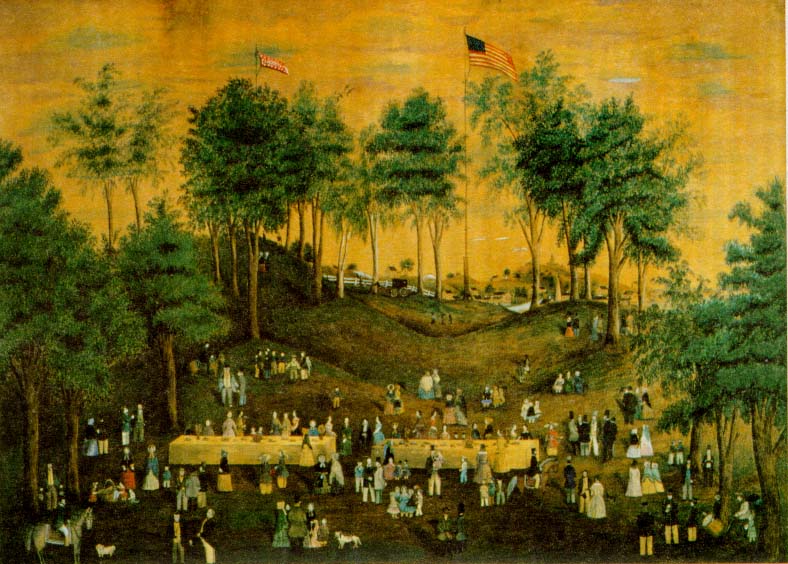
Yesterday, while sitting in the cafeteria, sipping the last of my tea, I scanned the seething mob of students around me. Pockets collected around tables, laughing. Some weaved through the rows of chairs, balancing plates. Most were focused, making beelines through the groups, mumbling excuses and smiling as they dodged bodies and carts, slipping into their own chair. Others took their time, stopping at tables, picking out apples like a chef at a farmer’s market.
Image courtesy of Vanderbilt library
Each person had a way of being. Some wore exercise clothes, others had prim button-down Oxfords, most shuffled through lines in pajamas. They had places to go, things to do–or an absence of things to do that they filled with conversations and distractions.
Having spent the morning reading William Langland’s Piers Plowman, an allegorical dream poem from the 14th century, I recalled one of the more famous lines. The narrator, a mysterious figure named Will, falls asleep and finds himself in the midst of a strange country. He describes it:
I saw a tower on a toft · worthily built; A deep dale beneath · a dungeon therein, With deep ditches and dark · and dreadful of sight A fair field full of folk · found I in between, Of all manner of men · the rich and the poor, Working and wandering · as the world asketh.
Will then goes on to describe these “fair folk.” Some toil in fields, while “Wasters” devour their products in gluttony. Some seek after salvation, becoming monks and anchorites; others wear the habit as a means to a escape poverty and cheat others. Merchants sell wares. Pilgrims travel. Kings rule, judges judge.
The poem describes a diverse spectrum of life, from highborn to low, and sandwiched them between these two towers: the one on a hill, the other in a ditch. We later discover that the tower on the hill is the tower of Truth, a symbol for God and salvation. The tower in the ditch belongs to Wrong, providing a symbol for a wasted life and a doomed afterlife. As the poem progresses through it’s many “steps,” visions chronicle Will’s search for salvation through Truth.
In the cafeteria, I considered Will’s vision, particularly this “fair field full of folk,” buzzing, weaving, laughing, and living around me. Where are they all going? I thought. What are they doing? Why are they here? A surge of compassion welled up in me as these questions turned over in my head, rolling one to the other. I felt connected to everyone and detached at the same time, an outside observer with a unique stake in the observation.

 kickball. Nope. Not me. That’s where I first learned French.
![Me this summer. [image from genio]](https://backyardphilosophy.com/wp-content/uploads/2014/05/busybeaverbook.jpg)


![[image from http://uuspringfieldvt.org/]](https://backyardphilosophy.com/wp-content/uploads/2014/01/mme-reach-for-the-stars.jpg)


 Backyard Philosophy