
This is a blog about “backyard philosophy,” a name I made up one day in the shower. 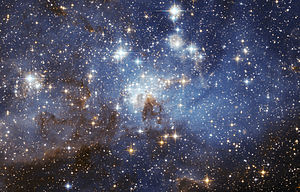 But I confess I stole it from Aristotle. Adrift in the boundless arguments and counter-arguments in his Metaphysics, I found a passage about philosophy’s humble birth. From its words, I’ve crafted my worldview and bound up my hopes. Although it’s a bit dense, I want to copy the complete passage here:
That it is not a productive science is clear from a consideration of the first philosophers. It is through wonder that men now begin and originally began to philosophize; wondering in the first place at obvious perplexities, and then by gradual progression raising questions about the greater matters too, e.g. about the changes of the moon and of the sun, or about the stars and about the origin of the universe. Now, he who wonders and is perplexed feels that he is ignorant (thus, the myth-lover is in a sense a philosopher, since myths are composed of wonders); therefore it was to escape ignorance that men studied philosophy, it is obvious that they pursued science for the sake of knowledge and not for any practical utility. (Metaphysics, Book I, part 2).
I read these words with a hushed sense of awe because they immediately brought me back to my early adolescence. Sitting beneath a broad canopy of stars in my backyard, my friends and I talked. And between the intervals about girls and school-wide politics, we hit deeper questions. They were still limited, but we stumbled through speculation on God or purpose in our lives, why we do things we do, our identity to ourselves and the world. Personal and simple, the issues nevertheless had the same philosophical underpinning that span Plato’s dialogues and Camus’ novels.
 Backyard Philosophy