Alan Watts on a Sunday

I need to get some serious work done on a few things today, so I don’t have time to type up my usual post–I swear I’m getting better at this, haha–but rather than leave you with nothing, I wanted to post a video with a spattering of Alan Watts lectures.

Alan Watts was a notable (though some would say notorious) Zen practitioner who dabbled in a variety of other fields, from philosophy to physics. Born in 1915 and dying in 1975, he spent much of his life lecturing and writing, becoming a central figure in the counter-culture movements of the 60s and 70s. His thoughts are often iconoclastic and his metaphors can be pointed, so few read Watts indifferent or unchanged.

A wealth of Alan Watts lectures exist on YouTube. Some users pair them with music and inspiring images or splice together clips of crowded city streets and airy mountaintops. This particular one is a short collection of meaningful excerpts animated by the creators of South Park. Some of the excerpts are quite insightful. Others are a little more out there, depending on your taste. But on the whole, they do give a brief view of Watts’ style and insights.

I hope you enjoy this, question it, and enter the week with some new ideas. Cheers.

What’s a Stoic to do? Emotions and Reason

We all have those moments when we say or do something foolish because our emotions “made us.” You decide to wait for the last minute to finish your work because you’d rather watch Breaking Bad, resulting in a last-minute panic. Or you lean in to kiss a friend because it “felt right,” only to be pushed away.frowny-face

If anything, emotions make life interesting.

But for the most part, we like to think that we’re rational decision makers. To make choices, we consider our options and chose the one that makes the most sense. We’re not willy-nilly about such things. And those foolish, emotion-based decisions are a rarity, not the norm. As Samuel Johnson once said, “We may take Fancy for our companion, but must follow reason as our guide.”

Moreover, Most of our public discourse assumes that we are rational. Our economy’s dominant theory is “rational market theory” and the framers designed our political system according to Enlightenment ideals of rational government. 

Philosophy, in particular has tended to focus on logic and reason. The Stoics are one famous example, but Socrates also prided logic over emotion, even to the point of death. Some exceptions exist, like Nietzsche and Rousseau, but they are precisely that: exceptions. 

Indeed, most of us like to think that we control our destiny with rational choice–whether its in buying a car or choosing a profession–but research shows we may not be as rational as we think.

Continue reading “What’s a Stoic to do? Emotions and Reason”

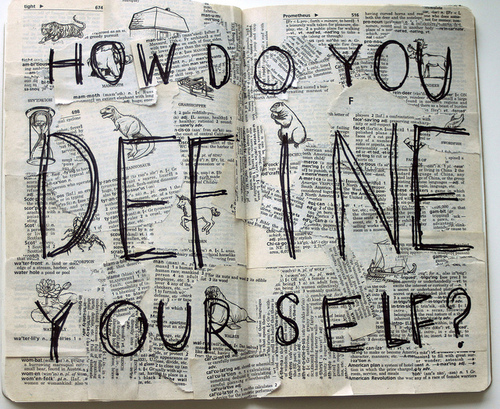
“I Am”: A sense of self

Image courtesy of Forbes.com

In 1841 a little-known English poet escaped an asylum and wandered back to his childhood home in the farmland of Northamtonshire, convinced that he was married to a woman who had died three years earlier.

The poet, John Clare, said that separation from his childhood home–its fields, cottages, and the small taverns where he worked–had made him increasingly alienated from his own self. His later poems reflect his fixation. In one he claims that he was once Shelly and Lord Byron. In his most famous one, “I Am,” he reflects on his isolation:

I am—yet what I am none cares or knows;

My friends forsake me like a memory lost:

I am the self-consumer of my woes—

They rise and vanish in oblivious host,

Like shadows in love’s frenzied stifled throes

And yet I am, and live—like vapours tossed.

Isolated and unknown, Clare clings to the few activities, memories, and passions that adhere to his fragmented self. This raises an important question: Who is this “I Am” Clare speaks of, separated from his roots? Who is an I? What is a self?

Continue reading ““I Am”: A sense of self”