Maps

So I am neither dead nor lost in some Tron-like universe, detached from reality. I’m treasure_map__skull_island_by_pumpkinjack6-d30me8qjust very busy: a starring role in a musical, an honors thesis, and the day-to-day tasks of tutoring and studying. Still, I apologize for my absence.

That said, I don’t have anything new today. But I figured I could copy-and-paste part of my honor’s project, a memoir that also involves French writer Albert Camus called Coming of Age with Camus. It’s coming along, but still needs work. Call it a peace offering.

Here’s the first chapter, Maps:

Continue reading “Maps”

Some thoughts on theater

Two weeks ago, I went to a college theater festival in Maryland. Surrounded by crazy

Photo from the festival: a few of us in Midsummer Night's Dream Costumes, designed by Emily West
Photo from the festival: a few of us in A Midsummer Night’s Dream costumes, designed by Emily West (Far right)

theater types, plays, and workshops–including one that taught how to use a feather to achieve inner balance–the nine of us who went had theater on the brain–still do, I suppose.

Since ninth grade, when I acted in my first play, theater has remained an integral part of my life. Many of my friends have been actors and techies, and my evenings–sometimes weekends–often get swallowed by it. Whenever I can, I try to see plays.

It’s a fascinating art. Is has the fragility of music and the visual complexity of painting, kinetic and dynamic like dance, yet grounded in the permanence of writing. It uses space and resonance in ways a film never could and the vocalization of everyday poetry.

And it’s immediate, like life.

Continue reading “Some thoughts on theater”

Dredging the self

This Monday, I dug up a crate of my old writing from my parent’s cellar. Journals,

Ah yes, my high school self...
Ah yes, my high school self…

poems, old short stories, math notebooks lined with marginal musings. Anything I could find. I fished love letters from my closet and photographs from my mothers’ desk, piling it all up like autumn leaves on my bedroom floor.

For a few days, I dug trough the stack.

OK, so “stack” may be a little exaggerated. But it’s a significant pile. I’m reread it all to revisit those hazy landscapes of my not-too-distant childhood, verifying events and reviving old memories, all in a pointed search of self.

I’m writing a memoir for my Honor’s project. I know I could half-ass most of it. But I’d get nothing from that besides reams of pleasant-sounding pulp. I don’t want that.

I’m after my own self, after all.

Continue reading “Dredging the self”

Sunset on the Allegheny River

I went for walk tonight along the river that runs behind the school. The sun was setting

A picture of the trail just after sunset.

over the hills, making me think of a piece I wrote four years ago during my freshman year. At the time, I didn’t know anyone, so I would sit by the river often, writing and reading Aldo Leopold, Khrishnamurti, and Thoreau.

The silence and solitude of the path still moves me. I think the piece captures that well:

Continue reading “Sunset on the Allegheny River”

Own it: Authenticity

Rain clouds loomed outside as I sat across from my spiritual advisor, Br. Robert, in the simple room. “You have to own it,” he said. “You’re an artist. Own it.”

He talked about his early years as a friar. The other friars didn’t think much of his penchant for painting, forcing Br. Robert to sacrifice his own time, money, and space for it. At one point, he even tried to suppress the urge because it interfered so much with his religious duties. Just as Thomas Merton complained about his “double” as a writer pestering him during his early years with the Trappists, Br. Robert struggled with the artist fighting for expression from within.

When he left the friars–and the Catholic Church for a time–Brother Robert lived on Skid Row, trying to make his work as an artist. He found a deep, resonant calling. Surviving on rice and beans–tuna fish, when he could afford it–he scraped by, but his art taught him his vows better than his stint with the friars. Poverty. Obedience. Chastity. The words clarified as the years wore on.

For Br. Robert, devotion to art proved a devotion to God.

“Own it,” he had said. The words made sense as he said them, but didn’t resonate. As the years has pass, the words Br. Robert and I shared deepen and clarify, like his vows. Tempered and stretched by experience, his wisdom grows. I understand him now.

Continue reading “Own it: Authenticity”

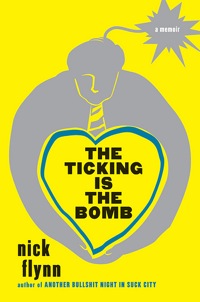
The Ticking is the Bomb Review

Image
The Ticking is the Bomb, as seen on Amazon.com

I propped open The Ticking is the Bomb by Nick Flynn while sitting on my bed in a Zen Monastery, day two of a spiritual pilgrimage. It’s an older book, coming out in 2012, but a teacher recommended it.

The day started just before 5 a.m., when some monk jangled a handful of bells outside the door. At the time, I imagined he took a sadistic joy in it.

“Hey, here’s a crammed group of exhausted travelers—how can I give a good start to the day?” he probably thought. “Loud bells!”

Rubbing my head, I greeted the others with a nod.

Night still drenched the windowpanes in reflection as we entered the meditation hall. I crossed my legs into a half-lotus and a bell pitched the space into silence, broken occasionally by the rattling radiator or the rasp of a stuffy nose.

I wrestled with my thoughts for the next hour or so. The rest of the day blurred as we moved from one lecture to another and a silent work call. I stayed in the kitchen, cracking 160 eggs for a massive casserole.

Thirteen hours after waking up, I was choking on Zen. Flynn’s tense prose challenged the backdrop of silence that permeated the day. But I needed it.

Continue reading “The Ticking is the Bomb Review”

Words

Some days all I can do is cling to my art. I feel my world withdrawing, but my fingers rib red lines along words as Imagethey grasp and hold and strain. It’s more feeling than reality, but it keeps me moving past my insecurities. The past few days, a quote by Albert Camus has lingered on edge of my thoughts, flashing now and then into focus:

Life continues, and some mornings, weary of the noise, discouraged by the prospect of the interminable work to keep after, sickened also by the madness of the world that leaps at you from the newspaper, finally convinced that I will not be equal to it and that I will disappoint everyone—all I want to do is sit down and wait for evening. This is what I feel like, and sometimes I yield to it.

I feel heavy.

Continue reading “Words”

Novel

I started on my novel again Monday. I began it during my winter break from mid-December to mid-January, then Imagetook a hiatus during school. I’ve been home for summer for about a week, but spent most of last week finishing final essays and creative writing assignments for classes and proofreading a literature magazine.

It felt great to hit the page again.

I’m going back to the beginning, editing to where I left off and resuming with all the threads in mind. It’s about 50,000 words now, which is about the length of The Great Gatsby. I aim to make it about 100,000, the typical soft-cover length.

So far, working on the novel has been hard but rewarding, especially since I’m neither a professional writer nor do I know what I’m going to do with it. But it begs completion. That’s enough.

Continue reading “Novel”

Non-economic labels

Image
from “Stealth of Nations,” a blog by Robert Neuwirth

I just finished Monoculture: How One Story is Changing Everything, a recent book by writer and researcher F.S. Michaels. She details how an economic view of the world shapes our lives at the expense of other views. The “economic story,” as she calls it, is a way of viewing the world that takes specific biases for reality: mainly that we’re rational individuals with selfish needs behaving in an indifferent market system.

Our world expects us to conform to this monoculture and we hardly notice its pervasive dominance.

It was a fascinating book, and I hope to have a review up this week, but I read it thinking of my own self-proscribed label as a “writer.”

Continue reading “Non-economic labels”

Philosophical Journalism

Philosophical journalists would be an interesting breed. I don’t mean bent, bearded men toting reporters’ notebooks and tape recorders stumbling across Capital Hill–although that would be interesting. Nor do I mean reporters jabbing politicians with barbs about how the latest bill violates Kant’s categorical imperative. Instead, I imagine people curious to see what other people think, people who like asking questions about our basic assumptions.

Today, I watched a documentary called the “Nature of Existence.” The filmmaker, named Roger Nygard, chronicles answers to those “big questions”–like the meaning of life–by interviewing people from around the world, including hard-core Indian ascetics, fiery evangelists, physicists, artists, and waitresses. Some dash off the questions with a humorous observation, others admit their own ignorance, and some weave stories substantiated by absolute conviction.

His methods are those of a journalist, but his focus is on first principles, the realm of the philosopher.

Scanning titles in the non-fiction and creative nonfiction shelves at bookstores, I realize modern readers still have a lot of questions. We like to pretend we are practical these days, zeroed in on the nuts and bolts of economics and applied science. But I feel we only use new disciplines to fill an age-old void: purpose and meaning.

Continue reading “Philosophical Journalism”