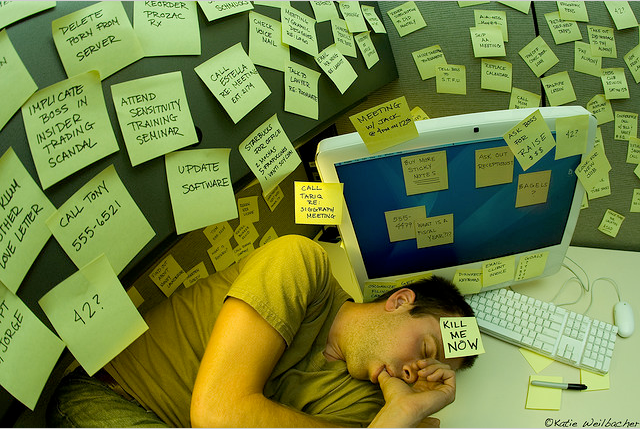
Humdrum aesthetics, ambiance, and everyday affect

I’ve been off lately. Like a typist with baseball mitts on or a table with uneven legs. Finishing up coursework, graduating, moving back to my parents to prep for the next phase of life, I’ve been recalibrating my humdrum “average everydayness,” to use Heidegger’s term.

Doing so has left me lurching, back peddling, and out of sorts. Fortunately, I’ve been riding it out well, even thinking about my daily driftings, dustings, and feelings as they fit the humdrum aesthetics of everyday life.

I like looking at life aesthetically, as this view implies the ever messy, artful, and personal position we have. While we often talk about “building” a life or going on “journeys,” I’ve always pictured life like a canvas, gradually accruing layers of paint as we rub away and redraw our life into becoming. Talking in terms of poetry, Nietzsche puts it well in The Gay Science: “we want to be the poets of our life–first of all in the smallest, most everyday matters” (240).

So we paint our lives through “daily fidelity,” as Camus puts it, through little etches and big thoughts, baby steps and bounds, each day passing as we glide, slip, and work within our daily world.

But we aren’t alone in this process. We also have other people in our lives, immediate and present or steering from a distance. But other things, like weather, geography, and the objects that allow our habits, compose our canvas as well. To use a term I’ve been thinking about lately, our lives have “ambiance,” situated, embedded, and present in a broader cradle of being. I tend to side with Thomas Rickert on this perspective: that traditional self/world or subject/object dichotomies are flimsy and over simplifying, even wrong in a way. We are worldly and bodily, not simply a self in a body in a world.

Moreover, many of these things recede from our immediate perspective, but still exert an influence. For example, I ran out of tea recently. Normally an everyday object taken for granted, its absence skewed my routine, affecting my whole day. And through the move, my placement of everyday objects has changed, from my wallet and keys to my pants and socks. All these little differences from things long-since receded change my humdrum aesthetics. They change my life.

In Kathleen Stewart’s Ordinary Affects, she maps and probes many of these “ordinary affects” and the largely diffuse and unconscious effect they exert. As she writes, worth quoting at length:

Ordinary affects are public feelings that begin and end in broad circulation but they’re also the stuff that seemingly intimate lives are made of. They give circuits and flows the forms of a life. They can be experienced as a pleasure and a shock, as an empty pause or a dragging undertow, as a sensibility that snaps into place or a profound disorientation. They can be funny, perturbing, or traumatic. Rooted not in fixed conditions of possibility but in the actual lines of potential that a something coming together calls to mind and sets in motion, they can be seen as both the pressure points of events or banalities suffered and the trajectories that forces might take if they were to go unchecked. (5)

Difficult to pin down, analyze, articulate, or even notice, these ordinary affects steer our lives. Stuff happens that we can’t fully articulate or trace, but we know that something is happening. Something is throwing itself together. Assembling. Doing. Changing. Being. And, often, this something catches us up in its folds. We resonate in mutual ambiance, distilled into becoming.

As Stewart describes, a biker couple enters a restaurant and mentions an accident, creating a conversation, creating a “we.” The greenery of a city increases well being. A collection of affect leaves me waking up at noon instead of 6:15, blinking at my clock, in a sprawl of blankets, dazed thoughts grasping at the wakefulness that gradually pools into a day, gathered up into a life.

“Grain upon grain, one by one,” writes Beckett, “and one day, suddenly, there’s a heap, a little heap, the impossible heap.”

Some thoughts about Objects and Expression

Source: Food for the Hungry

I’ve been thinking a lot about objects lately. A few weeks ago, I wrote a post that touched on a few of these ideas. At the moment, a friend and I are working on a panel proposal for the CCCC conference next April, centering the proposal around our object-centered and thing-related interests.

More specifically, I’ve been thinking about the relationship between people and our tools and interfaces.

A lot of this comes back to Martin Heidegger’s Being and Time (1927), in which Heidegger sketches out an ontological landscape that maps all the “beings” that “are” and how “being” expresses itself more generally. Breaking down the abstractions, at one point, Heidegger uses the example of a hammer.

When we first encounter a hammer, it is “ready-to-hand” for the most part, meaning that we encounter it as a tool in use. We associate hammers with hammering. This defines the hammer, making it intelligible to people and to the world at large. This contrasts with “present-at-hand,” which places the being of the hammer in a more speculative, observed frame. With “present-at-hand,” I am studying the hammer, observing the smooth maple handle, running my hands along the metal hooks that pry. I may balance the weight. But I am detached in a sense.

In short, “ready-to-hand” defines the hammer as one uses it; “present-at-hand” defines the hammer more abstractly as a series of properties.

Tool-Being (2002) by Graham Harman takes up Heidegger’s broader outlook on these issues to explore the being of the tool more directly, becoming a flagship book in “object-oriented ontology.”

But I want to go back to the tools, back to the “things themselves” as Husserl would put it, being careful of the sort of interface  or relationship that develops as people encounter the tools. This may sound a little out there, but digging into this gritty, abstract question may have pretty dynamic consequences.

Continue reading “Some thoughts about Objects and Expression”

“I Am”: A sense of self

Image courtesy of Forbes.com

In 1841 a little-known English poet escaped an asylum and wandered back to his childhood home in the farmland of Northamtonshire, convinced that he was married to a woman who had died three years earlier.

The poet, John Clare, said that separation from his childhood home–its fields, cottages, and the small taverns where he worked–had made him increasingly alienated from his own self. His later poems reflect his fixation. In one he claims that he was once Shelly and Lord Byron. In his most famous one, “I Am,” he reflects on his isolation:

I am—yet what I am none cares or knows;

My friends forsake me like a memory lost:

I am the self-consumer of my woes—

They rise and vanish in oblivious host,

Like shadows in love’s frenzied stifled throes

And yet I am, and live—like vapours tossed.

Isolated and unknown, Clare clings to the few activities, memories, and passions that adhere to his fragmented self. This raises an important question: Who is this “I Am” Clare speaks of, separated from his roots? Who is an I? What is a self?

Continue reading ““I Am”: A sense of self”

Option overload

Standing in the tea aisle of my local Wegmans, my heart pounded and my head froze. Too many choicesThe prim, brightly colored canisters and shiny, cellophaned boxes stared at me, rows of them, emblazoned with brand names, alleged health benefits, and flavors. Some were fair trade, some were organic. Others were just cheap.

I didn’t know what to do.

In the end, I picked a compromise of price and quality. The anxiety seems crazy. And, as my dad quipped when I mentioned the issue, it’s better to have too many choices than none at all. True. But option overload has become an increased problem in the West.

As absurd as it sounds, too many choices can be a bad thing.

Continue reading “Option overload”

Egypt, week 3

-1-

This past week, I’ve found my niche back in Egypt, after some uneven footing. On mornings when I don’t teach, I sometimes walk, sticking to the shady side of the street, saying hellos to those who meet my gaze, and finding shops to nose through when I reach the main road.

I like exploring bookshops the best. They’re usually air-conditioned and contain hours of entertainment. Also, many of the people who work there speak English.

In one, I met a young man name Ahmed, with the typical slicked-back hair, tight button-down shirt, and blue jeans. The store was empty, and he got me a coffee as I was looking at memoirs to burn away my 14-hour flight home next week.

“You like books?” he asked.

Well, I was in a bookstore, but I decided to be polite. “Yes,” I said.

“What kinds?”

“Many kinds,” I said.

Ahmed flashed me the seemingly universal you-can-trust-me (even when you can’t) Egyptian smile and handed me my coffee.

“I like philosophy, essays, and memoirs,” I said.

“Philosophy is very interesting,” he said.

I sat down, and welcomed him to sit nearby.

“Yes it is,” I continued. “What do you like to read?”

In alternating moments of coy reticence and loquacious openness—replete with dramatic Egyptian hand movements—Ahmed listed a few books, ranging from Arabic pop lit to the classics that sat on his parent’s bookshelf at home.

“I love The Great Gatsby,” he said.

We had more in common than I thought.

Ahmed had just finished his studies in computer science at The American University in Cairo and practiced his English as often as he could. Savvy and driven, he wanted to work for an American corporation, like IBM, and hopefully use it as leverage to move to America.

“At least, you know, at least for a time,” he said. “Until things get better.”

“Any luck with jobs?” I asked.

He held up his arms, showing the bookstore.

Ahmed’s position is normal—perhaps even a little lucky—for many young men in Egypt. Two years ago, the grim job market and the influx of unemployed college-educated helped spur the Jane. 25 Revolution. Now, the same young men face a similar job market: 13 percent unemployment.  If anything, the continued stagnation has only worsened the situation.

A recent college grad myself, I’m always thinking about jobs. Society forces me to. Everyone wants to know what I’m doing, what my plans are. Now what?

Sitting across from Ahmed I couldn’t help but realize how different our worlds were. Random births, karma, or fate—whatever you believe—had flung us in utterly different circumstances. A recent grand, he’s a lot like me, but his options are diminished, and in a few days, another revolution may rupture his country once again.

Eventually, we finished talking. Ahmed took my cup, empty long ago, and I went back to the seminary for lunch. But I couldn’t stop thinking about him.

As I walked back, I took in the mangled sidewalks, the widows begging for lose change, the skinny cats picking at garbage, and the dusty, dented cars that dotted the road.

After a while, it all becomes background. But now and then, something hits you. Like Ahmed.

Continue reading “Egypt, week 3”

Feeling “at home”

I spent the last three days traveling to Boston with an old friend and his girlfriend, House picturescouting for apartments. They’ll both be PhD candidates in the fall–one at B.U. and the other at MIT. My old friend called me about a month ago to catch up, and we decided it may be neat for me to move in with them.

I didn’t get into the MFA programs I applied to last winter, and the prospect of a gap year living with my parents at home as I applied to other programs didn’t seem pleasant. My friend agreed. Boston would have plenty of people, schools, and opportunities to explore. I’d be out of the house, living in the world.

The plan was to find a two-bedroom in Cambridge area for a reasonable price. Turns out, it wasn’t that simple.

Continue reading “Feeling “at home””

Dreyfus and Magee: Phenonomology and Existentialism

This week, I’ve been watching these 1980s videos with BBC host, author, and thinker Bryan Magee.

Each one is five parts, coming in at about 45 minutes, and is a great watch. Magee does a good job putting difficult concepts into fairly ordinary language and summarizing things.

I’ve uploaded one on phenomenology and existential philosophy, although most of it deals with Heidegger.

All of the videos are good. You get to see articulate, intelligent people discuss dynamic topics with extremely tallow-colored backgrounds! (What could be better than that?)Enjoy!

Labels

Labels are insidious. I imagine them slipping around like lampreys and aphids, Sticky_note_sleepingnotching their toothless jaws to us. They slip into conversation, into thought, and spatter the world like sticky notes, categorizing, separating, allocating, and organizing. We can pry them loose, but they always seem to slip back and latch on again. They’re often at the foundation of how we operate, whether we’re aware of them or not.

One of my favorite–albeit “sketchy”–pastimes is to sit in a crowded place, especially on a college campus, and look at how people naturally sort themselves, fitting into tidy categories

The “jocks,” with short, blond hair, fit physiques, and exercise clothes sit together. So does the alternative crowd, people like “hipsters,” with quirky sweaters, weathered jeans, and sunglasses, or the lingering pockets of “goth” and “emo”culture.

The pre-med students group together, and the theater folk unite. The church-going flock together, filling the same long tables at meals with persistent regularity.

People separate and and sort by age, majors, music tastes, geographic locations– anything to segment and define–and looking at them, I, too, block people together under labels.

I often wonder where the label ends and the person begins.

Continue reading “Labels”

Nursing home

The nursing home smelled of stale urine and had the wallpaper of a 1970s mental home, with calm colors and a bland boarder of flowers. An elderly lady clutched a baby doll with blue eyes and a prim smile as she rolled her wheel chair down the hall.  

“The baby’s smiling at you,” my uncle Matt said, pointing to the doll with a quiet chuckle. 

I smiled. Televisions droned in the background, filtering into the hall from open doors and an alarm sounded. 

“What do you think that alarm is?” my dad said. 

“Someone probably trying to get out,” said Matt with the same quiet chuckle. 

My dad nodded. 

A young nurse with blond hair pulled out of the room. Without smiling she said, “All set.”

We walked inside. My grandfather smiled as he saw us enter. He wore a blue woolen cap, khakis, and a striped blue shirt. His face looked like putty molded into a face–sunken cheeks, eyes dazed, mouth loosely hanging–and his body had skin stretched taut over thin bones. He was gray and tired. I shook his hand, a vague clasp that hung in my palm.

“Hey Grampa, nice to see you,” I said.

Continue reading “Nursing home”