Egypt, week one

I started traveling last Thursday at 5:15 a.m. Since then, life has been hectic: teaching, traveling, and finding my niche again in a completely different culture. Writing has been difficult. I’ve kept a journal, but little else.

I’ve been waiting to really pull and dig at travels so far and sort through the anxieties and joys.

I guess this is the first chance I’ve gotten to do so.

Last week, I traveled with two others on a hot, stuffy plane for eleven hours–the typical airplane annoyances. After our breakfast of three different breads and a thin layer of yogurt in a tray, the three of us landed, got our bags at the Egypt Air terminal, and bought our visas for $15, as an overly helpful man offered us taxis that we didn’t need.

A driver and a former student picked us up from airport to take us to the seminary where we’re staying–the same one as last year. We drove past the same rock-strewn strip of highway that led into Cairo.

Arabic pop crooned through the radio of our squat Suzuki as we raced along the road. The city sailed past, its beat-up apartments colored by drying clothes streaming on the lines. Billboards promised new malls and city centers. The hot air blew on my face, and cars honked as people dashed across the road.

I felt a surge of joy—a sense of homecoming, even—and swallowed back a few tears as I stared out the window. For the past year since I’ve been away, Cairo has followed me. It dug under my skin last summer, and especially on warm evenings, when I walked home after class, I missed it. I’m not sure what I missed exactly—the changed rhythms of everyday life, the people, the weather, the age, the chance to be away. I suppose that’s the main reason I’ve come back: to articulate what hit me so hard last summer and try to find it again.

So far, it remains a mystery.
Continue reading “Egypt, week one”

Thoughts on the Real World

My life continues to truck forward, as long-term projects gain roots. I’m not a very

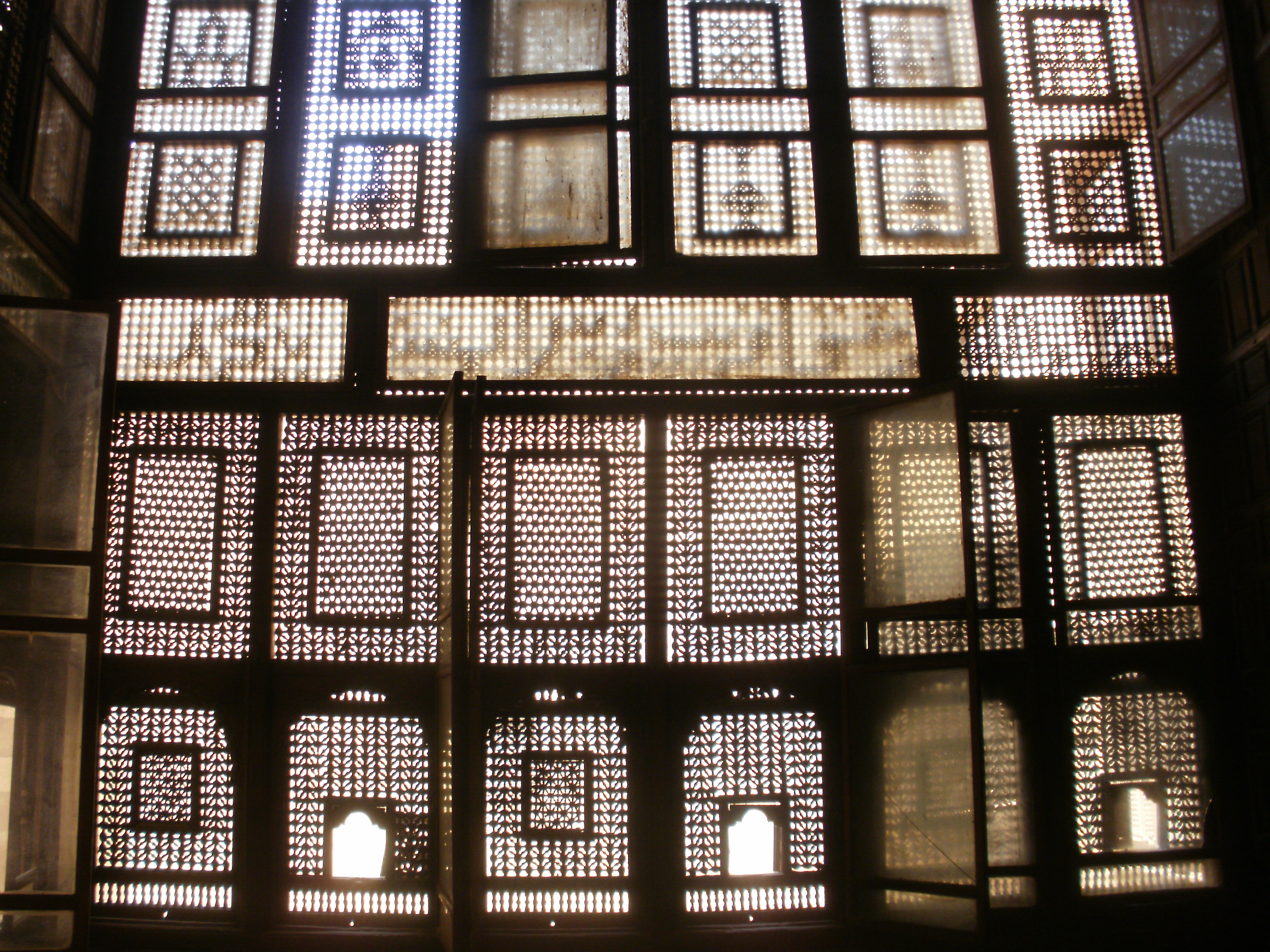
Looking through a traditional mashrabiya, photo by Brett

exciting person. On a scale from one to ten, I crop up somewhere in the middle. Right now, I’m living at home–yawn–researching philosophy PhD programs–super yawn–and brushing up on personal finance and fitness as I set out to join the “real world” with whatever jobs and internships can sustain me for a year–asleep yet?

But one week from today, I drive to the airport, battle through the baggage lines, and hit the air, sandwiched on a stuffy plane, on my second trip to Egypt to teach English.

I’m both nervous and excited.

Continue reading “Thoughts on the Real World”

The Good Life

opulence
Miniature giraffes and gold-encrusted chairs clearly mean the good life.

What many people consider creativity doesn’t occur in flash of sudden brilliance. A Mona Lisa doesn’t leap from the brush. In Search of Lost Time doesn’t write itself. Maybe sometimes, but not often. Most creative people slog through long hours, laboring without much inspiration, until their little efforts accumulate into a sizable project.

As French writer Albert Camus put it in an essay on French novels, “Works of art are not born in flashes of inspiration, but in a daily fidelity.”

One can never underestimate the sustained effort of a single person. But a person needs a direction first. Simply running and working without direction leads nowhere. Like a dog chasing its own tail or a hamster sprinting on its wheel, undirected effort–no matter how hard it is–remains undirected and fruitless.

One needs something to structure effort, like a goal or even a way of life. In many ways, this was once the role of philosophy.

Continue reading “The Good Life”

Feeling “at home”

I spent the last three days traveling to Boston with an old friend and his girlfriend, House picturescouting for apartments. They’ll both be PhD candidates in the fall–one at B.U. and the other at MIT. My old friend called me about a month ago to catch up, and we decided it may be neat for me to move in with them.

I didn’t get into the MFA programs I applied to last winter, and the prospect of a gap year living with my parents at home as I applied to other programs didn’t seem pleasant. My friend agreed. Boston would have plenty of people, schools, and opportunities to explore. I’d be out of the house, living in the world.

The plan was to find a two-bedroom in Cambridge area for a reasonable price. Turns out, it wasn’t that simple.

Continue reading “Feeling “at home””

Aphorisms

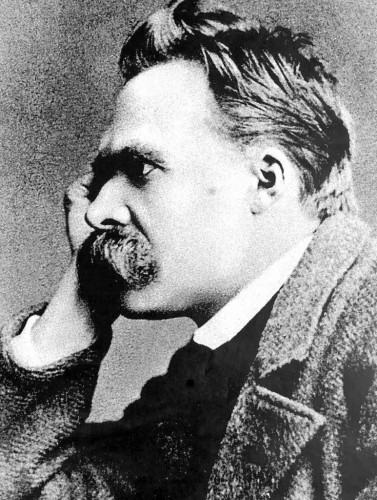
Call this a sequel to my last post. I graduated yesterday, and have been busy moving, nietzsche-377x500unpacking, and processing my final weeks. So I haven’t had much time to research or write anything new.

Still, in the midst of it, I’ve been reading Nietzsche. Along with his break with Wagner in 1876, Nietzsche took leave from his post at the University of Basel. With his freedom, Nietzsche wrote a series of aphoristic works, beginning with Human, All too Human and ending with The Gay Science.

I just finished reading excerpts from the set of them.

Before these works, Nietzsche wrote essays or reflections, The Birth of Tragedy being the main example. After, his work retained this aphoristic bent, even when he resumed a more traditional essay style, as in Beyond Good and Evil. The style may owe much to the German philosopher Schopenhauer and the French tradition that predated Nietzsche, which influenced his work a great deal, but he made it his own with his sharp wit, dynamic language, and unique philosophy.

Influenced by Nietzsche, I figured I’d share a few aphorisms I’ve gathered during college. I’ve heard some, borrowed others from books, and made up a number. In no particular order, here are a few:

Continue reading “Aphorisms”

Maps

So I am neither dead nor lost in some Tron-like universe, detached from reality. I’m treasure_map__skull_island_by_pumpkinjack6-d30me8qjust very busy: a starring role in a musical, an honors thesis, and the day-to-day tasks of tutoring and studying. Still, I apologize for my absence.

That said, I don’t have anything new today. But I figured I could copy-and-paste part of my honor’s project, a memoir that also involves French writer Albert Camus called Coming of Age with Camus. It’s coming along, but still needs work. Call it a peace offering.

Here’s the first chapter, Maps:

Continue reading “Maps”

A quote on love

I’m a bit too busy today to write a full post, so I figured I’d leave a quote I’ve been thinking about regarding love, especially with Valentine’s Day earlier this week. symbiosis-oxEnjoy.

A Tibetan mystic saying goes: We are here to realize the illusion of our separateness. The spiritual sentiment has a biological cognate. Our xenotropic drive — to merge with what is not us, temporarily in sex, or permanently in symbiosis or cross-species hybrids — is more than a metaphor. But it also offers spiritual solace. When we hook up with another, in sex or love (or, more rarely, both) we prove that our isolation is not permanent. In the fullness of time, we may all be linked. In the meantime, eros brings us together, making us more than we are alone. Cupid’s arrow, quivering into the heart of loneliness, kills us even as it sets us free.

-Dorian Sagan, in Death and Sex

Kant and Camus: The is and the ought

Last year I was reading the giving The Giving Tree by Shel Silverstein to my nephew,

German Philosopher Immanuel Kant (1724-1804)

around five at the time. In the book, a tree sacrifices everything for a particular boy who gradually grows into into an old man. First simple things, like leaves, but by the conclusion, the tree is a stump with nothing left to give.

I closed the book, just like my dad did when I was a kid. “Believe it or not,” I said. Henry snuggled next to me with Eddy the Elephant and closed his eyes. The house was quiet, his brothers asleep in bed, his parents downstairs. Then, in the most innocent voice—as if he were asking for a cookie—he asked, “Why do people die?”

“I don’t know,” I said. It hurt to say it, but I couldn’t lie.

And I don’t think I’ll ever know. I may be able to craft a very elegant “I don’t know,” but in the end, that’s all it will be.

Continue reading “Kant and Camus: The is and the ought”

Labels

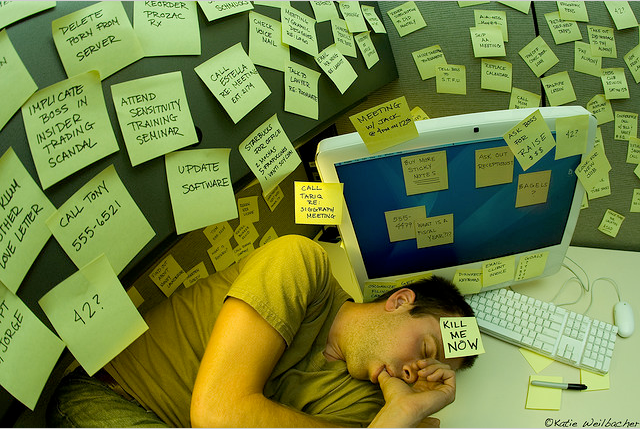
Labels are insidious. I imagine them slipping around like lampreys and aphids, Sticky_note_sleepingnotching their toothless jaws to us. They slip into conversation, into thought, and spatter the world like sticky notes, categorizing, separating, allocating, and organizing. We can pry them loose, but they always seem to slip back and latch on again. They’re often at the foundation of how we operate, whether we’re aware of them or not.

One of my favorite–albeit “sketchy”–pastimes is to sit in a crowded place, especially on a college campus, and look at how people naturally sort themselves, fitting into tidy categories

The “jocks,” with short, blond hair, fit physiques, and exercise clothes sit together. So does the alternative crowd, people like “hipsters,” with quirky sweaters, weathered jeans, and sunglasses, or the lingering pockets of “goth” and “emo”culture.

The pre-med students group together, and the theater folk unite. The church-going flock together, filling the same long tables at meals with persistent regularity.

People separate and and sort by age, majors, music tastes, geographic locations– anything to segment and define–and looking at them, I, too, block people together under labels.

I often wonder where the label ends and the person begins.

Continue reading “Labels”

There’s a difference between quiet and silence. Before I graduated high school, I climbed

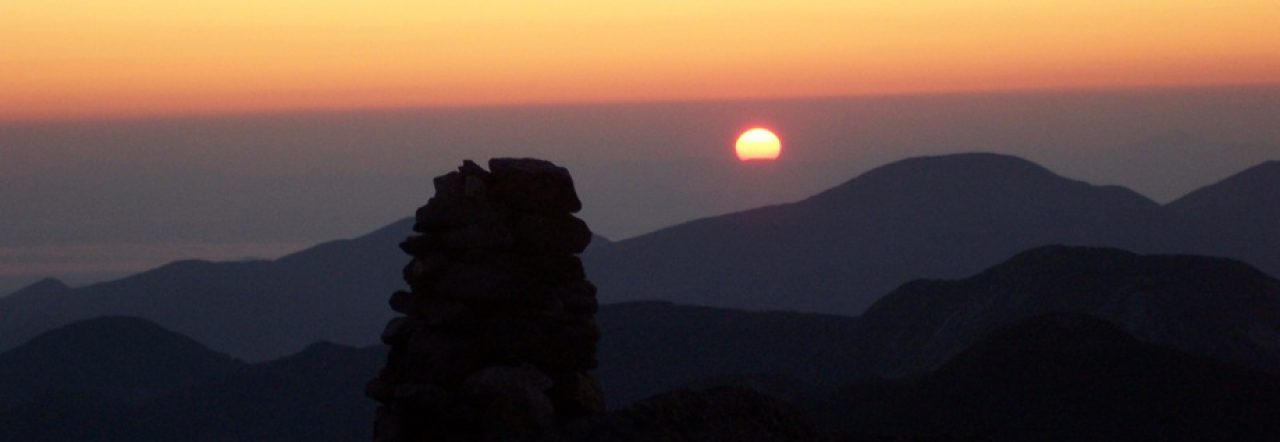
Photo I took from the summit as the sun rose.

Mt. Marcy, the tallest mountain in New York State, with one of my high school friends, his dad, and another scout. We started our ascent at midnight, reached the peak by 4 a.m., and waited for the sun to rise near five.

On our walk up, our breath mingled with the humidity, revealing webs of water vapor in the light of our headlamps. We sometimes talked, but mostly, things were quiet: the shuffling scratches and thuds of our footfalls as we scrambled over rocks, the heavy pants of our breath,  The occasional slosh and swallow of our water, and the continued cracking and hissing of wind laced through forest.

Now and then, I’d hear an animal, it’s sudden rustle breaking the background.

Quiet is a sense of monotony, a pattern, like a radiator rattling and blowing in a classroom. You forget the noise is there. It’s like the air, bearing down on us, stirred up in with fingers, vibrating in pulsing with invisible waves. Yet we feel like nothing is there. Continue reading