Excerpted from a 2011 interview with NPR’s Terry Gross and children’s book writer Maurice Sendak, animated by Christoph Niemann. Here, Sendak discusses the pain and beauty of aging.
Excerpted from a 2011 interview with NPR’s Terry Gross and children’s book writer Maurice Sendak, animated by Christoph Niemann. Here, Sendak discusses the pain and beauty of aging.
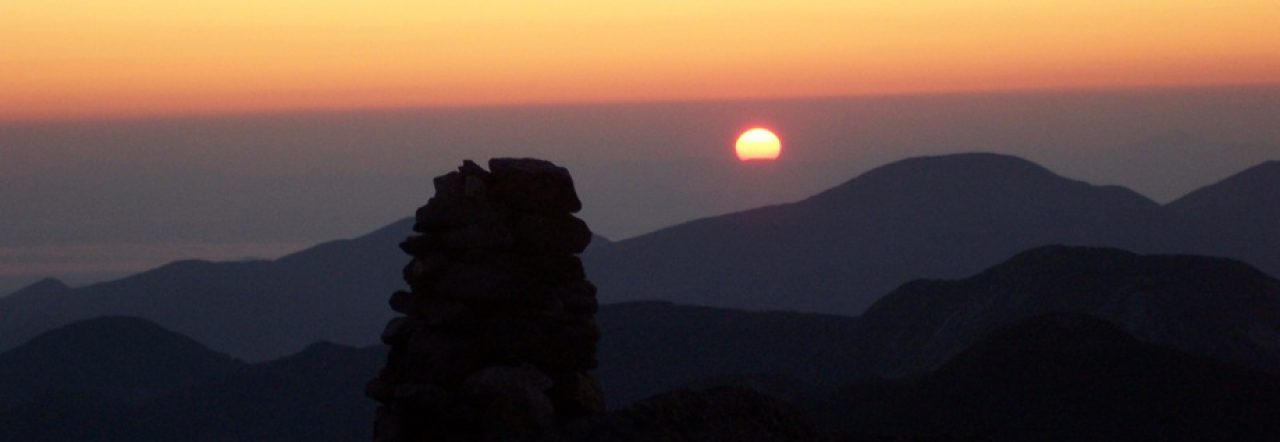
Two summers ago, my high school friends and I hit the road through New Hampshire, climbing a mountain, going to a theme park, ghost hunting, and staying in sketchy hotels and campsites in the White Mountains.
The state motto for New Hampshire is “Live free or die,” taken from a toast Revolutionary War hero John Stark wrote for the 1809 anniversary to the Battle of Bennington. Poor health prevented his attendance to the anniversary, but his words penned and mailed have endured:
Live free or die: Death is not the worst of evils.
I saw the words on the roads in front of us, emblazoned on license plates and signs, and they’ve stuck, always on the hazy edge of consciousness. Live free or die. They’ve become my own motto.
I leave this year laden with memories. Despite difficulties, it’s been the best one of my life so far, because it’s the first year when I’ve felt fully alive.
Writing my memoir piece, I’ve been reading a lot of my old journals and blog posts,  “dredging the self” as I called it in my last post. I found this and thought it quite relevant, considering the season. So I polished it up and posted it below.
I do apologize for the occasional “recycled” post. It’s not that I can’t write another one or that don’t want to, but I find I can’t replicate some sentiments. Writing, I find myself dragging my net through the world, searching for a story, and sometimes particular moments have an eloquence or meaning that only lived during that brief space. Taking my net out again, I know I cannot find it.
So it is with this.
But a brief backstory may help. Last year, as I’ve alluded too, I was battling a depressive episode. I took a four-day stint of solitude, where I did not see a single person. Sometimes I rested, or walked in the forest, or meditated. I did what the hours allowed. The piece below was a reflection I wrote from the period, not anything grand or academic, but my own tangled thoughts about the world.
Thank you.
This Monday, I dug up a crate of my old writing from my parent’s cellar. Journals,

poems, old short stories, math notebooks lined with marginal musings. Anything I could find. I fished love letters from my closet and photographs from my mothers’ desk, piling it all up like autumn leaves on my bedroom floor.
For a few days, I dug trough the stack.
OK, so “stack” may be a little exaggerated. But it’s a significant pile. I’m reread it all to revisit those hazy landscapes of my not-too-distant childhood, verifying events and reviving old memories, all in a pointed search of self.
I’m writing a memoir for my Honor’s project. I know I could half-ass most of it. But I’d get nothing from that besides reams of pleasant-sounding pulp. I don’t want that.
I’m after my own self, after all.
I went for walk tonight along the river that runs behind the school. The sun was setting

over the hills, making me think of a piece I wrote four years ago during my freshman year. At the time, I didn’t know anyone, so I would sit by the river often, writing and reading Aldo Leopold, Khrishnamurti, and Thoreau.
The silence and solitude of the path still moves me. I think the piece captures that well:
Yep, another update. But I should be having some more substantial posts soon as I only have four more weeks of school before winter break. In the meantime, the work goes on. Still, I have some reflections to consider.
“You have to do what nourishes you,” one of my English professors said earlier this semester. The words have been close at hand the past few days. After a three-week low, I’ve started to pick up lately. I’ve gotten a lot of work done and have had some meaningful interactions with people.
In short, I’ve nourished myself.
You don’t fall in love like you fall in a hole. You fall likefalling through space. It’s like you jump off your own private planet to visit someone else’s planet. And when you get there it all looks different: the flowers, the animals, the colours people wear. It is a big surprise falling in love because you thought you had everything just right on your own planet, and that was true, in a way, but then somebody signalled to you across space and the only way you could visit was to take a giant jump. Away you go, falling into someone else’s orbit and after a while you might decide to pull your two planets together and call it home. And you can bring your dog. Or your cat. Your goldfish, hamster, collection of stones, all your odd socks. (The ones you lost, including the holes, are on the new planet you found.)
And you can bring your friends to visit. And read your favourite stories to each other. And the falling was really the big jump that you had to make to be with someone you don’t want to be without. That’s it.
PS You have to be brave.
–Jeanette Winterson, answering why do we fall in love?” in Big Questions from Little People: and Simple Answers from Great Minds
I’ve been thinking a lot lately, going over old photographs and reading articles. It’s been introspective. At such times, I always recall an image a friar once used to describe spiritual growth: Augustine’s wineskins.
Augustine noted that a fresh wineskin is too tight to hold much wine. Someone fills it, and it strains, bulging and stretching, ready to burst. Gradually, it stretches enough to hold more, so we pour more in, but again, it fills quickly. Still, it stretches, and as we repeat the process, it can suddenly hold gallons.
Likewise, life stretches us through challenge, reflection, and experience. The same events that hurt us or stretch us as we grow, let us hold more. As another friar told me, “The older I get the more grief I can hold.”
Rain clouds loomed outside as I sat across from my spiritual advisor, Br. Robert, in the simple room. “You have to own it,” he said. “You’re an artist. Own it.”
He talked about his early years as a friar. The other friars didn’t think much of his penchant for painting, forcing Br. Robert to sacrifice his own time, money, and space for it. At one point, he even tried to suppress the urge because it interfered so much with his religious duties. Just as Thomas Merton complained about his “double” as a writer pestering him during his early years with the Trappists, Br. Robert struggled with the artist fighting for expression from within.
When he left the friars–and the Catholic Church for a time–Brother Robert lived on Skid Row, trying to make his work as an artist. He found a deep, resonant calling. Surviving on rice and beans–tuna fish, when he could afford it–he scraped by, but his art taught him his vows better than his stint with the friars. Poverty. Obedience. Chastity. The words clarified as the years wore on.
For Br. Robert, devotion to art proved a devotion to God.
“Own it,” he had said. The words made sense as he said them, but didn’t resonate. As the years has pass, the words Br. Robert and I shared deepen and clarify, like his vows. Tempered and stretched by experience, his wisdom grows. I understand him now.
Some advice from my favorite Stoic, Marcus Aurelius, that I ran across today:
“Live a good life. If there are gods and they are just, then they will not care how devout you have been, but will welcome you based on the virtues you have lived by. If there are gods, but unjust, then you should not want to worship them. If there are no gods, then you will be gone, but will have lived a noble life that will live on in the memories of your loved ones.”
 Backyard Philosophy