Stoicism

By eighth grade, most guys find girls. I found Stoicism. Girls came later.

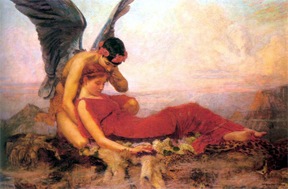
Zeno of Citium (c. 334 B.C.-c. 262 B.C.), founder of Stoicism, depicted by Raphael. Picture from Wikipedia.

In eighth, I read my first philosophy book–a brisk, colorful introduction called Get a Grip on Philosophy by Neil Turnbull. The recycled-paper pages reminded me of paper bags,  and its binding soon faded from many rereadings on bus rides home.

In the section about Hellenistic philosophy–the period following Aristotle–Turnbull wrote, “the Stoics didn’t lose their sense of wonder” and described a Stoic as “a person who advocates an ethic of resilience in the face of adversity; a believer in cosmopolitan politics.”

There were a few paragraphs , not much else. Still, Stoicism made an impression. It’s focus on reason, morality, and tranquility had roots in my personality, and the idea of being a cosmopolitan, “a citizen of the cosmos,” sounded fascinating.

So I converted.
Continue reading “Stoicism”

Fleeting and Eternal

I often sit and stare at the sky, watching the clouds drift and dissolve in silence. Bugs

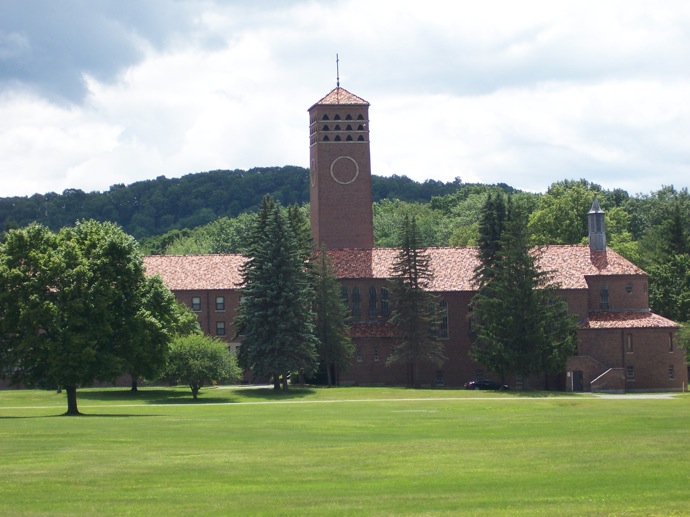
Picture of St. Francis Hall, St. Bonaventure. Taken by me.

furrow through the grass. Pools of shadow sift light. Branches murmur in the wind. Now and then, people cross on sidewalks, their soft strides pacing conversations as they pass away. Sometimes they wave.

Right now, I’m doing the same: sitting under my favorite tree on campus, looking at the brick buildings strapped to the ground, the drunken sky a whirl of cirrus and cumulous flooding the blue above.  It’s summer and the quad is quiet and still–almost deserted. The buildings slumber, their windows dark, their doors closed.

Normally I feel lonesome in the slow trickle of strangers and the empty hours before me. I do today. But something deeper always opens in such moments, as if it requires the sun-laced stillness of an empty afternoon.

Continue reading “Fleeting and Eternal”

Insomnia time

ImageLast night I had a horrific case of insomnia. It hits me now and then, but it’s not regular–at least not normally. When I was in high school, I would sneak out through the garage–the front and back doors squeaked–and walk around my neighborhood. I’m blessed by a secure ring of suburbia, so I was never afraid. I watched the cars sail along the road and the televisions coloring the windows.

I descovered a word for it a few years ago:  “noctivagant,” night wandering. 

The time of an insomniac differs than a day-dweller. It seems to expand when we have nothing to fill it with, like long Sundays or silent miles passing down a long road. It’s looser, less rigid. Free. 

Sometimes I picture time like a flag on windy day, straining to break away from its pole. It rips away and glides high and free, untethered. Such is insomnia time. 

Continue reading “Insomnia time”

Water droplets

Sometimes I sit and watch water drops form and fall in the sink. One at a time. A small bead gathers on the faucet’s tip, its surface swarming with the water. Then it begins to fall, stretching into a strained neck that clips itself apart and separates into a falling droplet.

For those brief milliseconds, a world forms on the tense surface of the drop. It’s not attached to anything. An individual drop. At first I thought of the literal world of microbes and particulates swarming and whirring through the bead, like H.G. Wells describes at the opening of the War of the Worlds, “transient creatures that swarm and multiply in a drop of water.”

The rotifers and paramecium stretch and move along the drop, but then their world shatters like falling glass and rolls down the drain.

I soon imagined a world like ours: skyscrapers, cathedrals, complicated ideas. The infusoria building houses, getting an education, pondering their future, framing an ethical code, “finding themselves,” getting married, divorcing, fighting, killing, preaching, and dying amid the ritual and fanfare of civility. Then their world fragments and drains away.  
Continue reading “Water droplets”

Backyard Philosophy

This is a blog about “backyard philosophy,” a name I made up one day in the shower. But I confess I stole it from Aristotle. Adrift in the boundless arguments and counter-arguments in his Metaphysics, I found a passage about philosophy’s humble birth. From its words, I’ve crafted my worldview and bound up my hopes. Although it’s a bit dense, I want to copy the complete passage here:

That it is not a productive science is clear from a consideration of the first philosophers. It is through wonder that men now begin and originally began to philosophize; wondering in the first place at obvious perplexities, and then by gradual progression raising questions about the greater matters too, e.g. about the changes of the moon and of the sun, or about the stars and about the origin of the universe. Now, he who wonders and is perplexed feels that he is ignorant (thus, the myth-lover is in a sense a philosopher, since myths are composed of wonders); therefore it was to escape ignorance that men studied philosophy, it is obvious that they pursued science for the sake of knowledge and not for any practical utility. (Metaphysics, Book I, part  2).

I read these words with a hushed sense of awe because they immediately brought me back to my early adolescence. Sitting beneath a broad canopy of stars in my backyard, my friends and I talked. And between the intervals about girls and school-wide politics, we hit deeper questions. They were still limited, but we stumbled through speculation on God or purpose in our lives, why we do things we do, our identity to ourselves and the world. Personal and simple, the issues nevertheless had the same philosophical underpinning that span Plato’s dialogues and Camus’ novels.

Continue reading “Backyard Philosophy”