Echoes and identity

I’ve been reading Camus’ preface to Jean Grenier’s The Islands, published in 1959. Like much of Camus’ later work–he died Jan. 4, 1960–the preface is nostalgic, yet mature.

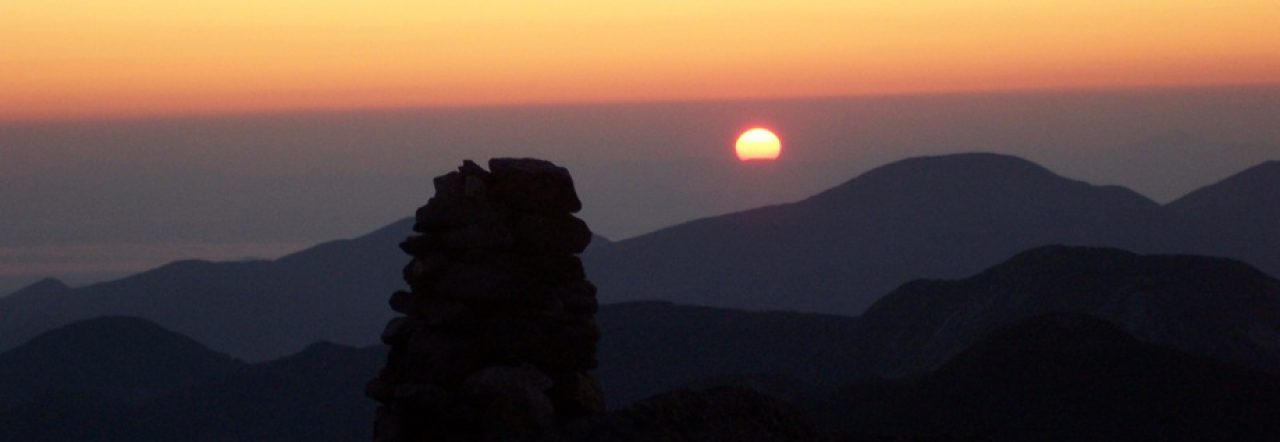
The Allegheny River Trail at dusk, taken by me.

Grenier’s book proved a major influence on Camus as a young man. In return, Camus dedicated his first collection of essays The Wrong Side and the Right Side and The Rebel to Grenier.

In the preface, Camus describes how he felt when he first started reading Grenier’s The Islands:

A garden of incomparable wealth was finally opening up to me; I had just discovered art. Something, someone was stirring dimly within me, longing to speak. Reading one book, hearing one conversation, can provoke this rebirth in a young person. One sentence stands out from the open book, one word still vibrates in the room [. . .] Already, at the same moment, in response to this perfect language, a timid, clumsier song rises from the darkness of our being.

Reading The Islands pushed Camus to be a writer. Other books aided the decision, but as Camus says in his preface, only The Islands lingered. It transformed his worldview, and he continued to quote it for the rest of his life, repeating the phrases as if they were his own.

There are moments, words, people that define who we are, that consume us like kindling in a violent flash. From there, we rebuild on a new foundation. But the fire never burns down. It continues to smolder.
Continue reading “Echoes and identity”

Crinkled, old books

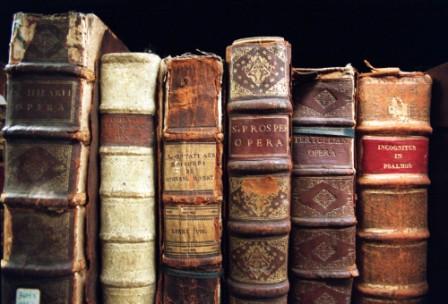
The school library gives away excess books, usually obscure philosophy titles that have lingered on shelves for years, dusted with age and the prints of wizened grad students. Wednesday, they had a table full. I survey the jumbled piles on a table by the main entrance, pluck and shuffle them as I scan the titles.

Now and then, I open one. The binding crinkles, as if glued into place, and the yellowed pages exhale their pale aroma, a warm, dusty tang that has always reminded me of cigars and cedar wardrobes.

I can’t help but steal a few: some Heidegger, Dostoevsky, a Kaufmann anthology of Existentialist writings. I slip the delicate volumes into my backpack and continue.

Continue reading “Crinkled, old books”

Update: Finding an Honors Project

With school and all that comes with it, I can’t put the same time I’d otherwise like to into my blog. I apologize. However, I’d still like to continue it in a series of “updates,” petit posts to fill the interim as I write my thesis, lead clubs, and cram classwork via tea and naps.

That said, I can’t put the same level of polish and professionalism that I’d otherwise like to, but hopefully a few phrases still ring and a few ideas linger after that final punctuation point.

Continue reading “Update: Finding an Honors Project”

Stoicism

By eighth grade, most guys find girls. I found Stoicism. Girls came later.

Zeno of Citium (c. 334 B.C.-c. 262 B.C.), founder of Stoicism, depicted by Raphael. Picture from Wikipedia.

In eighth, I read my first philosophy book–a brisk, colorful introduction called Get a Grip on Philosophy by Neil Turnbull. The recycled-paper pages reminded me of paper bags,  and its binding soon faded from many rereadings on bus rides home.

In the section about Hellenistic philosophy–the period following Aristotle–Turnbull wrote, “the Stoics didn’t lose their sense of wonder” and described a Stoic as “a person who advocates an ethic of resilience in the face of adversity; a believer in cosmopolitan politics.”

There were a few paragraphs , not much else. Still, Stoicism made an impression. It’s focus on reason, morality, and tranquility had roots in my personality, and the idea of being a cosmopolitan, “a citizen of the cosmos,” sounded fascinating.

So I converted.

Continue reading “Stoicism”

Book Review: God is Not Great

I just finished God is not Great: How Religion Poisons Everything by the recently

The cover, from Brain Pickings. com

deceased polymath, essayist, and atheist Christopher Hitchens. I bought the book after seeing it linger on shelves and cropping up in my recommendations on Amazon.com for the past year.

It’s a systematic, caustic critique on religion that ends with a plea for secular rationalism and a “New Enlightenment,” a book bound to spur controversy.

I’m no stranger to religion. After an incident involving milk and foam cups at one pre-K, my parents moved me to Gingerbread House, a Catholic pre-K in the nearby City of Syracuse.

My dad drove our blue-green Volvo each day, past the gutted factories and black windows, beneath the low bridges etched with rusty rivulets, and past the sidewalks with tufts of grass and weedy tendrils.

Among the nap-time, craft-time, and play-time typical of most pre-Ks, Gingerbread House had prayer time. Teachers took us to a low, dark chapel with clean floors and a white flame incased behind red glass. A crucifix hung in the front. Now and then, the stories of the Bible cropped up in conversation.

My memory is hazy, but Gingerbread house must have hit something. My mom said I dragged her to the chapel once, and as we stood in the silence, I shushed her and pointed to the crucifix.

“That’s God,” I whispered.

Continue reading “Book Review: God is Not Great”

Fleeting and Eternal

I often sit and stare at the sky, watching the clouds drift and dissolve in silence. Bugs

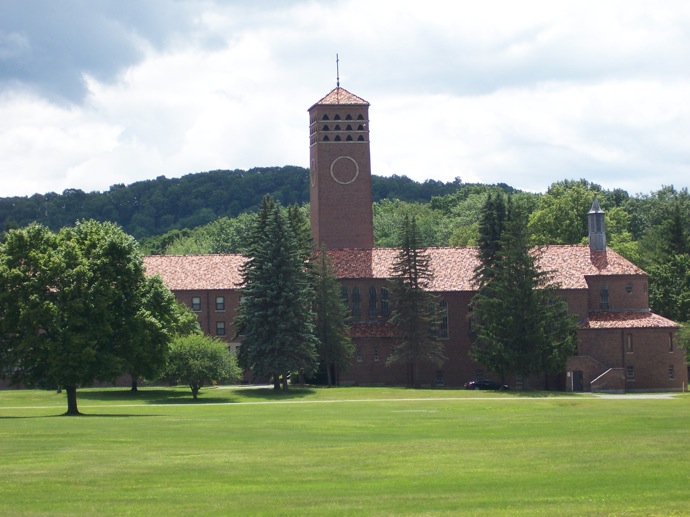
Picture of St. Francis Hall, St. Bonaventure. Taken by me.

furrow through the grass. Pools of shadow sift light. Branches murmur in the wind. Now and then, people cross on sidewalks, their soft strides pacing conversations as they pass away. Sometimes they wave.

Right now, I’m doing the same: sitting under my favorite tree on campus, looking at the brick buildings strapped to the ground, the drunken sky a whirl of cirrus and cumulous flooding the blue above.  It’s summer and the quad is quiet and still–almost deserted. The buildings slumber, their windows dark, their doors closed.

Normally I feel lonesome in the slow trickle of strangers and the empty hours before me. I do today. But something deeper always opens in such moments, as if it requires the sun-laced stillness of an empty afternoon.

Continue reading “Fleeting and Eternal”

Brokenness and Healing

I’ve been home from Egypt for about one and a half weeks. I’ve been busy setting

A few of my students in Egypt

seeing friends and family, prodded with requests for stories. “What were the pyramids like?” they ask. Or, “Did you see the Sphinx?”

I’ve also been reading The Myth of Sisyphus by Albert Camus and organizing loans and finances to prepare for my final year at college. Soon, I’ll be moving into campus housing, seeing old friends, and attending classes as if nothing happened.

But the transition to “reality” has been hard.

My third night home, my dad and I went out for a hot fudge sunday at a place nearby–an irregular tradition for past few years. As I ate my ice cream, the other customers walked up, laughing and buying their cones.

To me, they felt unreal. I couldn’t take my mind from the students I had taught in Egypt. Some had lost friends and family to religious violence. All had endured the throes of violent political change the past year. For some of them, justice was a truth worth dying for. Then, my thoughts turned to Libya and Syria, torn by their own violence, like the hundreds killed in the recent attack at Tremseh.

It hurt to know that a month and a half ago, I was just an oblivious American eating ice cream, too.

Continue reading “Brokenness and Healing”

Novel

I started on my novel again Monday. I began it during my winter break from mid-December to mid-January, then Imagetook a hiatus during school. I’ve been home for summer for about a week, but spent most of last week finishing final essays and creative writing assignments for classes and proofreading a literature magazine.

It felt great to hit the page again.

I’m going back to the beginning, editing to where I left off and resuming with all the threads in mind. It’s about 50,000 words now, which is about the length of The Great Gatsby. I aim to make it about 100,000, the typical soft-cover length.

So far, working on the novel has been hard but rewarding, especially since I’m neither a professional writer nor do I know what I’m going to do with it. But it begs completion. That’s enough.

Continue reading “Novel”

Insomnia time

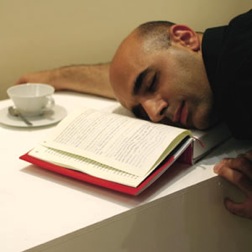
ImageLast night I had a horrific case of insomnia. It hits me now and then, but it’s not regular–at least not normally. When I was in high school, I would sneak out through the garage–the front and back doors squeaked–and walk around my neighborhood. I’m blessed by a secure ring of suburbia, so I was never afraid. I watched the cars sail along the road and the televisions coloring the windows.

I descovered a word for it a few years ago:  “noctivagant,” night wandering. 

The time of an insomniac differs than a day-dweller. It seems to expand when we have nothing to fill it with, like long Sundays or silent miles passing down a long road. It’s looser, less rigid. Free. 

Sometimes I picture time like a flag on windy day, straining to break away from its pole. It rips away and glides high and free, untethered. Such is insomnia time. 

Continue reading “Insomnia time”