
“I Am”: A sense of self

Image courtesy of Forbes.com

In 1841 a little-known English poet escaped an asylum and wandered back to his childhood home in the farmland of Northamtonshire, convinced that he was married to a woman who had died three years earlier.

The poet, John Clare, said that separation from his childhood home–its fields, cottages, and the small taverns where he worked–had made him increasingly alienated from his own self. His later poems reflect his fixation. In one he claims that he was once Shelly and Lord Byron. In his most famous one, “I Am,” he reflects on his isolation:

I am—yet what I am none cares or knows;

My friends forsake me like a memory lost:

I am the self-consumer of my woes—

They rise and vanish in oblivious host,

Like shadows in love’s frenzied stifled throes

And yet I am, and live—like vapours tossed.

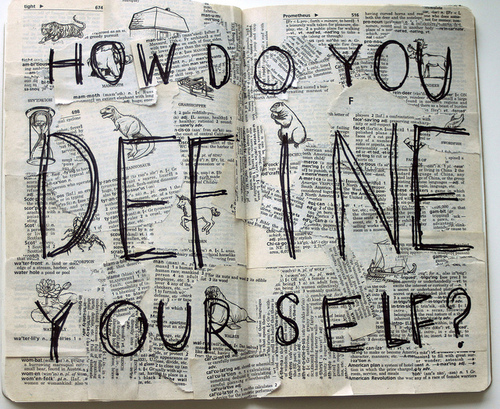
Isolated and unknown, Clare clings to the few activities, memories, and passions that adhere to his fragmented self. This raises an important question: Who is this “I Am” Clare speaks of, separated from his roots? Who is an I? What is a self?

Continue reading ““I Am”: A sense of self”

Augustine and Evil

My dad closed the door and flicked off the lights, pitching the room into a clean black. Whistler-Nocturne_in_black_and_gold“Goodnight,” he said as he walked way. He footsteps receded as he walked downstairs to rejoin my mom. My brother sat up beside the bed.

“Ready?” he asked.

I nodded.

We piled my stuffed animals and realigned my pillows, burying the human-like decoy in a thick comforter. From the doorway, it looked like a body curled up in deep sleep. Perfect.

My brother and I snuck downstairs, our soft footfalls swallowed by explosions and gunshots from an action movie. We opened the basement door and slipped downstairs to my brother’s room, where we watched kung-fu and R-rated movies, eating chips and dip, until dawn.

I could have asked my parents to sleep downstairs. They would have probably said yes—it was a Friday and I was almost nine. But the thrill of subterfuge tinged my flight. Breaking rules was liberating, saying “no” was exciting. Doing the “wrong” thing was a thrill.

In his Confessions, Augustine of Hippo tells a similar story. One night, he and his friends sneak into a garden and steal pears. They don’t eat the fruit but still enjoy the theft for its sinful pleasure. As he writes, “The malice of the act was base and I loved it—that is to say, I loved my own undoing, I loved the evil in me” (Augustine and F.J. Sheed, trans., 44).

One of the many picture's of St. Augustine (by Antonio Rodríguez)
One of the many pictures of St. Augustine (by Antonio Rodríguez)

In my forbidden flight and Augustine’s theft, we broke rules. Using Augustine’s theological language, we “sinned,” turning away from God toward ourselves. In Augustine’s case, he picked a forbidden fruit. In my case, I disobeyed my parents. This “turning away” forms an essential crux in Augustine’s argument defending God against the charge of evil. But to understand his argument one must first understand his notion of being and non-being–gleaned from the Greek tradition.

Continue reading “Augustine and Evil”

Starlight and renewal

Sometimes, when I’m tired or lost I look at old writing. It reminds me where I camestars1.jpg from, what has always mattered, and where I ought to go. Today, as I struggled to write a blog post, I sorted through old files and notebooks.

I found this, a reflection from fall of my junior year. It was a hard semester, as I’ve referenced before, but it many ways, it set my foundation. In the midst of that darkness, I found my passions and insecurities. I found my self.

I think this particular reflection captures a lot of that. It also hits at the seed that inspired this entire blog: the fusion of life and philosophy that makes “backyard philosophy.”

I repost it in full below, only edited for grammar. We all need reminders now and then.

Continue reading “Starlight and renewal”

Option overload

Standing in the tea aisle of my local Wegmans, my heart pounded and my head froze. Too many choicesThe prim, brightly colored canisters and shiny, cellophaned boxes stared at me, rows of them, emblazoned with brand names, alleged health benefits, and flavors. Some were fair trade, some were organic. Others were just cheap.

I didn’t know what to do.

In the end, I picked a compromise of price and quality. The anxiety seems crazy. And, as my dad quipped when I mentioned the issue, it’s better to have too many choices than none at all. True. But option overload has become an increased problem in the West.

As absurd as it sounds, too many choices can be a bad thing.

Continue reading “Option overload”

Thoughts on friendship

Tonight, I go on my fifth annual road trip with a few high school friends. The six of us

From the Painting "Kindred Spirits."
From the Painting “Kindred Spirits.”

met in seventh and eighth grade making films. Now and for the past four years we’ve been going in separate places: different schools, different interests, different cities–even states.

Still, something has held us  together, for the past eight years. Sometimes, that’s hard to believe.

Dunbar’s number dictates we can only keep track of around 150 beings at any given time. If they’re too distant, they don’t make the cut and blur behind a thin haze of anonymity.

During our lives, few people make the cut. Those who do so consistently become friends.

Friendship has the rare honor of being part of “the human condition,” the seemingly universal and timeless experience that defines what it means to be human. I don’t know if anyone has ever tried to outline our condition, but I imagine that friendship would be on the list somewhere.

Despite it’s prevalence, however, friendship remains a brittle obscure topic. As Thoreau opens in his essay Friendship, “Friendship is evanescent in every man’s experience, and remembered like neat lightening in past summers.” It takes place for all of us, sometimes for just a fragile collection of moments. Yet we can barely describe what makes it so essential.

Continue reading “Thoughts on friendship”

The Good Life

opulence
Miniature giraffes and gold-encrusted chairs clearly mean the good life.

What many people consider creativity doesn’t occur in flash of sudden brilliance. A Mona Lisa doesn’t leap from the brush. In Search of Lost Time doesn’t write itself. Maybe sometimes, but not often. Most creative people slog through long hours, laboring without much inspiration, until their little efforts accumulate into a sizable project.

As French writer Albert Camus put it in an essay on French novels, “Works of art are not born in flashes of inspiration, but in a daily fidelity.”

One can never underestimate the sustained effort of a single person. But a person needs a direction first. Simply running and working without direction leads nowhere. Like a dog chasing its own tail or a hamster sprinting on its wheel, undirected effort–no matter how hard it is–remains undirected and fruitless.

One needs something to structure effort, like a goal or even a way of life. In many ways, this was once the role of philosophy.

Continue reading “The Good Life”

Dreyfus and Magee: Phenonomology and Existentialism

This week, I’ve been watching these 1980s videos with BBC host, author, and thinker Bryan Magee.

Each one is five parts, coming in at about 45 minutes, and is a great watch. Magee does a good job putting difficult concepts into fairly ordinary language and summarizing things.

I’ve uploaded one on phenomenology and existential philosophy, although most of it deals with Heidegger.

All of the videos are good. You get to see articulate, intelligent people discuss dynamic topics with extremely tallow-colored backgrounds! (What could be better than that?)Enjoy!

Kant and Camus: The is and the ought

Last year I was reading the giving The Giving Tree by Shel Silverstein to my nephew,

German Philosopher Immanuel Kant (1724-1804)

around five at the time. In the book, a tree sacrifices everything for a particular boy who gradually grows into into an old man. First simple things, like leaves, but by the conclusion, the tree is a stump with nothing left to give.

I closed the book, just like my dad did when I was a kid. “Believe it or not,” I said. Henry snuggled next to me with Eddy the Elephant and closed his eyes. The house was quiet, his brothers asleep in bed, his parents downstairs. Then, in the most innocent voice—as if he were asking for a cookie—he asked, “Why do people die?”

“I don’t know,” I said. It hurt to say it, but I couldn’t lie.

And I don’t think I’ll ever know. I may be able to craft a very elegant “I don’t know,” but in the end, that’s all it will be.

Continue reading “Kant and Camus: The is and the ought”

Labels

Labels are insidious. I imagine them slipping around like lampreys and aphids, Sticky_note_sleepingnotching their toothless jaws to us. They slip into conversation, into thought, and spatter the world like sticky notes, categorizing, separating, allocating, and organizing. We can pry them loose, but they always seem to slip back and latch on again. They’re often at the foundation of how we operate, whether we’re aware of them or not.

One of my favorite–albeit “sketchy”–pastimes is to sit in a crowded place, especially on a college campus, and look at how people naturally sort themselves, fitting into tidy categories

The “jocks,” with short, blond hair, fit physiques, and exercise clothes sit together. So does the alternative crowd, people like “hipsters,” with quirky sweaters, weathered jeans, and sunglasses, or the lingering pockets of “goth” and “emo”culture.

The pre-med students group together, and the theater folk unite. The church-going flock together, filling the same long tables at meals with persistent regularity.

People separate and and sort by age, majors, music tastes, geographic locations– anything to segment and define–and looking at them, I, too, block people together under labels.

I often wonder where the label ends and the person begins.

Continue reading “Labels”

Dredging the self

This Monday, I dug up a crate of my old writing from my parent’s cellar. Journals,

Ah yes, my high school self...
Ah yes, my high school self…

poems, old short stories, math notebooks lined with marginal musings. Anything I could find. I fished love letters from my closet and photographs from my mothers’ desk, piling it all up like autumn leaves on my bedroom floor.

For a few days, I dug trough the stack.

OK, so “stack” may be a little exaggerated. But it’s a significant pile. I’m reread it all to revisit those hazy landscapes of my not-too-distant childhood, verifying events and reviving old memories, all in a pointed search of self.

I’m writing a memoir for my Honor’s project. I know I could half-ass most of it. But I’d get nothing from that besides reams of pleasant-sounding pulp. I don’t want that.

I’m after my own self, after all.

Continue reading “Dredging the self”