Alan Watts on a Sunday

I need to get some serious work done on a few things today, so I don’t have time to type up my usual post–I swear I’m getting better at this, haha–but rather than leave you with nothing, I wanted to post a video with a spattering of Alan Watts lectures.

Alan Watts was a notable (though some would say notorious) Zen practitioner who dabbled in a variety of other fields, from philosophy to physics. Born in 1915 and dying in 1975, he spent much of his life lecturing and writing, becoming a central figure in the counter-culture movements of the 60s and 70s. His thoughts are often iconoclastic and his metaphors can be pointed, so few read Watts indifferent or unchanged.

A wealth of Alan Watts lectures exist on YouTube. Some users pair them with music and inspiring images or splice together clips of crowded city streets and airy mountaintops. This particular one is a short collection of meaningful excerpts animated by the creators of South Park. Some of the excerpts are quite insightful. Others are a little more out there, depending on your taste. But on the whole, they do give a brief view of Watts’ style and insights.

I hope you enjoy this, question it, and enter the week with some new ideas. Cheers.

Sisyphus and the fair field full of folk

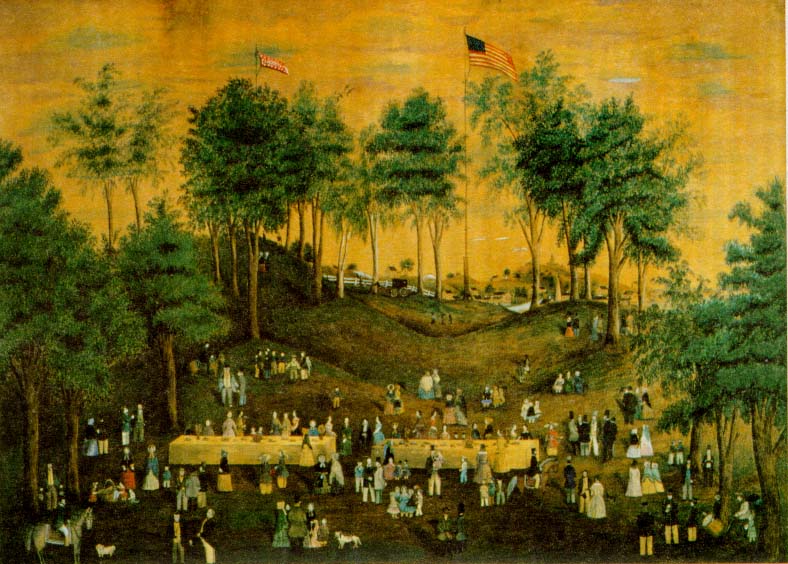
Yesterday, while sitting in the cafeteria, sipping the last of my tea, I scanned the seething mob of students around me. Pockets collected around tables, laughing. Some weaved through the rows of chairs, balancing plates. Most were focused, making beelines through the groups, mumbling excuses and smiling as they dodged bodies and carts, slipping into their own chair. Others took their time, stopping at tables, picking out apples like a chef at a farmer’s market.

Image courtesy of Vanderbilt library

Each person had a way of being. Some wore exercise clothes, others had prim button-down Oxfords, most shuffled through lines in pajamas. They had places to go, things to do–or an absence of things to do that they filled with conversations and distractions.

Having spent the morning reading William Langland’s Piers Plowman, an allegorical dream poem from the 14th century, I recalled one of the more famous lines. The narrator, a mysterious figure named Will, falls asleep and finds himself in the midst of a strange country. He describes it:

I saw a tower on a toft · worthily built; 
A deep dale beneath · a dungeon therein, 
With deep ditches and dark · and dreadful of sight 
A fair field full of folk · found I in between, 
Of all manner of men · the rich and the poor, 
Working and wandering · as the world asketh. 

Will then goes on to describe these “fair folk.” Some toil in fields, while “Wasters” devour their products in gluttony. Some seek after salvation, becoming monks and anchorites; others wear the habit as a means to a escape poverty and cheat others. Merchants sell wares. Pilgrims travel. Kings rule, judges judge.

The poem describes a diverse spectrum of life, from highborn to low, and sandwiched them between these two towers: the one on a hill, the other in a ditch. We later discover that the tower on the hill is the tower of Truth, a symbol for God and salvation. The tower in the ditch belongs to Wrong, providing a symbol for a wasted life and a doomed afterlife. As the poem progresses through it’s many “steps,” visions chronicle Will’s search for salvation through Truth.

In the cafeteria, I considered Will’s vision, particularly this “fair field full of folk,” buzzing, weaving, laughing, and living around me. Where are they all going? I thought. What are they doing? Why are they here? A surge of compassion welled up in me as these questions turned over in my head, rolling one to the other. I felt connected to everyone and detached at the same time, an outside observer with a unique stake in the observation.

Continue reading “Sisyphus and the fair field full of folk”

What’s a Stoic to do? Emotions and Reason

We all have those moments when we say or do something foolish because our emotions “made us.” You decide to wait for the last minute to finish your work because you’d rather watch Breaking Bad, resulting in a last-minute panic. Or you lean in to kiss a friend because it “felt right,” only to be pushed away.frowny-face

If anything, emotions make life interesting.

But for the most part, we like to think that we’re rational decision makers. To make choices, we consider our options and chose the one that makes the most sense. We’re not willy-nilly about such things. And those foolish, emotion-based decisions are a rarity, not the norm. As Samuel Johnson once said, “We may take Fancy for our companion, but must follow reason as our guide.”

Moreover, Most of our public discourse assumes that we are rational. Our economy’s dominant theory is “rational market theory” and the framers designed our political system according to Enlightenment ideals of rational government. 

Philosophy, in particular has tended to focus on logic and reason. The Stoics are one famous example, but Socrates also prided logic over emotion, even to the point of death. Some exceptions exist, like Nietzsche and Rousseau, but they are precisely that: exceptions. 

Indeed, most of us like to think that we control our destiny with rational choice–whether its in buying a car or choosing a profession–but research shows we may not be as rational as we think.

Continue reading “What’s a Stoic to do? Emotions and Reason”

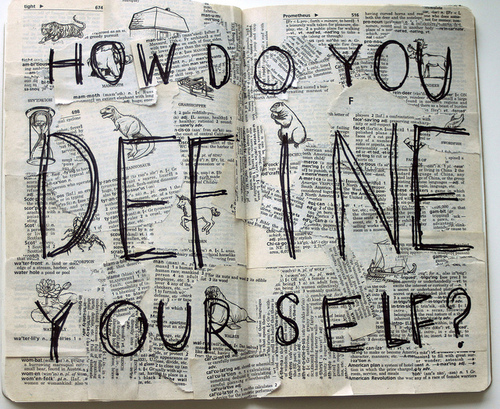
“I Am”: A sense of self

Image courtesy of Forbes.com

In 1841 a little-known English poet escaped an asylum and wandered back to his childhood home in the farmland of Northamtonshire, convinced that he was married to a woman who had died three years earlier.

The poet, John Clare, said that separation from his childhood home–its fields, cottages, and the small taverns where he worked–had made him increasingly alienated from his own self. His later poems reflect his fixation. In one he claims that he was once Shelly and Lord Byron. In his most famous one, “I Am,” he reflects on his isolation:

I am—yet what I am none cares or knows;

My friends forsake me like a memory lost:

I am the self-consumer of my woes—

They rise and vanish in oblivious host,

Like shadows in love’s frenzied stifled throes

And yet I am, and live—like vapours tossed.

Isolated and unknown, Clare clings to the few activities, memories, and passions that adhere to his fragmented self. This raises an important question: Who is this “I Am” Clare speaks of, separated from his roots? Who is an I? What is a self?

Continue reading ““I Am”: A sense of self”

Thoughts on friendship

Tonight, I go on my fifth annual road trip with a few high school friends. The six of us

From the Painting "Kindred Spirits."
From the Painting “Kindred Spirits.”

met in seventh and eighth grade making films. Now and for the past four years we’ve been going in separate places: different schools, different interests, different cities–even states.

Still, something has held us  together, for the past eight years. Sometimes, that’s hard to believe.

Dunbar’s number dictates we can only keep track of around 150 beings at any given time. If they’re too distant, they don’t make the cut and blur behind a thin haze of anonymity.

During our lives, few people make the cut. Those who do so consistently become friends.

Friendship has the rare honor of being part of “the human condition,” the seemingly universal and timeless experience that defines what it means to be human. I don’t know if anyone has ever tried to outline our condition, but I imagine that friendship would be on the list somewhere.

Despite it’s prevalence, however, friendship remains a brittle obscure topic. As Thoreau opens in his essay Friendship, “Friendship is evanescent in every man’s experience, and remembered like neat lightening in past summers.” It takes place for all of us, sometimes for just a fragile collection of moments. Yet we can barely describe what makes it so essential.

Continue reading “Thoughts on friendship”

Back home

I’ve been home for about three days now after surviving over 24 hours traveling, sustained by Cliff Bars, airline food, and caffeine. My mom barely held her tears in as she squeezed me near the baggage counter in the echoing spaces of the near-empty airport. The rest of the flight pooled around the carousel, frayed and wrinkled.

“It’s good to be home,” I said.

And it was. Four days before, June 30th arrived after weeks of warnings, anticipation, and scattered protests. Like a ruptured pipe, millions pooled into the squares and streets across Egypt. Tamarod, the grass-roots movement that organized the opposition, flaunted 22 million signatures to throw out Morsi while Tagarod, the pro-Morsi opposition, organized sit-ins.

As some graffiti said, “January 25 and June 30, our Revolution continues.”

Flags, fireworks, clenched fists, posters, and red cards colored the crowds. Couples, children, and friends held cards reading “Leave.” In a country with notorious disregard for timeliness, organization, and teamwork, millions gathered with a single purpose.

“It is the biggest protest in Egypt’s history,” one official told Agence France-Presse.

Continue reading “Back home”

Egypt, week 3

-1-

This past week, I’ve found my niche back in Egypt, after some uneven footing. On mornings when I don’t teach, I sometimes walk, sticking to the shady side of the street, saying hellos to those who meet my gaze, and finding shops to nose through when I reach the main road.

I like exploring bookshops the best. They’re usually air-conditioned and contain hours of entertainment. Also, many of the people who work there speak English.

In one, I met a young man name Ahmed, with the typical slicked-back hair, tight button-down shirt, and blue jeans. The store was empty, and he got me a coffee as I was looking at memoirs to burn away my 14-hour flight home next week.

“You like books?” he asked.

Well, I was in a bookstore, but I decided to be polite. “Yes,” I said.

“What kinds?”

“Many kinds,” I said.

Ahmed flashed me the seemingly universal you-can-trust-me (even when you can’t) Egyptian smile and handed me my coffee.

“I like philosophy, essays, and memoirs,” I said.

“Philosophy is very interesting,” he said.

I sat down, and welcomed him to sit nearby.

“Yes it is,” I continued. “What do you like to read?”

In alternating moments of coy reticence and loquacious openness—replete with dramatic Egyptian hand movements—Ahmed listed a few books, ranging from Arabic pop lit to the classics that sat on his parent’s bookshelf at home.

“I love The Great Gatsby,” he said.

We had more in common than I thought.

Ahmed had just finished his studies in computer science at The American University in Cairo and practiced his English as often as he could. Savvy and driven, he wanted to work for an American corporation, like IBM, and hopefully use it as leverage to move to America.

“At least, you know, at least for a time,” he said. “Until things get better.”

“Any luck with jobs?” I asked.

He held up his arms, showing the bookstore.

Ahmed’s position is normal—perhaps even a little lucky—for many young men in Egypt. Two years ago, the grim job market and the influx of unemployed college-educated helped spur the Jane. 25 Revolution. Now, the same young men face a similar job market: 13 percent unemployment.  If anything, the continued stagnation has only worsened the situation.

A recent college grad myself, I’m always thinking about jobs. Society forces me to. Everyone wants to know what I’m doing, what my plans are. Now what?

Sitting across from Ahmed I couldn’t help but realize how different our worlds were. Random births, karma, or fate—whatever you believe—had flung us in utterly different circumstances. A recent grand, he’s a lot like me, but his options are diminished, and in a few days, another revolution may rupture his country once again.

Eventually, we finished talking. Ahmed took my cup, empty long ago, and I went back to the seminary for lunch. But I couldn’t stop thinking about him.

As I walked back, I took in the mangled sidewalks, the widows begging for lose change, the skinny cats picking at garbage, and the dusty, dented cars that dotted the road.

After a while, it all becomes background. But now and then, something hits you. Like Ahmed.

Continue reading “Egypt, week 3”

Egypt, week one

I started traveling last Thursday at 5:15 a.m. Since then, life has been hectic: teaching, traveling, and finding my niche again in a completely different culture. Writing has been difficult. I’ve kept a journal, but little else.

I’ve been waiting to really pull and dig at travels so far and sort through the anxieties and joys.

I guess this is the first chance I’ve gotten to do so.

Last week, I traveled with two others on a hot, stuffy plane for eleven hours–the typical airplane annoyances. After our breakfast of three different breads and a thin layer of yogurt in a tray, the three of us landed, got our bags at the Egypt Air terminal, and bought our visas for $15, as an overly helpful man offered us taxis that we didn’t need.

A driver and a former student picked us up from airport to take us to the seminary where we’re staying–the same one as last year. We drove past the same rock-strewn strip of highway that led into Cairo.

Arabic pop crooned through the radio of our squat Suzuki as we raced along the road. The city sailed past, its beat-up apartments colored by drying clothes streaming on the lines. Billboards promised new malls and city centers. The hot air blew on my face, and cars honked as people dashed across the road.

I felt a surge of joy—a sense of homecoming, even—and swallowed back a few tears as I stared out the window. For the past year since I’ve been away, Cairo has followed me. It dug under my skin last summer, and especially on warm evenings, when I walked home after class, I missed it. I’m not sure what I missed exactly—the changed rhythms of everyday life, the people, the weather, the age, the chance to be away. I suppose that’s the main reason I’ve come back: to articulate what hit me so hard last summer and try to find it again.

So far, it remains a mystery.

Continue reading “Egypt, week one”

Thoughts on the Real World

My life continues to truck forward, as long-term projects gain roots. I’m not a very

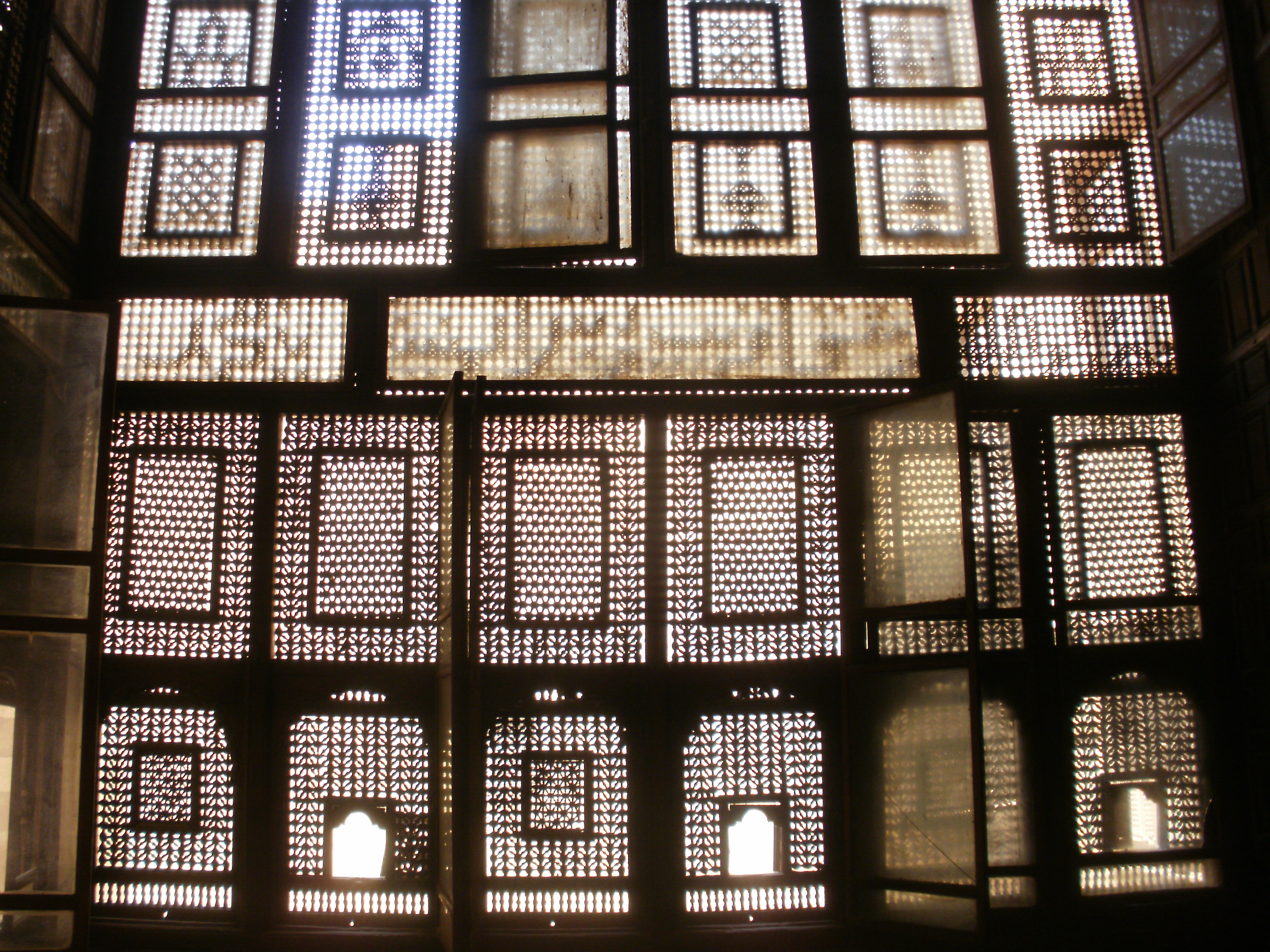
Looking through a traditional mashrabiya, photo by Brett

exciting person. On a scale from one to ten, I crop up somewhere in the middle. Right now, I’m living at home–yawn–researching philosophy PhD programs–super yawn–and brushing up on personal finance and fitness as I set out to join the “real world” with whatever jobs and internships can sustain me for a year–asleep yet?

But one week from today, I drive to the airport, battle through the baggage lines, and hit the air, sandwiched on a stuffy plane, on my second trip to Egypt to teach English.

I’m both nervous and excited.

Continue reading “Thoughts on the Real World”

The Good Life

opulence
Miniature giraffes and gold-encrusted chairs clearly mean the good life.

What many people consider creativity doesn’t occur in flash of sudden brilliance. A Mona Lisa doesn’t leap from the brush. In Search of Lost Time doesn’t write itself. Maybe sometimes, but not often. Most creative people slog through long hours, laboring without much inspiration, until their little efforts accumulate into a sizable project.

As French writer Albert Camus put it in an essay on French novels, “Works of art are not born in flashes of inspiration, but in a daily fidelity.”

One can never underestimate the sustained effort of a single person. But a person needs a direction first. Simply running and working without direction leads nowhere. Like a dog chasing its own tail or a hamster sprinting on its wheel, undirected effort–no matter how hard it is–remains undirected and fruitless.

One needs something to structure effort, like a goal or even a way of life. In many ways, this was once the role of philosophy.

Continue reading “The Good Life”