Time, art, and negative capability

I found my summers yesterday, in the fall, the whole of them blue-sky bound and strewn with wind. The oak and maple leaves weaved paths like a wandering needle as they settled to the ground, sun-curled and scattered. Meanwhile, the afternoon light shimmered in the shaking leaves like a mirage or a whispered poem.railway-autumn

Legs folded, I sat on a red Adirondack chair, looking at the backyard where I grew up. A few things were different. The white picket fence wasn’t there anymore. My brother and his friends had taken sledge hammers to it some hot day years ago, celebrated with beer, and piled up the boards like felled trees. A wire fence replaced it, rattling in the wind and squaring off the yard like the lines on a chess board.

My grandfather’s old table was gone too. It was old when I was a kid, gray like the weather had bleached the life out of it, while lichen and moss filled the cracks. I used to poke my finger through knotholes and wiggle it, like a worm, legs swinging too high to touch the flagstone patio where the table rested. I don’t know where that went. Maybe firewood. Maybe the soil behind the stand of hemlocks in the back.

There, on that old table, my neighbor and I built planes with computer paper from my dad’s old Macintosh. That’s gone too, or maybe buried somewhere in a dim corner of the basement, beneath rusted wrenches and coffee cans of old nails. Those days, before the wire fences went up, my neighbor would cut through our backyards and knock on our back door. We rarely called. I’d see him on our back step, his hair like a pile of feathers cemented under a baseball cap, and I’d steal the paper.

For the whole summer day, we’d sit out at that table, folding, and cutting, and throwing our planes when the wind blew. Sometimes they weaved, crashed, and tumbled on the ground like drunk pigeons. And other times, the wind caught the frail wings of our creations and carried them up into the blue, blue sky like birds chasing the sun, and we forgot that there were boundaries, forgot that there were fences and time limits.

Yesterday, sitting on that red chair, I found that joy again. I could see the table, the paper, and my neighbor folding planes beside me. Memories pooled in a puddle that never dried up. The images had a deep resonance, like the memory had bounced back from some distant place, bringing echoes as it returned. Time dissolved.

Then, the moment passed, as a gust brought a branch full of yellow leaves sailing down like a dozen paper planes, all weaving, and diving, and settling. I locked back into time again, like a wanderer suddenly brought back to the path.

Continue reading “Time, art, and negative capability”

What’s a Stoic to do? Emotions and Reason

We all have those moments when we say or do something foolish because our emotions “made us.” You decide to wait for the last minute to finish your work because you’d rather watch Breaking Bad, resulting in a last-minute panic. Or you lean in to kiss a friend because it “felt right,” only to be pushed away.frowny-face

If anything, emotions make life interesting.

But for the most part, we like to think that we’re rational decision makers. To make choices, we consider our options and chose the one that makes the most sense. We’re not willy-nilly about such things. And those foolish, emotion-based decisions are a rarity, not the norm. As Samuel Johnson once said, “We may take Fancy for our companion, but must follow reason as our guide.”

Moreover, Most of our public discourse assumes that we are rational. Our economy’s dominant theory is “rational market theory” and the framers designed our political system according to Enlightenment ideals of rational government. 

Philosophy, in particular has tended to focus on logic and reason. The Stoics are one famous example, but Socrates also prided logic over emotion, even to the point of death. Some exceptions exist, like Nietzsche and Rousseau, but they are precisely that: exceptions. 

Indeed, most of us like to think that we control our destiny with rational choice–whether its in buying a car or choosing a profession–but research shows we may not be as rational as we think.

Continue reading “What’s a Stoic to do? Emotions and Reason”

Update

Hey all,

I’ve been on the road for most of this weekend, so I haven’t had a chance to update the blog. I apologize. In the meantime, here’s a video. It’s a two-part video on Kierkegaard from a BBC documentary called Sea of Faith that covers a number of modern philosophers, including Kierkegaard and Wittgenstein, and how they approached faith in the modern era.

Enjoy:

“I Am”: A sense of self

Image courtesy of Forbes.com

In 1841 a little-known English poet escaped an asylum and wandered back to his childhood home in the farmland of Northamtonshire, convinced that he was married to a woman who had died three years earlier.

The poet, John Clare, said that separation from his childhood home–its fields, cottages, and the small taverns where he worked–had made him increasingly alienated from his own self. His later poems reflect his fixation. In one he claims that he was once Shelly and Lord Byron. In his most famous one, “I Am,” he reflects on his isolation:

I am—yet what I am none cares or knows;

My friends forsake me like a memory lost:

I am the self-consumer of my woes—

They rise and vanish in oblivious host,

Like shadows in love’s frenzied stifled throes

And yet I am, and live—like vapours tossed.

Isolated and unknown, Clare clings to the few activities, memories, and passions that adhere to his fragmented self. This raises an important question: Who is this “I Am” Clare speaks of, separated from his roots? Who is an I? What is a self?

Continue reading ““I Am”: A sense of self”

Augustine and Evil

My dad closed the door and flicked off the lights, pitching the room into a clean black. Whistler-Nocturne_in_black_and_gold“Goodnight,” he said as he walked way. He footsteps receded as he walked downstairs to rejoin my mom. My brother sat up beside the bed.

“Ready?” he asked.

I nodded.

We piled my stuffed animals and realigned my pillows, burying the human-like decoy in a thick comforter. From the doorway, it looked like a body curled up in deep sleep. Perfect.

My brother and I snuck downstairs, our soft footfalls swallowed by explosions and gunshots from an action movie. We opened the basement door and slipped downstairs to my brother’s room, where we watched kung-fu and R-rated movies, eating chips and dip, until dawn.

I could have asked my parents to sleep downstairs. They would have probably said yes—it was a Friday and I was almost nine. But the thrill of subterfuge tinged my flight. Breaking rules was liberating, saying “no” was exciting. Doing the “wrong” thing was a thrill.

In his Confessions, Augustine of Hippo tells a similar story. One night, he and his friends sneak into a garden and steal pears. They don’t eat the fruit but still enjoy the theft for its sinful pleasure. As he writes, “The malice of the act was base and I loved it—that is to say, I loved my own undoing, I loved the evil in me” (Augustine and F.J. Sheed, trans., 44).

One of the many picture's of St. Augustine (by Antonio Rodríguez)
One of the many pictures of St. Augustine (by Antonio Rodríguez)

In my forbidden flight and Augustine’s theft, we broke rules. Using Augustine’s theological language, we “sinned,” turning away from God toward ourselves. In Augustine’s case, he picked a forbidden fruit. In my case, I disobeyed my parents. This “turning away” forms an essential crux in Augustine’s argument defending God against the charge of evil. But to understand his argument one must first understand his notion of being and non-being–gleaned from the Greek tradition.

Continue reading “Augustine and Evil”

An update (and Carl Sagan)

I’ve been adjusting this past week to life back at school as I get my masters in English. That said, I’ve been a bit too disoriented to write a solid post. Although I’ve had some ideas and halting drafts, nothing coalesced.

I apologize.

I’ll try my best to post something this coming Sunday. In the meantime, here’s a compilation of the Sagan series, nine well-crafted videos using audio from the cosmologist Carl Sagan who died in ’96. The creators wanted to inspire science literacy, a lifelong crusade for Sagan.

You may not agree with everything Sagan says, but the videos offer a pointed perspective. One of the top-rated comments puts it well, I think: “Just like any teenager I love sleep but recently I have begun waking up half an hour earlier everyday to watch this video. It keeps my dreams alive for just a little longer before going about my day. . .”

Enjoy.

Sagan series

Solitude and Loneliness

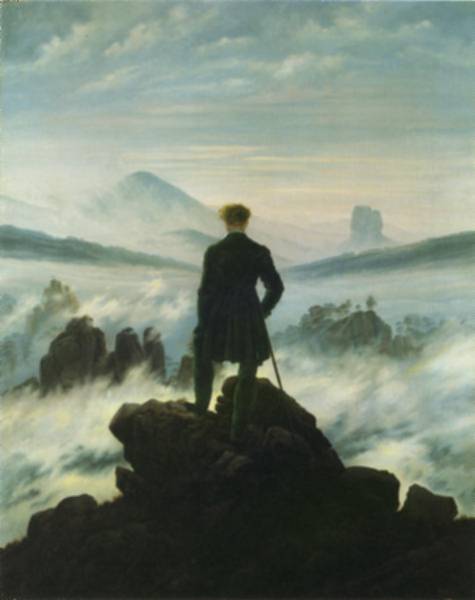
A friend recently mentioned in a message to me that she doesn’t mind spending time alone anymore. As she put it, “I’ve gotten to the point where I don’t feel like I’m a loser when I’m alone.” She even described a moment walking home in the rain alone without a raincoat or umbrella. Wanderer_above_the_Sea_of_Fog

“People driving by probably thought I was miserable, but I just smiled the entire time like I had a big secret that I couldn’t tell anyone,” she wrote. “The rain was so refreshing.”

I suppose the millennial generation feels particularly pressured to avoid “being alone.” We’re increasingly connected with cell phones and social networks. A “lonely person” conjures images of a Friday-night recluse in a concrete room with cold fluorescent lights pouring down on a clammy floor strewn with old magazines. Meanwhile, everyone he knows–even the smelly kid with the sketchy sweatshirt who sat near him on the bus in third grade–is at some party with Aziz Ansari and David Tennent, having a great time. FOMO, it’s called: “fear of missing out”

We fear being alone because we fear loneliness: the sense of exclusion, the shame, the boredom. But you don’t have to be alone to feel alone. It can hit anywhere, even at a party.

And sometimes being alone doesn’t mean you feel lonely. As my friend realized, being alone can be empowering. Even fun. As theologian Paul Tillich notes in The Eternal Now, “Our language has wisely sensed these two sides of man’s being alone. It has created the word ‘loneliness’ to express the pain of being alone. And it has created the word ‘solitude’ to express the glory of being alone.

But what’s the difference?

Continue reading “Solitude and Loneliness”

Egypt: a reaction

When I first read Robert Frost’s poem “Out, Out–“ about a boy getting killed in a chainsaw accident, I cringed at the final sentence: “And they, since they/ Were not the one dead, turned to their affairs.”

Egypt, street scene

How could they be so calloused? I thought. That boy just died, and they “turned to their affairs”?

I now understand that we must often turn to our affairs despite tragedy or else nothing would get done. Held down, scarred over, and silenced with whiteout, our memories remain, but we move on. There’s even a sort of stoic courage there.

Egypt has resurfaced in the news as the violence worsens. As of this writing, the mainstream media has confirmed over 800 people dead since unrest began. That doesn’t count the thousands of injured. The burned churches. The torched and dismantled government buildings. The barricades. The shattered lives. The unconfirmed dead. The fear.

Another teacher I worked with reported on a blog how a priest she knows was riding in car when a man with a knife started chasing him. The fast-thinking driver saved the priest’s life.

“Today this same priest told me that priests in Egypt fear being led like sheep to the slaughter,” the teacher wrote.  

It’s one image in a complicated mosaic.

“It was a hell,” a doctor said about the violence a few weeks ago. I can’t imagine what he’d say now, with hundreds dying and motorcycles carrying bodies back from front lines to makeshift morgues in mosques.

I, too, worry about the friends I made, the places I saw, the people I shook hands with. They are more than statistics. The grease and dust from their hands has washed off, but I still feel it. I still hear their stories, remember their smiles. Every update makes me think of them.

I want to mourn or fight, but I must “turn to my affairs”–so says that voice inside my head, that voice that points to all the practical, at-hand problems I must deal with: loans, money, drivers’ tests, GRE exams, messy kitchens.

I’m getting them done, but my mind is still in Egypt.

Continue reading “Egypt: a reaction”

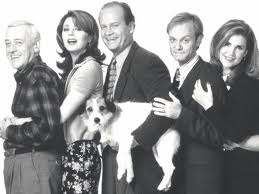
On Frasier and Leaving The Past Behind

I’ve been watching a lot of Frasier the last few weeks. Maybe it’s a hankering for something funnier than today’s formulaic television comedies, or it’s probably just that the show is wickedly entertaining.

from fanpop.com
from fanpop.com

The 90s powerhouse comedy features Kelsey Grammer as the titular Dr. Frasier Crane,a pseudo-intellectual radio psychiatrist trying to get through life despite his multiple character flaws. He’s joined by his equally pseudo-intellectual psychiatrist brother Niles, his retired cop father and his snarky British housekeeper as he weaves through a series of unfortunate shenanigans.

In the episode “Seat of Power,” the Crane brothers attempt to fix a leaky toilet to prove to their father they can do more than recite Faulkner and wax poetic on a particularly good vintage. Of course, they fail miserably and call in a plumber; in a twist, the plumber is one of Niles’s high-school tormentors.

Niles wants no more than to shove his foe’s head into the toilet, giving him a “swirly,” the torture he endured many time in high school. Frasier talks him out of it, instead urging him to tout his success: the “living well” revenge.

When that backfires (the plumber drives a Mercedes and has a fulfilling marriage), Frasier recommends Niles simply talk it out with the bully. Though Frasier ignores his own advice when he takes a toilet-water infused revenge on a second bully-turned-plumber, Niles comes to terms with his aggressor and moves forward, settling some 20 years of pent-up anger.

You may wonder what my point is, but I was struck with how well Niles and Frasier’s misadventure mirrored my own struggles with leaving high school resentments behind.

Continue reading “On Frasier and Leaving The Past Behind”

Starlight and renewal

Sometimes, when I’m tired or lost I look at old writing. It reminds me where I camestars1.jpg from, what has always mattered, and where I ought to go. Today, as I struggled to write a blog post, I sorted through old files and notebooks.

I found this, a reflection from fall of my junior year. It was a hard semester, as I’ve referenced before, but it many ways, it set my foundation. In the midst of that darkness, I found my passions and insecurities. I found my self.

I think this particular reflection captures a lot of that. It also hits at the seed that inspired this entire blog: the fusion of life and philosophy that makes “backyard philosophy.”

I repost it in full below, only edited for grammar. We all need reminders now and then.

Continue reading “Starlight and renewal”