Orwellian tea advice

I enjoy a nice “cuppa tea.” Sometimes, especially on cold, drizzly days, I add milk.

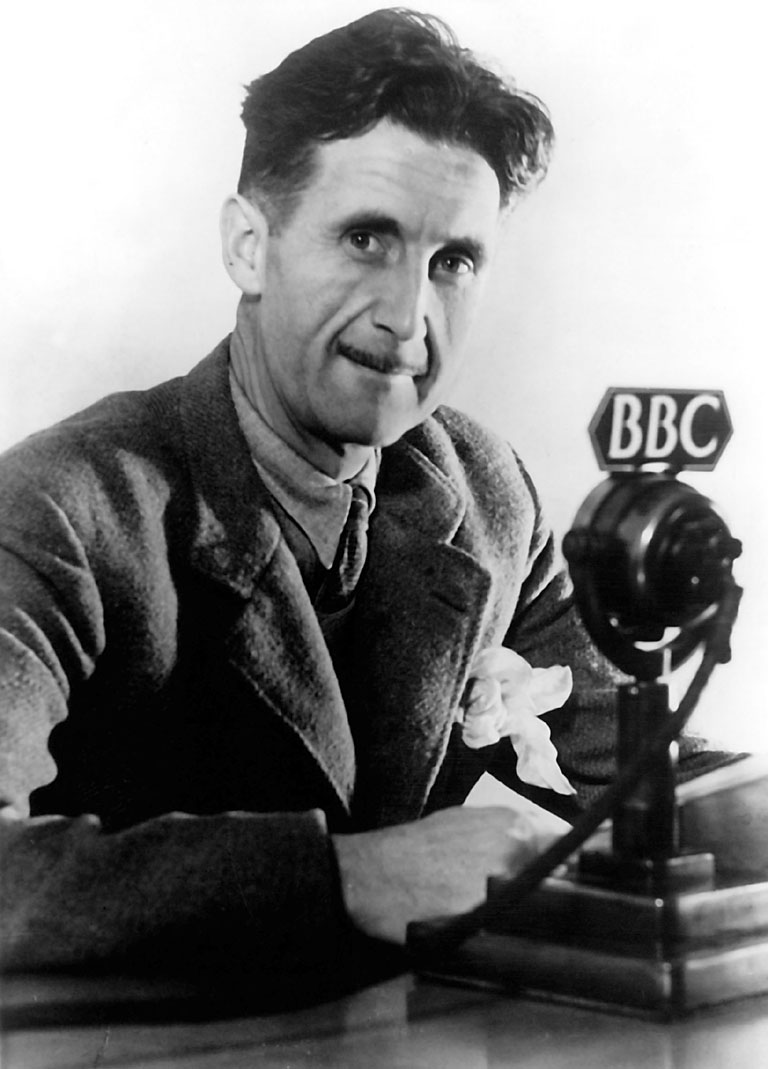
The tea drinker himself, Eric Blair, a.k.a., George Orwell

Whenever I do, I always try to remember Orwell’s eleven charmingly British rules on the craft, even if I don’t follow most of them.

When he wasn’t trying to shoot an elephant as a colonial police officer, dawning work clothes to blend in with London’s lower classes, or battling the strangling reach of totalitarianism–Orwell drank tea. And as you can see from the newspaper column, he loved tea a great deal.

I hope you enjoy it, and for an audio version of him saying a few rules, click here.

Cheers.

The Quest for Peace

Something I wrote before: “I am not like yesterday. Not yet tomorrow. I am today.” This line returns to me like a long slow breath, stretching syllables until they share the weight of my body and soul.   And then I remember what I lack, what I fear, what I need for “today” to be here with me as my present self. Because tomorrow I will say, “I am not like yesterday.” Thoughts are my enemies, but I learned that peace is something that never ceases to exist. It’s there. But peace is humble; it doesn’t seek our attention. In lieu, we must be the ones to pursue it—or perhaps, realize peace.

The quest for peace in our days is a labyrinth with its dark tunnels and hidden passageways. I am in this maze just as much as you are.  But I have discovered that the peace is the maze itself. Or maybe not? Well, I am still living and learning. Ten or twenty years from now I might assemble a different perspective on peace. But, as of now, I am taking a stop in my travels, so I can let my life stir what it has collected over the years.

Within the stream of my thoughts and endless needs and desires, I can feel the weight of the world dropping on my hands like tiny seeds waiting to be planted in my head. And within my fears and doubts, I can distinguish which seeds I had actually considered to plant ten years ago.

I am not drawn to gardening at all, but if I had the influence, I would. As of now, I am tending the garden in my head and, especially, my heart.

Peace grows where we unite ourselves to the soul of peace.

I don’t want to say the ground of peace or the core of peace, but rather the soul—the soul is its life, its true breath. The soul is an intimate substance. It is where the encounter of our essence and intangibility gaze at each other as lovers do before they depart. The only difference is that the makeup of our soul never leaves—it is us. And we make that precious encounter with peace when we contemplate on its authenticity as opposed to the benefits or outcomes of peace itself. In a similar way, we make that distinctive encounter with ourselves when we contemplate on the intimate reality that we possess in our souls. Not in yesterday’s reasons and excuses or tomorrow’s goals and desires, but today’s moment. Peace is for today; it’s meant for today. And it’s meant for us and it longs for each of our distinctive union.

As I have mentioned before, peace is humble, so it is not ignorant or oblivious to its own beauty and power. As each fear or troubling thought marks its territory in my mind, peace remains quiet and patient because it knows I have to make the effort to enter into its sanctuary.

We must humble ourselves to encounter peace. We must admit our faults and frustrations and realize that there are things in life we do not have control over. Deep inside ourselves, we are vulnerable and powerless. Deep inside ourselves, we fail to remember our human quality which is truly vital to recognize as we face our struggles and disappointments. But, we, most importantly, overlook the active presence of our soul that is oftentimes deadened by our fleeting pursuits of unnecessary and damaging ambitions. And, yet, peace still waits for us. Underneath, above, in between our angst and fears and concerns—peace is there. It exists. It exists. It exists.

The Amazon Post or Why Print Was Already Dead

gfsnell3's avatarHighTalk

AmazonPost2

One of my PR colleagues had this reaction to Jeff Bezos, the founder of Amazon.com, buying the Washington Post.

“This really is the end of an era for print media as we know it.”

My reaction?

Where have you been?

Print media, particularly print newspapers, official kicked the bucket in 2009 – after a long and agonizing death. In fact, 2009 was so painfully grim for print media that I dubbed it the year of the Great Media Collapse.

It was epic.

2009 ended with more than 14,000 journalism jobs gone forever. It ended with circulation rates at 1940s levels. It saw the end of dozens of newspapers including mainstay dailies in Tucson, Seattle, Detroit, Baltimore and Denver. Heck, in 2009, Businessweek was sold for less than the price of a really nice condo in Manhattan.

The situation has continued to deteriorate at a startling rate.

The Pew Research…

View original post 435 more words

Checking in

Hey all,

So I didn’t get a chance to write a solid blog post. The muse wasn’t with me, and my nephew was too busy requesting me to sing the scarecrow song from the Wizard of Oz as we danced around the room–or rather, as I danced with him on my back.

That said, I apologize. But I wanted to give a quick update about things, so it works out.

First of all, I have a “new” page on the blog: a list of helpful sites for brain candy, philosophy resources, and other tidbits from around the Internet. If you have some, feel free to comment there. I’ll try to update it now and then.

Second, I put up a list of books I’ve been reading, paired with a brief review. As I explain there, it may give some insight about where I’m coming from on the posts and offer possible titles if you want to broaden your own reading list. If you have suggestions, I’d be happy to give them a whirl–and who knows, I may even find time to review!

Third, you may have noticed the guest post this past week from my friend “blackbyrd.” I hope to have more posts from other writers mid-week. Feel free to stop in and see them Wednesday or Thursday. If you have an interesting reflection, thought, or experience that may fit on the blog, feel free to comment below. It may end up there as well.

The bigger the forum, the bigger the fun.

Fourth, I finally upgraded to backyardphilosophy01.com, without that extra .wordpress. addendum. I’ll be exploring that as time goes on and may change up the blog’s look. It’s been a while.

Fifth, I’m planning on writing a few hubs once I get more familiar with their system. Hubs are a neat little addition to the Web. They’re collections of long-form posts focused on how-to discussions or information-dense topics–like how to write a good introduction. I’ll try to post the links if they’re relevant.

And that’s about it. Thanks for reading, commenting, and liking my posts. I’ll keep up my end of the deal with the reading, writing, and posting.

As Sartre said, “There is no art except for and by others.” Art exists, like flavor, through a communion of the object and the subject–the sender and the receiver. The compounds to create flavor in an apple, but “sweetness” doesn’t exist until someone takes a bite. Likewise, “art” is all about the “aesthetic experience” of the observer and the creation of the artist. At least, that’s what the subjectivists would say.

…And would you look at that, a bit of philosophy after all! Take care and stay skeptical, curious, and thoughtful.

-Brett
Hope4Humanity

Even with my limited service background, I’ve recognized the fact that much of what people say about the homeless or disenfranchised is true: they are dysfunctional, they can be scary, and they can be difficult and manipulative. Still, they are human, and they are broken humans, and I never understood why people throw their anger against them. Like this video shows, I think: above all, a truth we can all realize is that they are human beings, regardless of the other labels we pile on top.

Truthseeker247's avatarTruthseeker247

View original post

Empty blue mattresses

June 24, 2011. Blue and white caps and gowns dotted the football field. From my chair in the front row, I remember thinking to myself, “I will never be in the presence of this exact group of people ever again.” 

Since then, I can count on one hand how many people from my high school graduating class I’ve gone out of my way to see since that June evening over two years ago (the answer is three –– not kidding).

But my lack of friends from high school is an entirely different matter; the real point here is that there are moments we seriously can never get back. And places, too. Physical locations are just as important.

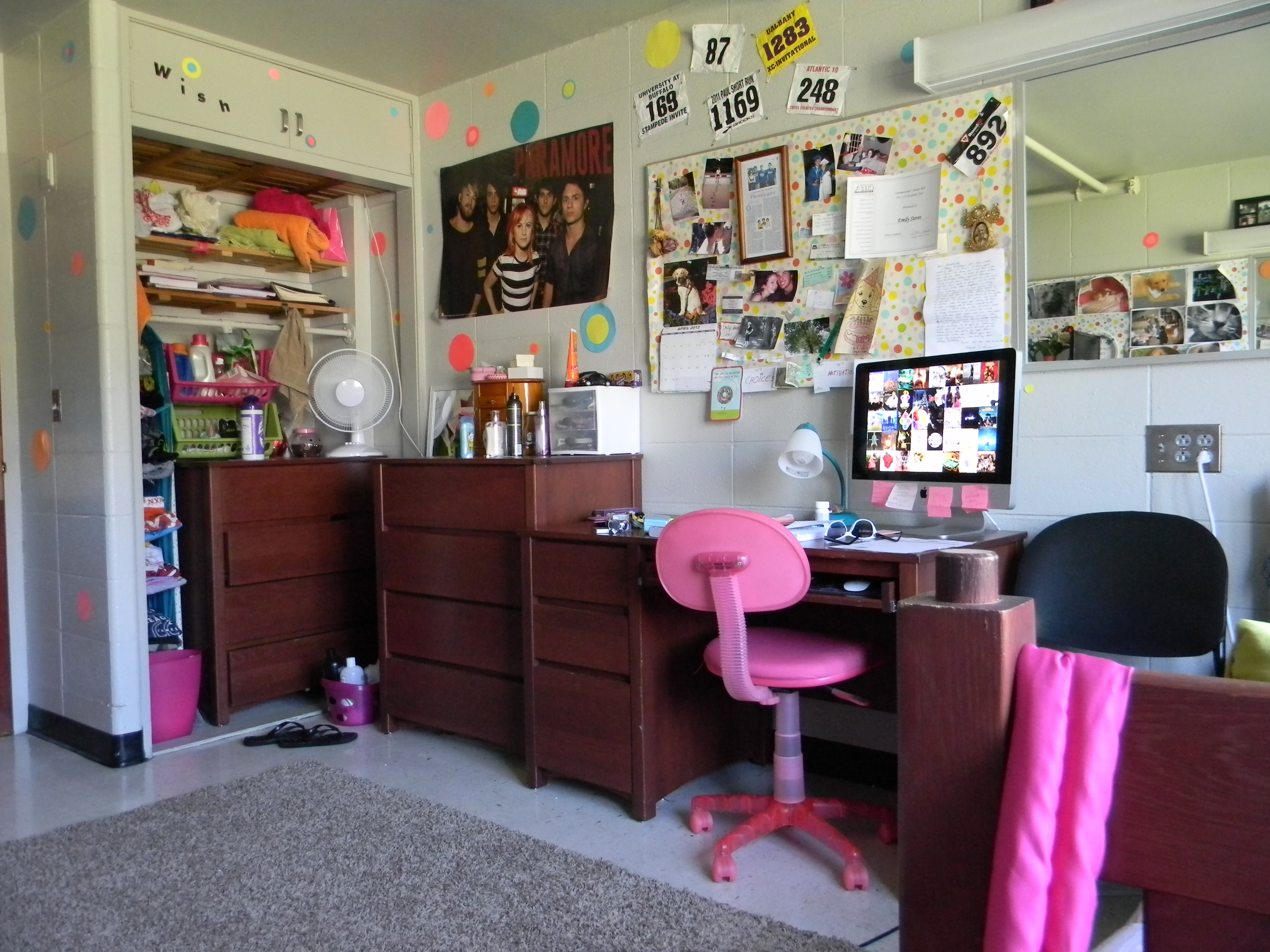
Polka-dots galore, welcome to my freshman dorm room.

I adored my freshman year dorm room. I have so many memories trapped within the walls of room 157 in Loughlen Hall. My friends and I watched Jenna Marbles videos and snuggled in my bed. We got fancy with wine the night before one of my finals and shoveled handfuls of classy taco cheese down our throats, the next-best thing to Gruyère.

It hits me when I remember that room doesn’t exist anymore. And some of those people in the memories don’t even attend the university now. We’ll never recreate that group of people or the place we once called “home.” The then-polka-dotted walls are back to their original white cinder-block state, with lonely bed frames housing empty blue mattresses.

I’m currently in limbo, picturing my dorm room from this past year instead of looking forward to a new white box to call my home. And what I’m thinking of and picturing doesn’t even really exist anymore. The frame does, the touches that made it Emily’s Room don’t.

Next time you’re in a group of friends, look around. Memorize facial expressions and laughter. Take the time to discover what each person contributes to the gathering and ponder what it would be like if he/she were not there. How do your surroundings make an impact? What if you could never return to that particular place? You’re living in a moment that may never present itself again. Cherish it.

I hope that if/when my parents sell my childhood home, the new owners take the time to look it over and imagine bare feet tearing through the different rooms and up the staircase. I know I will be.

The minute that “SOLD” sign is posted, I’ll have lost access to a portal containing countless memories; one that can never be reopened once sealed.

Carl Sagan

I’m a bit of a Carl Sagan junkie. I suppose it started the evening before Thanksgiving Carl_Sagan_Planetary_Societybreak my junior year, when my ride changed plans to leave the next morning. With an evening free, I scanned HULU for a show to kill time with. It recommended Cosmos, and after reading the glowing comments, I decided to check it out.

The name Carl Sagan was familiar, and I had seen his parted hair, turtleneck, and beige jacket parodied on television. I had also heard his famous Pale Blue Dot monologue at a talk from Bill Nye, who respected Sagan. I even met a professor from Cornell who got his office, replete with a hidden foot pedal to call campus police for unwanted visitors.

But the pieces didn’t connect.

The strangely nostalgic piano and synth-string theme played over an intro of star fields and passing nebula. The café around me softened into a whimpering white noise of scuffing tables, chatting workers, and clattering cups. Sagan spoke, his iconic cadences seeming to pick out words with the precision of tweezers.

“The sky calls to us,” he said. “If we do not destroy ourselves, we will one day venture to the stars.”

Continue reading “Carl Sagan”

Option overload

Standing in the tea aisle of my local Wegmans, my heart pounded and my head froze. Too many choicesThe prim, brightly colored canisters and shiny, cellophaned boxes stared at me, rows of them, emblazoned with brand names, alleged health benefits, and flavors. Some were fair trade, some were organic. Others were just cheap.

I didn’t know what to do.

In the end, I picked a compromise of price and quality. The anxiety seems crazy. And, as my dad quipped when I mentioned the issue, it’s better to have too many choices than none at all. True. But option overload has become an increased problem in the West.

As absurd as it sounds, too many choices can be a bad thing.

Continue reading “Option overload”