Sisyphus and the fair field full of folk

Yesterday, while sitting in the cafeteria, sipping the last of my tea, I scanned the seething mob of students around me. Pockets collected around tables, laughing. Some weaved through the rows of chairs, balancing plates. Most were focused, making beelines through the groups, mumbling excuses and smiling as they dodged bodies and carts, slipping into their own chair. Others took their time, stopping at tables, picking out apples like a chef at a farmer’s market.
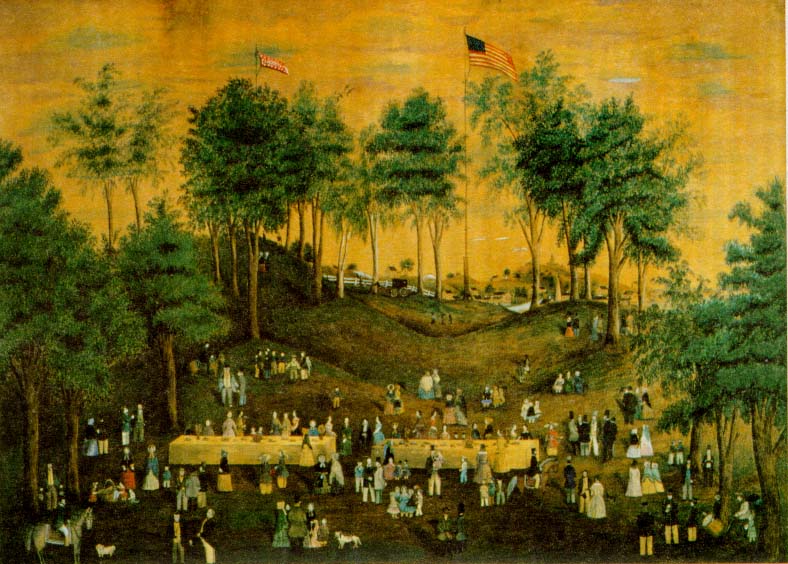
Image courtesy of Vanderbilt library

Each person had a way of being. Some wore exercise clothes, others had prim button-down Oxfords, most shuffled through lines in pajamas. They had places to go, things to do–or an absence of things to do that they filled with conversations and distractions.

Having spent the morning reading William Langland’s Piers Plowman, an allegorical dream poem from the 14th century, I recalled one of the more famous lines. The narrator, a mysterious figure named Will, falls asleep and finds himself in the midst of a strange country. He describes it:

I saw a tower on a toft · worthily built; 
A deep dale beneath · a dungeon therein, 
With deep ditches and dark · and dreadful of sight 
A fair field full of folk · found I in between, 
Of all manner of men · the rich and the poor, 
Working and wandering · as the world asketh. 

Will then goes on to describe these “fair folk.” Some toil in fields, while “Wasters” devour their products in gluttony. Some seek after salvation, becoming monks and anchorites; others wear the habit as a means to a escape poverty and cheat others. Merchants sell wares. Pilgrims travel. Kings rule, judges judge.

The poem describes a diverse spectrum of life, from highborn to low, and sandwiched them between these two towers: the one on a hill, the other in a ditch. We later discover that the tower on the hill is the tower of Truth, a symbol for God and salvation. The tower in the ditch belongs to Wrong, providing a symbol for a wasted life and a doomed afterlife. As the poem progresses through it’s many “steps,” visions chronicle Will’s search for salvation through Truth.

In the cafeteria, I considered Will’s vision, particularly this “fair field full of folk,” buzzing, weaving, laughing, and living around me. Where are they all going? I thought. What are they doing? Why are they here? A surge of compassion welled up in me as these questions turned over in my head, rolling one to the other. I felt connected to everyone and detached at the same time, an outside observer with a unique stake in the observation.

Continue reading “Sisyphus and the fair field full of folk”

Time, art, and negative capability

I found my summers yesterday, in the fall, the whole of them blue-sky bound and strewn with wind. The oak and maple leaves weaved paths like a wandering needle as they settled to the ground, sun-curled and scattered. Meanwhile, the afternoon light shimmered in the shaking leaves like a mirage or a whispered poem.railway-autumn

Legs folded, I sat on a red Adirondack chair, looking at the backyard where I grew up. A few things were different. The white picket fence wasn’t there anymore. My brother and his friends had taken sledge hammers to it some hot day years ago, celebrated with beer, and piled up the boards like felled trees. A wire fence replaced it, rattling in the wind and squaring off the yard like the lines on a chess board.

My grandfather’s old table was gone too. It was old when I was a kid, gray like the weather had bleached the life out of it, while lichen and moss filled the cracks. I used to poke my finger through knotholes and wiggle it, like a worm, legs swinging too high to touch the flagstone patio where the table rested. I don’t know where that went. Maybe firewood. Maybe the soil behind the stand of hemlocks in the back.

There, on that old table, my neighbor and I built planes with computer paper from my dad’s old Macintosh. That’s gone too, or maybe buried somewhere in a dim corner of the basement, beneath rusted wrenches and coffee cans of old nails. Those days, before the wire fences went up, my neighbor would cut through our backyards and knock on our back door. We rarely called. I’d see him on our back step, his hair like a pile of feathers cemented under a baseball cap, and I’d steal the paper.

For the whole summer day, we’d sit out at that table, folding, and cutting, and throwing our planes when the wind blew. Sometimes they weaved, crashed, and tumbled on the ground like drunk pigeons. And other times, the wind caught the frail wings of our creations and carried them up into the blue, blue sky like birds chasing the sun, and we forgot that there were boundaries, forgot that there were fences and time limits.

Yesterday, sitting on that red chair, I found that joy again. I could see the table, the paper, and my neighbor folding planes beside me. Memories pooled in a puddle that never dried up. The images had a deep resonance, like the memory had bounced back from some distant place, bringing echoes as it returned. Time dissolved.

Then, the moment passed, as a gust brought a branch full of yellow leaves sailing down like a dozen paper planes, all weaving, and diving, and settling. I locked back into time again, like a wanderer suddenly brought back to the path.

Continue reading “Time, art, and negative capability”

Some thoughts on theater

Two weeks ago, I went to a college theater festival in Maryland. Surrounded by crazy

Photo from the festival: a few of us in Midsummer Night's Dream Costumes, designed by Emily West
Photo from the festival: a few of us in A Midsummer Night’s Dream costumes, designed by Emily West (Far right)

theater types, plays, and workshops–including one that taught how to use a feather to achieve inner balance–the nine of us who went had theater on the brain–still do, I suppose.

Since ninth grade, when I acted in my first play, theater has remained an integral part of my life. Many of my friends have been actors and techies, and my evenings–sometimes weekends–often get swallowed by it. Whenever I can, I try to see plays.

It’s a fascinating art. Is has the fragility of music and the visual complexity of painting, kinetic and dynamic like dance, yet grounded in the permanence of writing. It uses space and resonance in ways a film never could and the vocalization of everyday poetry.

And it’s immediate, like life.

Continue reading “Some thoughts on theater”

Sunset on the Allegheny River

I went for walk tonight along the river that runs behind the school. The sun was setting

A picture of the trail just after sunset.

over the hills, making me think of a piece I wrote four years ago during my freshman year. At the time, I didn’t know anyone, so I would sit by the river often, writing and reading Aldo Leopold, Khrishnamurti, and Thoreau.

The silence and solitude of the path still moves me. I think the piece captures that well:

Continue reading “Sunset on the Allegheny River”

Own it: Authenticity

Rain clouds loomed outside as I sat across from my spiritual advisor, Br. Robert, in the simple room. “You have to own it,” he said. “You’re an artist. Own it.”

He talked about his early years as a friar. The other friars didn’t think much of his penchant for painting, forcing Br. Robert to sacrifice his own time, money, and space for it. At one point, he even tried to suppress the urge because it interfered so much with his religious duties. Just as Thomas Merton complained about his “double” as a writer pestering him during his early years with the Trappists, Br. Robert struggled with the artist fighting for expression from within.

When he left the friars–and the Catholic Church for a time–Brother Robert lived on Skid Row, trying to make his work as an artist. He found a deep, resonant calling. Surviving on rice and beans–tuna fish, when he could afford it–he scraped by, but his art taught him his vows better than his stint with the friars. Poverty. Obedience. Chastity. The words clarified as the years wore on.

For Br. Robert, devotion to art proved a devotion to God.

“Own it,” he had said. The words made sense as he said them, but didn’t resonate. As the years has pass, the words Br. Robert and I shared deepen and clarify, like his vows. Tempered and stretched by experience, his wisdom grows. I understand him now.

Continue reading “Own it: Authenticity”

Words

Some days all I can do is cling to my art. I feel my world withdrawing, but my fingers rib red lines along words as Imagethey grasp and hold and strain. It’s more feeling than reality, but it keeps me moving past my insecurities. The past few days, a quote by Albert Camus has lingered on edge of my thoughts, flashing now and then into focus:

Life continues, and some mornings, weary of the noise, discouraged by the prospect of the interminable work to keep after, sickened also by the madness of the world that leaps at you from the newspaper, finally convinced that I will not be equal to it and that I will disappoint everyone—all I want to do is sit down and wait for evening. This is what I feel like, and sometimes I yield to it.

I feel heavy.

Continue reading “Words”

Novel

I started on my novel again Monday. I began it during my winter break from mid-December to mid-January, then Imagetook a hiatus during school. I’ve been home for summer for about a week, but spent most of last week finishing final essays and creative writing assignments for classes and proofreading a literature magazine.

It felt great to hit the page again.

I’m going back to the beginning, editing to where I left off and resuming with all the threads in mind. It’s about 50,000 words now, which is about the length of The Great Gatsby. I aim to make it about 100,000, the typical soft-cover length.

So far, working on the novel has been hard but rewarding, especially since I’m neither a professional writer nor do I know what I’m going to do with it. But it begs completion. That’s enough.

Continue reading “Novel”