A former Journalism and Mass Communication major at St. Bonaventure, Brett changed his major to philosophy sophomore year.
Now, a recent graduate he's looking to continue his twin passions in writing and philosophy in whatever ways he can.
There are few places on earth where I feel like I have slipped into a mythical time period, and
Egypt
is one. The ancient Egyptians were geniuses, creating some of the greatest marvels of the world. During my visits, the historical sites were never-ending and always impressive, but what intrigued me most were the people. Incredibly insightful, and very willing to discuss life, politics and cultural issues over tea.
The openness of the people was surprising, and enjoyed talking with them more than I enjoyed the tourist sites (don’t get me wrong, the sites are truly incredible achievements). Over tea, we could delve into these discussions of politics, history and philosophy, all of which added to the flavor of country and its culture. The one consistent trait that seeped into every conversation I had with my Egyptian friends, was their great pride in their country and their astute eye…
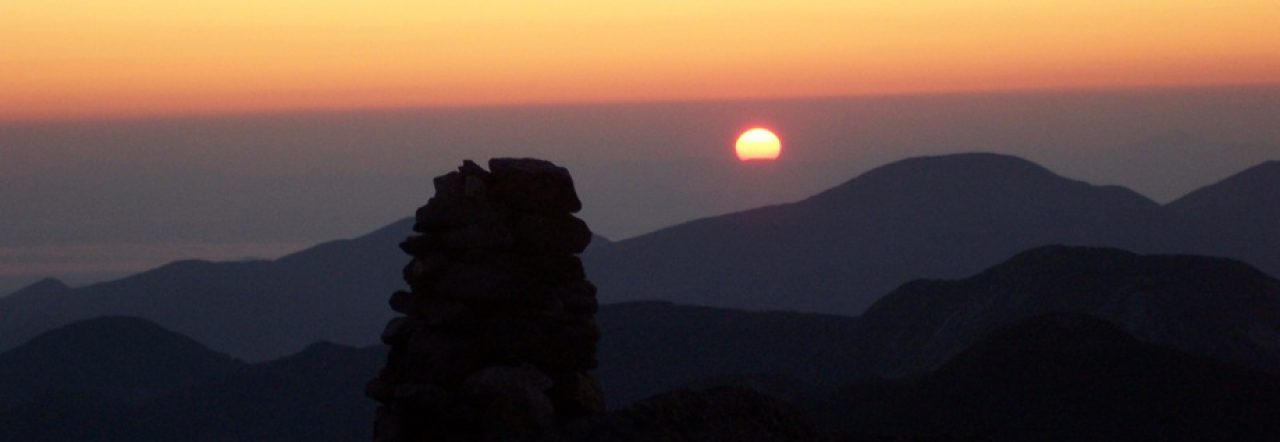
Once again, other projects have consumed my weekend. Perhaps, I’ll try to find time in the midst of the week to write, so this doesn’t happen again. In the meantime, here is a link to a beautiful poem by Wordsworth and a picture I took in my own travels around his home in the Lake District, one of my favorite places in the world. Enjoy.
As I have a few other writing projects taking up my time and creative energy this weekend, I haven’t gotten around to writing a worthwhile blog post. Instead, enjoy a lovely lecture by Monty Python’s John Cleese explaining the difference between the “closed zone” of everyday life and the “open zone” of creative expression and how to encourage the open zone–as best as one can.
As one can expect, Cleese sprinkles his clear explanation with humor, so at the very least, you’ll learn how many folk singers it takes to screw in a lightbulb. Enjoy.
[Image from North Dakota State University]I had plans for another post today, in light of a fellow blogger nominating me for a Liebster Award. But a night at a Franciscan retreat center has prompted me to write something a little different.
Since I first learned about Buddhism in high school, I’ve been interested in it. I still remember filling out answers to the Four Noble Truths on quizzes in the front of my ninth grade class, alongside sanskrit terms.
Since then, I’ve come a long way.
An independent study in Buddhist philosophy, numerous books, a few meditation retreats, and a daily meditation practice that lasted a few years have all increased my awareness in Buddhism, especially Zen.
But two winters ago, my interest culminated in a three day retreat at a Zen monastery in the Catskills. I still recall the final day of the retreat. After the exhausting stints of 5 a.m. zazen meditation and work projects–where I silently cracked over a hundred eggs–we concluded with a koan and a dharma talk by the sensei. The koan was about the diamond sutra, a central text in Mahayana Buddhism, called “diamond” because a true understanding allows one to cut through illusion and ignorance like a diamond.
The sensei brought up the ending of the sutra itself:
“So I say to you – This is how to contemplate our conditioned existence in this fleeting world:”
“Like a tiny drop of dew, or a bubble floating in a stream; Like a flash of lightning in a summer cloud, Or a flickering lamp, an illusion, a phantom, or a dream.”
“So is all conditioned existence to be seen.”
Thus spoke Buddha.
Building on the Buddhist notion of impermanence–that life contains unceasing flux and change–the sensei stressed our need to “leave no footprints” as we moved through life, negotiating the tricky balance of “equanimity,” a peaceful abiding between aversion and desire that does not fall into indifference. Life is indeed brief. It is full of change and interdependence. Like a dream, things come and go.
Sitting in zazen position, legs folded and “heart open,” I felt a change. Buddhism traditionally has different levels of understanding, ranging from the merely intellectual to the silent but sure understanding of an Enlightened one. Somewhere between lies a heart understanding, where one truly “feels” a new insight that cannot fit into words.
In the midst of the dharma talk, I felt that insight.
Walking to the library recently, morning tea in hand, I paused a moment and watched snowflakes powder the branches of a nearby stand of pines. The air was quiet–that vacuum-sealed hush that pervades winter dawns–and the sun glowed through the cloudy sky like flashlight through a fogged window.
“I’m happy,” I said suddenly.
Since then, I’ve been thinking about what happiness means, but it’s a slippery word. Images and expressions clutter its meaning, twisting and warping the word beyond recognition in some cases. There’s the tranquil happiness of a retiree feeding pigeons to pass time on a warm Sunday morning. Then, there’s the hedonistic thrill of a teenager, beer in hand, slipping into a throng of dancers in some dim, crowded corner of a house party. Then there’s Stoic and Buddhist joy, a sort of peaceful equanimity.
Fortunately, they do have a few things in common, I think.
I moved back into school today to start the next semester. A new semester has always had more of a “New Year” feeling than actual New Years, since school provides a ready-made change of scenery and lifestyle.
[image from http://uuspringfieldvt.org/%5DThat said, I try not to treat “resolutions” like “revolutions.” Often, this time of year–especially the first week or two at the start–gets annoying. Everyone has a hundred hopes, impossible plans, and vague outlines, all aimed at turning them into a new person. I respect the hope and spirit that goes into this, but as with many things, the hope outshoots the reality. Would-be gym-goers, dieters, meditators, and volunteers slump back into their old habits, like a well-worn couch, and lose momentum until “next year.”
It’s happened to me a dozen times. To people I know. To people I don’t know, but see peppering the gym this time of year, then slipping away like a trial product that never goes big. According to a recent study by the University of Scranton, used by Time and Forbes, only about 8% of those who try a resolution say they usually make it.
Other research has different numbers, but the conclusion seems pretty clear: resolutions don’t come easily.
One thing that may hamper our ability to reach our goals is an inherent limitation to self control. Recent research seems to indicate that we can only use so much self control before we succumb to temptation. Or, at the very least, we get more likely to succumb. That pizza, ice cream, and beer hits us much harder after a long day at work.
Sometimes we even rationalize it, saying “Well, I worked hard today and kept up my diet, so I deserve a little something.” The psychologist Kelly McGonigal, who studies willpower, critiques this particular tactic that she calls “moral licensing” in an interesting video.
Moreover, moral licensing and limited self control aren’t the only things that impede resolutions. The stubborn resilience of bad habits, our inability to visualize future selves, competing priorities, guilt-saturated procrastination, and more set strong roadblocks between us and progress.
Here’s a link to an interview I conducted with one of my professors about nonviolence published on another blog. In particular we discuss his own involvement with nonviolence, Gandhi, and the difference between nonviolence and civil resistance.
[image from “theotherhubby.com”]Flying is stressful. Flying during the winter is even more stressful. Last week, the winter storm “Hercules” hit the northeast United States, dumping feet of snow. Now, an Arctic chill creeps eastward across the northern midwest, chilling the air in some places to negative 65 degrees Fahrenheit (with windchill), as further storms hit. Coming at the end of the holiday season, the timing couldn’t be worse. U.S. Airlines canceled over 2,300 flights last Thursday and about 1,500 flights early Friday, according to the New York Daily News, and the trend continued, with over 6,000 flights canceled yesterday.
My parents, meanwhile, struggled to navigate the Kafkaesque airline industry to reroute, cancel, or reschedule flights for their long-ago-planned anniversary trip to San Francisco and Sonoma. They didn’t have much luck. Saturday, I spent an hour and a half with my dad waiting in a line stocked with people with canceled and delayed flights–some of them trying their luck for days–only to be told we couldn’t do anything in a flat, minute-long answer. Sunday, United Air canceled their flight, and they canceled their trip.
On both days, when we called, a pre-recorded message said the company was too flooded with calls to help. The others in line had the same problem, one man insisting he waited on hold for six hours before giving up and driving an hour to the airport to meet with someone. Others told similar tales.
Meanwhile, indignant flyers hammer employees at desk with questions, as their machines occasionally froze and their administration sorted through the swath of situations.
From a large perspective, airport stress is insignificant. It is, as the internet memes say, “a first-world problem,” and seems a minor cost to pay for the ability to hop in a metal machine and fly around the world in relative comfort at record speeds, going from New York City to Cairo in 12 hours. Compared to the Silk Road, the bandit-laced treks of merchants in the Middle Ages, and the tenuous crossing of the Atlantic on cramped wooden ships by early settlers, flying is easy.
But in the midst of it, airport travel is a difficult endeavor and that stress requires serious effort to overcome. Fortunately, stoicism provide a few helpful tips.
First of all, happy New Year. Perhaps 2013 was a down-and-out scrape to get through or an idyllic gallop on the pig’s back. Whatever the case, it’s ended and a new window aglow with resolutions awaits. But since New Years resolution posts have already flooded the internet, I wanted to write about another timely topic: being an introvert during the holidays.
I don’t handle holidays well. The noise, social obligations, tedious traditions, ostentatious meals, and blitzkrieg shoppers exhaust and overwhelm me. Each year as Christmas crawls around, my stomach knots up with dread. And the past few years I’ve reached saturation points, where at the end of a long string of busy days, I crash like stretched out spring ripping back into place. I cannot put on the act any longer.
With the holiday season on the wane, I can say that I survived this year. It took an effort, but in the end, this was the best holiday season I’ve had in a while. Perhaps some of you weren’t so lucky. In that case, here are a few ideas that helped me.
I found this recording of the famous post-modern novelist, cultural critic, essayist, and educator David Foster Wallace delivering a commencement speech at Kenyon College. The words are all the more haunting knowing that Wallace hanged himself Sept. 12, 2008 after a lifelong struggle with depression. The main focus of the speech is the “human value” of a liberal arts education. For Wallace, an ideal education provides “awareness” of our world and our way of processing the world.
David Foster Wallace (1962-2008), image courtesy of Salon.com
With this in mind, two passages in particular struck me. The first deals with the potential dangers of the mind. As Wallace says:
Twenty years after my own graduation, I have come gradually to understand that the liberal arts cliché about teaching you how to think is actually shorthand for a much deeper, more serious idea: learning how to think really means learning how to exercise some control over how and what you think. It means being conscious and aware enough to choose what you pay attention to and to choose how you construct meaning from experience. Because if you cannot exercise this kind of choice in adult life, you will be totally hosed. Think of the old cliché about ‘the mind being an excellent servant but a terrible master.’
As someone who suffered from depression, Wallace clearly understood the tyranny of a mind mastering reality, the way it warps and weaves impressions into a gloomy, self-destructive haze, leaving one alone in a world of friends.
But equally destructive is the closed-minded comfort that creates destructive prejudices or what Wallace calls our “default setting”: the self-focused way we narrate, judge, and arrange our life. In itself, this is innocuous, but when we start to think our reality is the norm or the “right” way of doing things, a process called “normative hubris,” we can become destructive.
As the blog and book You Are Not So Smart argues, our “rational” or “informed” opinions are often biased rationalizations. Some of these biases may be cultural or biological, but many are self-created, or at the very least, they can be self-controlled.
This, argues Wallace, is the goal of the liberal arts education: the ability to recognize this hubris and ignorance and do our best, if possible, to keep it in check. It grants us the ability to recognize the most basic thing, the way we explain reality.
Wallace is not the only person to say this. It rings with the self-conscious ignorance of Socrates and echoes Albert Camus’ dictum from his notebooks: “An intellectual is someone whose mind watches itself.” Its view of education also mirrors what astronomer Carl Sagan said in his final interview about science: “Science is more than a body of knowledge: It’s a way of thinking.”
Wallace’s unique addition is the painful awareness he has over his own limitations and the poignant, almost Zen-like awareness that the simplest, most pervasive things are the most hidden. Wallace opens the speech with a didactic story about two young fish swimming. Coming the opposite direction, an older fish swims by them saying, “Morning boys, how’s the water?” The two younger fish keep going, and eventually one of the fish turns to the other and asks, “What the hell is water?” The very fabric of their existence is far from obvious.
This parable returns toward the speech’s conclusion in a pointed restatement of the theme:
[T]he real value of a real education [has] almost nothing to do with knowledge, and everything to do with simple awareness; awareness of what is so real and essential, so hidden in plain sight all around us, all the time, that we have to keep reminding ourselves over and over:
‘This is water.’
‘This is water.’
It is unimaginably hard to do this, to stay conscious and alive in the adult world day in and day out. Which means yet another grand cliché turns out to be true: your education really IS the job of a lifetime.
As someone who works as a T.A. for a freshman composition class and in a writing center that aids students with the composition process, I’ve come to reach a similar point of view–I hesitate to call it a conclusion. Now on the other side of the desk, where I’m supposed to provide “knowledge” or “guidance” to new students, I painfully recognize the subjectivity of it all, the hubris of trying to “teach” someone how I see the world.
Instead, I just want to make them aware–aware of the world around them, with its conversations and conventions, and how they fit into it. What their own voice has to say. Or what their own voice has misidentified, misunderstood, or overgeneralized. But I often feel torn between the immediate goals of polishing up their arguments, correcting their grammar, or getting them a good grade and this much more idealistic, long-term longing. Moreover, I often struggle with normative hubris or unaware auto pilot in myself.
Most of the time, I’m not the older fish who sees the water. Most of the time, I’m simply the younger one, asking, “What the hell?”


 There are few places on earth where I feel like I have slipped into a mythical time period, and
Egypt
is one. The ancient Egyptians were geniuses, creating some of the greatest marvels of the world. During my visits, the historical sites were never-ending and always impressive, but what intrigued me most were the people. Incredibly insightful, and very willing to discuss life, politics and cultural issues over tea.
There are few places on earth where I feel like I have slipped into a mythical time period, and
Egypt
is one. The ancient Egyptians were geniuses, creating some of the greatest marvels of the world. During my visits, the historical sites were never-ending and always impressive, but what intrigued me most were the people. Incredibly insightful, and very willing to discuss life, politics and cultural issues over tea.


 The openness of the people was surprising, and enjoyed talking with them more than I enjoyed the tourist sites (don’t get me wrong, the sites are truly incredible achievements). Over tea, we could delve into these discussions of politics, history and philosophy, all of which added to the flavor of country and its culture. The one consistent trait that seeped into every conversation I had with my Egyptian friends, was their great pride in their country and their astute eye…



![[image from http://uuspringfieldvt.org/]](https://backyardphilosophy.com/wp-content/uploads/2014/01/mme-reach-for-the-stars.jpg)


 Backyard Philosophy