“I Am”: A sense of self

Image courtesy of Forbes.com

In 1841 a little-known English poet escaped an asylum and wandered back to his childhood home in the farmland of Northamtonshire, convinced that he was married to a woman who had died three years earlier.

The poet, John Clare, said that separation from his childhood home–its fields, cottages, and the small taverns where he worked–had made him increasingly alienated from his own self. His later poems reflect his fixation. In one he claims that he was once Shelly and Lord Byron. In his most famous one, “I Am,” he reflects on his isolation:

I am—yet what I am none cares or knows;

My friends forsake me like a memory lost:

I am the self-consumer of my woes—

They rise and vanish in oblivious host,

Like shadows in love’s frenzied stifled throes

And yet I am, and live—like vapours tossed.

Isolated and unknown, Clare clings to the few activities, memories, and passions that adhere to his fragmented self. This raises an important question: Who is this “I Am” Clare speaks of, separated from his roots? Who is an I? What is a self?

Continue reading ““I Am”: A sense of self”

Augustine and Evil

My dad closed the door and flicked off the lights, pitching the room into a clean black. Whistler-Nocturne_in_black_and_gold“Goodnight,” he said as he walked way. He footsteps receded as he walked downstairs to rejoin my mom. My brother sat up beside the bed.

“Ready?” he asked.

I nodded.

We piled my stuffed animals and realigned my pillows, burying the human-like decoy in a thick comforter. From the doorway, it looked like a body curled up in deep sleep. Perfect.

My brother and I snuck downstairs, our soft footfalls swallowed by explosions and gunshots from an action movie. We opened the basement door and slipped downstairs to my brother’s room, where we watched kung-fu and R-rated movies, eating chips and dip, until dawn.

I could have asked my parents to sleep downstairs. They would have probably said yes—it was a Friday and I was almost nine. But the thrill of subterfuge tinged my flight. Breaking rules was liberating, saying “no” was exciting. Doing the “wrong” thing was a thrill.

In his Confessions, Augustine of Hippo tells a similar story. One night, he and his friends sneak into a garden and steal pears. They don’t eat the fruit but still enjoy the theft for its sinful pleasure. As he writes, “The malice of the act was base and I loved it—that is to say, I loved my own undoing, I loved the evil in me” (Augustine and F.J. Sheed, trans., 44).

One of the many picture's of St. Augustine (by Antonio Rodríguez)
One of the many pictures of St. Augustine (by Antonio Rodríguez)

In my forbidden flight and Augustine’s theft, we broke rules. Using Augustine’s theological language, we “sinned,” turning away from God toward ourselves. In Augustine’s case, he picked a forbidden fruit. In my case, I disobeyed my parents. This “turning away” forms an essential crux in Augustine’s argument defending God against the charge of evil. But to understand his argument one must first understand his notion of being and non-being–gleaned from the Greek tradition.

Continue reading “Augustine and Evil”

An update (and Carl Sagan)

I’ve been adjusting this past week to life back at school as I get my masters in English. That said, I’ve been a bit too disoriented to write a solid post. Although I’ve had some ideas and halting drafts, nothing coalesced.

I apologize.

I’ll try my best to post something this coming Sunday. In the meantime, here’s a compilation of the Sagan series, nine well-crafted videos using audio from the cosmologist Carl Sagan who died in ’96. The creators wanted to inspire science literacy, a lifelong crusade for Sagan.

You may not agree with everything Sagan says, but the videos offer a pointed perspective. One of the top-rated comments puts it well, I think: “Just like any teenager I love sleep but recently I have begun waking up half an hour earlier everyday to watch this video. It keeps my dreams alive for just a little longer before going about my day. . .”

Enjoy.

Sagan series

Solitude and Loneliness

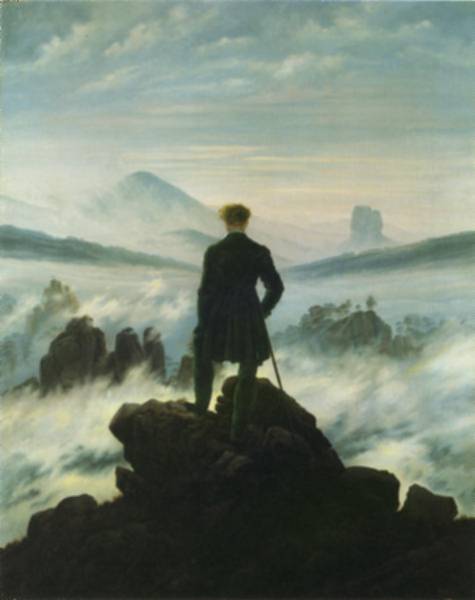
A friend recently mentioned in a message to me that she doesn’t mind spending time alone anymore. As she put it, “I’ve gotten to the point where I don’t feel like I’m a loser when I’m alone.” She even described a moment walking home in the rain alone without a raincoat or umbrella. Wanderer_above_the_Sea_of_Fog

“People driving by probably thought I was miserable, but I just smiled the entire time like I had a big secret that I couldn’t tell anyone,” she wrote. “The rain was so refreshing.”

I suppose the millennial generation feels particularly pressured to avoid “being alone.” We’re increasingly connected with cell phones and social networks. A “lonely person” conjures images of a Friday-night recluse in a concrete room with cold fluorescent lights pouring down on a clammy floor strewn with old magazines. Meanwhile, everyone he knows–even the smelly kid with the sketchy sweatshirt who sat near him on the bus in third grade–is at some party with Aziz Ansari and David Tennent, having a great time. FOMO, it’s called: “fear of missing out”

We fear being alone because we fear loneliness: the sense of exclusion, the shame, the boredom. But you don’t have to be alone to feel alone. It can hit anywhere, even at a party.

And sometimes being alone doesn’t mean you feel lonely. As my friend realized, being alone can be empowering. Even fun. As theologian Paul Tillich notes in The Eternal Now, “Our language has wisely sensed these two sides of man’s being alone. It has created the word ‘loneliness’ to express the pain of being alone. And it has created the word ‘solitude’ to express the glory of being alone.

But what’s the difference?

Continue reading “Solitude and Loneliness”

Egypt: a reaction

When I first read Robert Frost’s poem “Out, Out–“ about a boy getting killed in a chainsaw accident, I cringed at the final sentence: “And they, since they/ Were not the one dead, turned to their affairs.”

Egypt, street scene

How could they be so calloused? I thought. That boy just died, and they “turned to their affairs”?

I now understand that we must often turn to our affairs despite tragedy or else nothing would get done. Held down, scarred over, and silenced with whiteout, our memories remain, but we move on. There’s even a sort of stoic courage there.

Egypt has resurfaced in the news as the violence worsens. As of this writing, the mainstream media has confirmed over 800 people dead since unrest began. That doesn’t count the thousands of injured. The burned churches. The torched and dismantled government buildings. The barricades. The shattered lives. The unconfirmed dead. The fear.

Another teacher I worked with reported on a blog how a priest she knows was riding in car when a man with a knife started chasing him. The fast-thinking driver saved the priest’s life.

“Today this same priest told me that priests in Egypt fear being led like sheep to the slaughter,” the teacher wrote.  

It’s one image in a complicated mosaic.

“It was a hell,” a doctor said about the violence a few weeks ago. I can’t imagine what he’d say now, with hundreds dying and motorcycles carrying bodies back from front lines to makeshift morgues in mosques.

I, too, worry about the friends I made, the places I saw, the people I shook hands with. They are more than statistics. The grease and dust from their hands has washed off, but I still feel it. I still hear their stories, remember their smiles. Every update makes me think of them.

I want to mourn or fight, but I must “turn to my affairs”–so says that voice inside my head, that voice that points to all the practical, at-hand problems I must deal with: loans, money, drivers’ tests, GRE exams, messy kitchens.

I’m getting them done, but my mind is still in Egypt.

Continue reading “Egypt: a reaction”

Starlight and renewal

Sometimes, when I’m tired or lost I look at old writing. It reminds me where I camestars1.jpg from, what has always mattered, and where I ought to go. Today, as I struggled to write a blog post, I sorted through old files and notebooks.

I found this, a reflection from fall of my junior year. It was a hard semester, as I’ve referenced before, but it many ways, it set my foundation. In the midst of that darkness, I found my passions and insecurities. I found my self.

I think this particular reflection captures a lot of that. It also hits at the seed that inspired this entire blog: the fusion of life and philosophy that makes “backyard philosophy.”

I repost it in full below, only edited for grammar. We all need reminders now and then.

Continue reading “Starlight and renewal”

Orwellian tea advice

I enjoy a nice “cuppa tea.” Sometimes, especially on cold, drizzly days, I add milk.

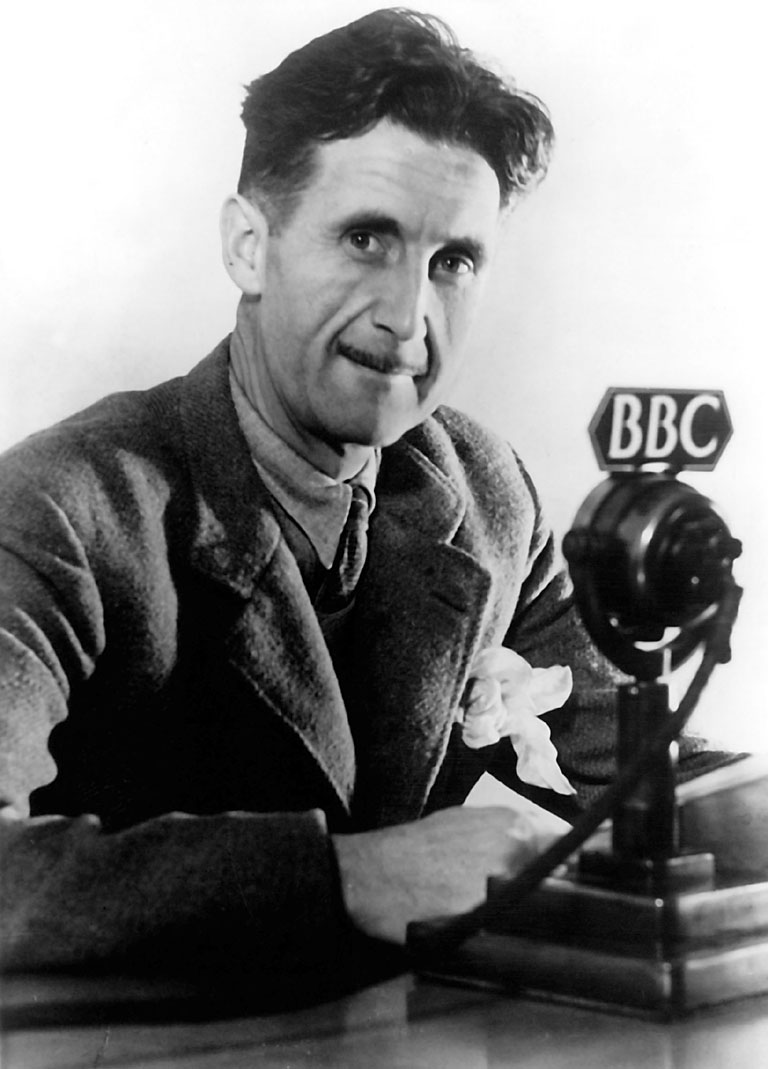
The tea drinker himself, Eric Blair, a.k.a., George Orwell

Whenever I do, I always try to remember Orwell’s eleven charmingly British rules on the craft, even if I don’t follow most of them.

When he wasn’t trying to shoot an elephant as a colonial police officer, dawning work clothes to blend in with London’s lower classes, or battling the strangling reach of totalitarianism–Orwell drank tea. And as you can see from the newspaper column, he loved tea a great deal.

I hope you enjoy it, and for an audio version of him saying a few rules, click here.

Cheers.

The Amazon Post or Why Print Was Already Dead

gfsnell3's avatarHighTalk

AmazonPost2

One of my PR colleagues had this reaction to Jeff Bezos, the founder of Amazon.com, buying the Washington Post.

“This really is the end of an era for print media as we know it.”

My reaction?

Where have you been?

Print media, particularly print newspapers, official kicked the bucket in 2009 – after a long and agonizing death. In fact, 2009 was so painfully grim for print media that I dubbed it the year of the Great Media Collapse.

It was epic.

2009 ended with more than 14,000 journalism jobs gone forever. It ended with circulation rates at 1940s levels. It saw the end of dozens of newspapers including mainstay dailies in Tucson, Seattle, Detroit, Baltimore and Denver. Heck, in 2009, Businessweek was sold for less than the price of a really nice condo in Manhattan.

The situation has continued to deteriorate at a startling rate.

The Pew Research…

View original post 435 more words

Checking in

Hey all,

So I didn’t get a chance to write a solid blog post. The muse wasn’t with me, and my nephew was too busy requesting me to sing the scarecrow song from the Wizard of Oz as we danced around the room–or rather, as I danced with him on my back.

That said, I apologize. But I wanted to give a quick update about things, so it works out.

First of all, I have a “new” page on the blog: a list of helpful sites for brain candy, philosophy resources, and other tidbits from around the Internet. If you have some, feel free to comment there. I’ll try to update it now and then.

Second, I put up a list of books I’ve been reading, paired with a brief review. As I explain there, it may give some insight about where I’m coming from on the posts and offer possible titles if you want to broaden your own reading list. If you have suggestions, I’d be happy to give them a whirl–and who knows, I may even find time to review!

Third, you may have noticed the guest post this past week from my friend “blackbyrd.” I hope to have more posts from other writers mid-week. Feel free to stop in and see them Wednesday or Thursday. If you have an interesting reflection, thought, or experience that may fit on the blog, feel free to comment below. It may end up there as well.

The bigger the forum, the bigger the fun.

Fourth, I finally upgraded to backyardphilosophy01.com, without that extra .wordpress. addendum. I’ll be exploring that as time goes on and may change up the blog’s look. It’s been a while.

Fifth, I’m planning on writing a few hubs once I get more familiar with their system. Hubs are a neat little addition to the Web. They’re collections of long-form posts focused on how-to discussions or information-dense topics–like how to write a good introduction. I’ll try to post the links if they’re relevant.

And that’s about it. Thanks for reading, commenting, and liking my posts. I’ll keep up my end of the deal with the reading, writing, and posting.

As Sartre said, “There is no art except for and by others.” Art exists, like flavor, through a communion of the object and the subject–the sender and the receiver. The compounds to create flavor in an apple, but “sweetness” doesn’t exist until someone takes a bite. Likewise, “art” is all about the “aesthetic experience” of the observer and the creation of the artist. At least, that’s what the subjectivists would say.

…And would you look at that, a bit of philosophy after all! Take care and stay skeptical, curious, and thoughtful.

-Brett

Hope4Humanity

Even with my limited service background, I’ve recognized the fact that much of what people say about the homeless or disenfranchised is true: they are dysfunctional, they can be scary, and they can be difficult and manipulative. Still, they are human, and they are broken humans, and I never understood why people throw their anger against them. Like this video shows, I think: above all, a truth we can all realize is that they are human beings, regardless of the other labels we pile on top.

Truthseeker247's avatarTruthseeker247

View original post